On Thursday, EU leaders will meet in Brussels for their customary pre-Christmas summit. But this year, things are more serious than usual. Ukraine needs urgent financial assistance, and at the latest in the second quarter of next year.
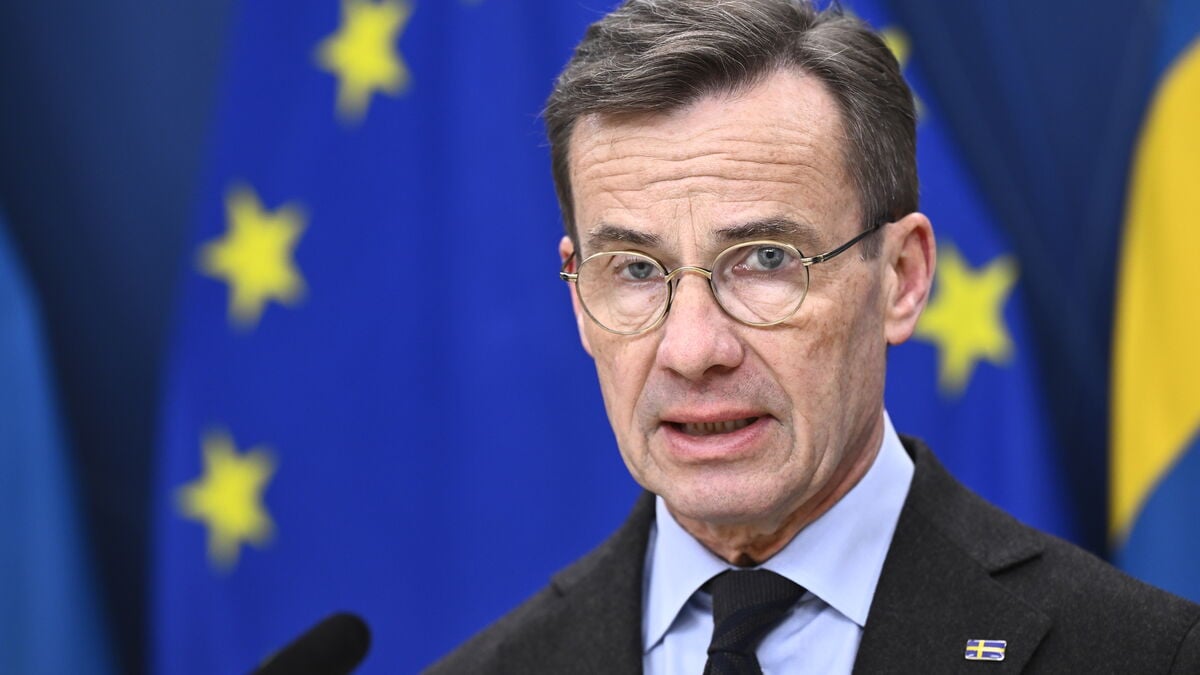
Early next year, the money for Ukraine will basically run out, says Prime Minister Ulf Kristersson (M) in the Riksdag's EU Committee.
I think everyone can imagine what that would mean for defense capabilities, but also for all the civilian production that is required for a country at war. Russia knows all this.
Intensive negotiations are underway between EU countries to find a solution.
The result of tomorrow's meeting is far from clear, says Kristersson.
Belgian resistance
A majority of EU countries support the European Commission's proposal to use frozen Russian assets as the basis for a multi-billion dollar loan that would provide financing for two years to come.
But Belgium, where most of the frozen Russian assets are located, is resisting. The country fears that Russia may make tough claims for damages and is not satisfied with the guarantees that have been promised that everyone will be involved and share the risks.
Several countries are siding with Belgium, including Italy, Bulgaria, the Czech Republic and Hungary. But they are not numerous enough to block the decision.
Theoretically, a decision can be made by qualified majority, but politically it is complicated to run over Belgium.
It is difficult, almost impossible, to make such a decision without Belgian acceptance, says Kristersson.
He does not want to answer whether Sweden would consider driving over Belgium in a situation where it is the only option to be able to use Russian assets.
Large print
Right now it is unclear what the exact solution will look like. Negotiations are ongoing basically around the clock.
The pressure on Belgium is very, very great, says Kristersson.
Kristersson, like Council President António Costa, who is leading the EU summit, believes that the decision cannot be postponed. It must be made now.
Sometimes it happens that decisions can mature later, but this cannot mature, he says, adding:
Besides, Ukraine is simply running out of money.
Facts: Frozen Russian state assets in the EU
According to the European Commission's calculations, there are a total of 210 billion euros in frozen Russian state assets in the EU.
The majority – 185 billion – is held by the securities institution Euroclear in Belgium. The other 25 billion is held by other institutions in the country, but also in France, among others. There is also a smaller amount in Sweden – but only around 120,000 kronor.
Of the assets, the European Commission now wants to earmark €45 billion for repayment of previous loans that Ukraine received through a G7 deal last year. €90 billion is proposed to be lent to Ukraine in 2026 and 2027, leaving €75 billion available for possible future needs for the country.
Source: European Commission, Minister for Foreign Affairs Maria Malmer Stenergard.