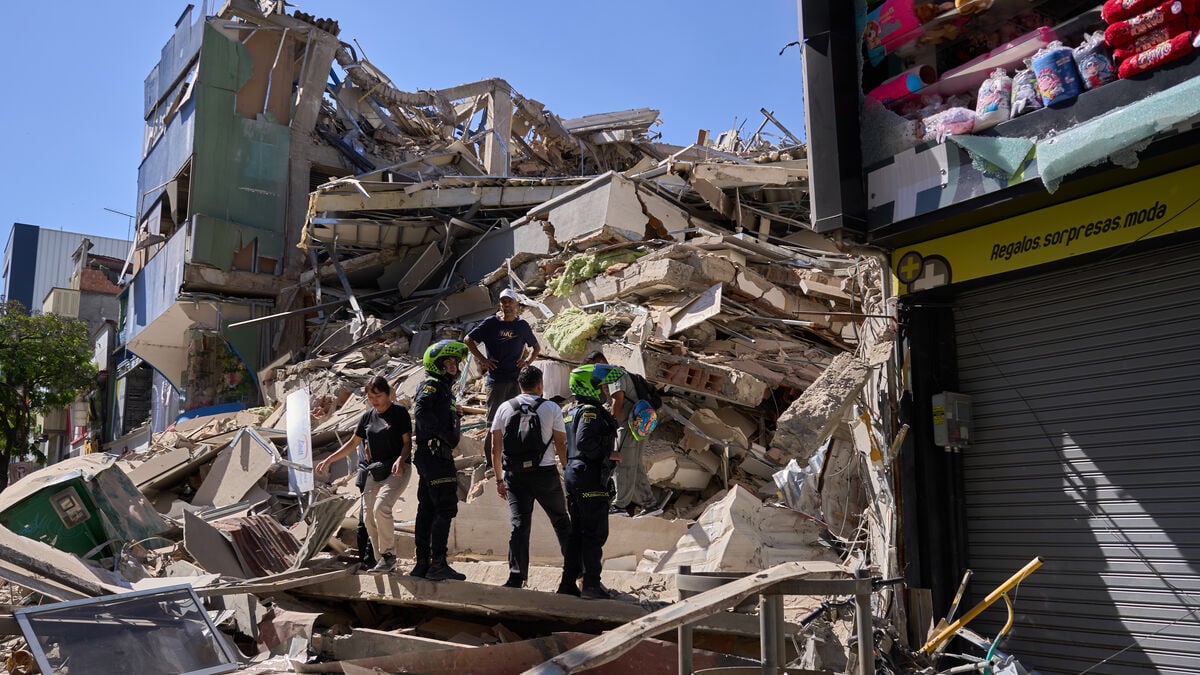
The magnitude was 7.4 and the epicentre was in San José del Palmar in the department of Chocó, according to the US Geological Survey (USGS). The quake struck at a depth of 107 kilometres early Monday local time and has mainly affected western Colombia.
Local media are reporting destroyed buildings in several cities. According to a statement from newly elected President Abelardo de la Espriella, the government has deployed all resources “to protect lives, assist affected communities and deliver emergency aid to all areas that need it.”
The president says that in addition to 111 confirmed deaths, 87 people have been injured.
Feared to be stuck
The deaths include 40 people in the Risaralda region, where the hard-hit city of Pereira is located. Another 27 people have been confirmed dead in the Valle del Cauca region, which includes the capital Cali. Two deaths were reported in Manizales, where one of the towers of the city's neo-Gothic cathedral collapsed, and at least twelve in Chocó.
Many people are feared to be trapped under the rubble.
Damage in the capital Bogotá is reported to be limited to cracks in facades and walls.
Six smaller airports in western Colombia have been damaged and have halted operations, according to the Colombian aviation authority.
The earthquake was felt in neighbouring Ecuador, Panama and Venezuela. No tsunami warning has been issued.
Help from the EU
The quake is the strongest recorded in the country in the last decade, Colombia's geological agency said. Two aftershocks with magnitudes of 2.8 and 4.8 followed the larger quake.
The United States is monitoring the situation and is "ready to support the people of Colombia," US Secretary of State Marco Rubio writes on X.
European Commission President Ursula von der Leyen writes that the EU has already deployed the Union's satellite service Copernicus to assist rescue efforts and that "more support" may be needed.