
As expected, the Democrats are taking over the majority in the House of Representatives, according to AP and other outlets. They have also won a number of Senate seats, taking several from the Republicans, and look set to take control of the Senate as well.
Can we say that we are seeing a blue wave across the United States?
I would go so far as to call it a blue tsunami, says Christopher Galdieri, a professor of political science at Saint Anselm College in New Hampshire.
The incumbent party often loses ground in midterm elections, but this is on a different level, Galdieri believes.
The Democrats are winning in places where they have not managed to do so in many years. For example, they took over the seat in South Carolina.
Election about Donald Trump
The election has been entirely about President Donald Trump, he says.
I think most people who voted for Trump in 2024 expected him to turn back time to 2019, before the pandemic and everything else. He campaigned on staying out of new foreign conflicts.
Two years later, here we are: Prices are high, gasoline is expensive, diesel is expensive. Trump started a war in Iran without really trying to convince the American people.
Political scientist Grant Reeher, of Syracuse University in New York, agrees:
Voters seem to be sending a pretty clear message that they are not happy with Trump for the first time in two years, and they are holding the Republican candidates responsible for it, he tells TT.
We see the same phenomenon among Republican members at the regional level, who have nothing to do with Trump at all. But they are being voted out of office for the same reason.
It is an “astonishing” result for the Republicans, according to Galdieri.
This isn't just because Democratic voters have been enthusiastic and Republicans have stayed home. It really seems like many who usually vote Republican have decided to vote Democratic this year.
Key Senate Candidates
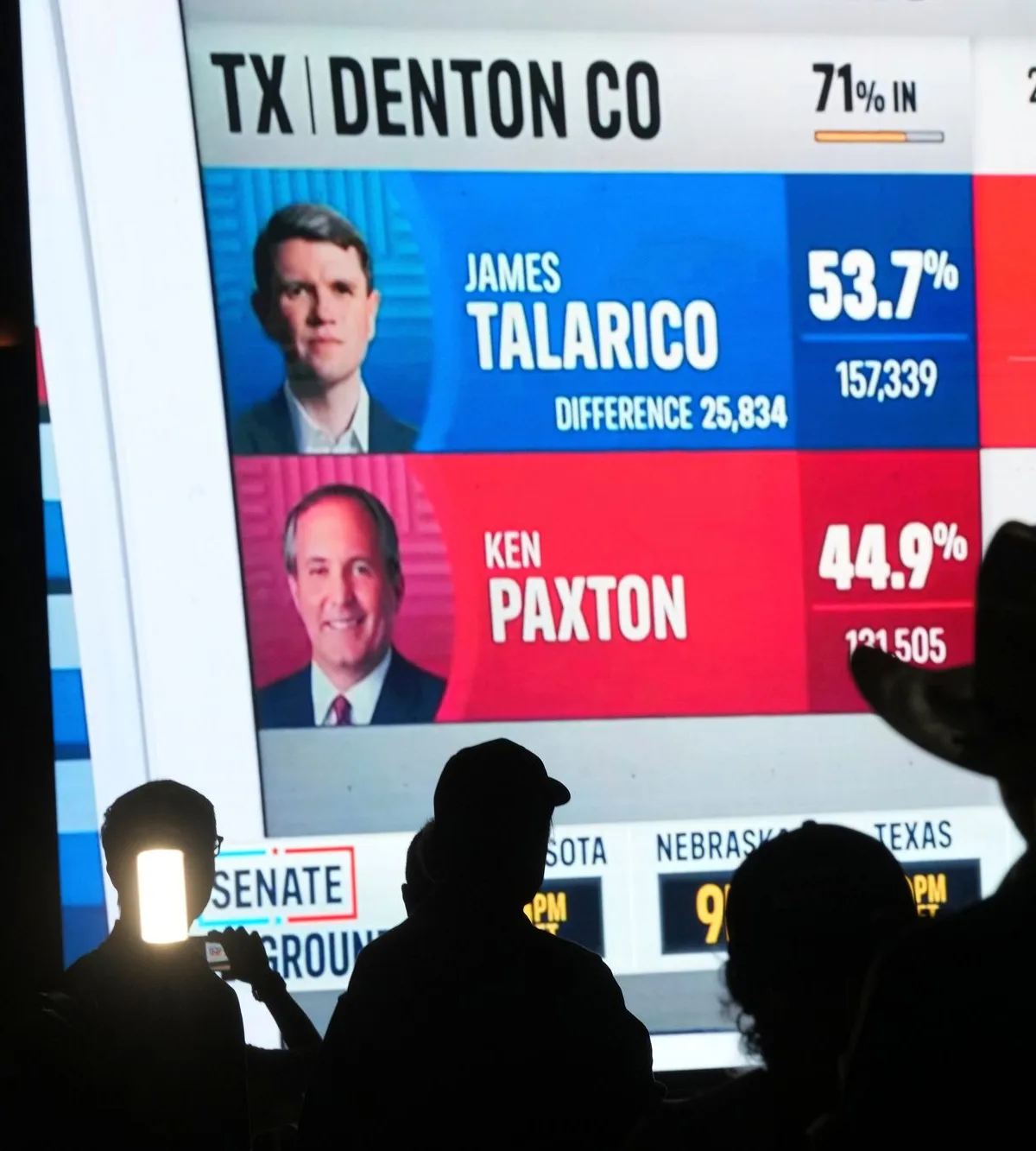
In addition to frustration with how the government has run the country over the past two years, Galdieri points to the choice of candidates as a deciding factor. Among them are Democrats James Talarico in Texas and Adam Hamilton in Kansas.
They are comfortable speaking in religious terms, talking about faith and reconciling their policy proposals with their religious beliefs. I think that's persuasive to a significant portion of the voters there, says Galdieri.






What do you think?