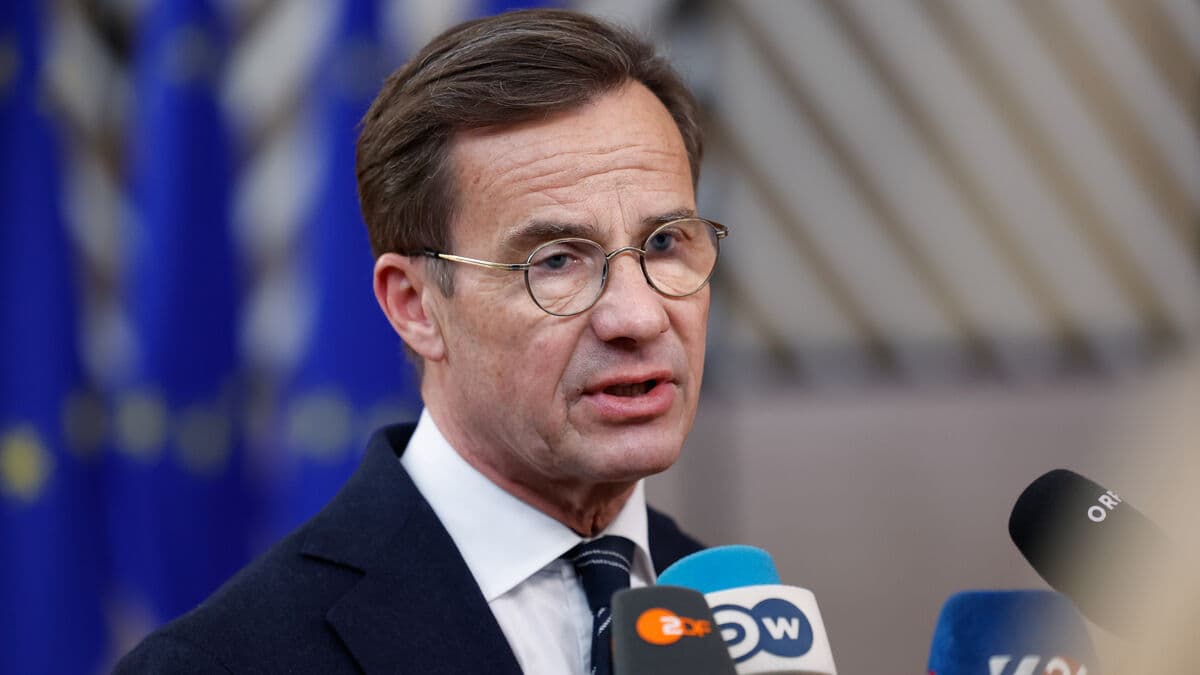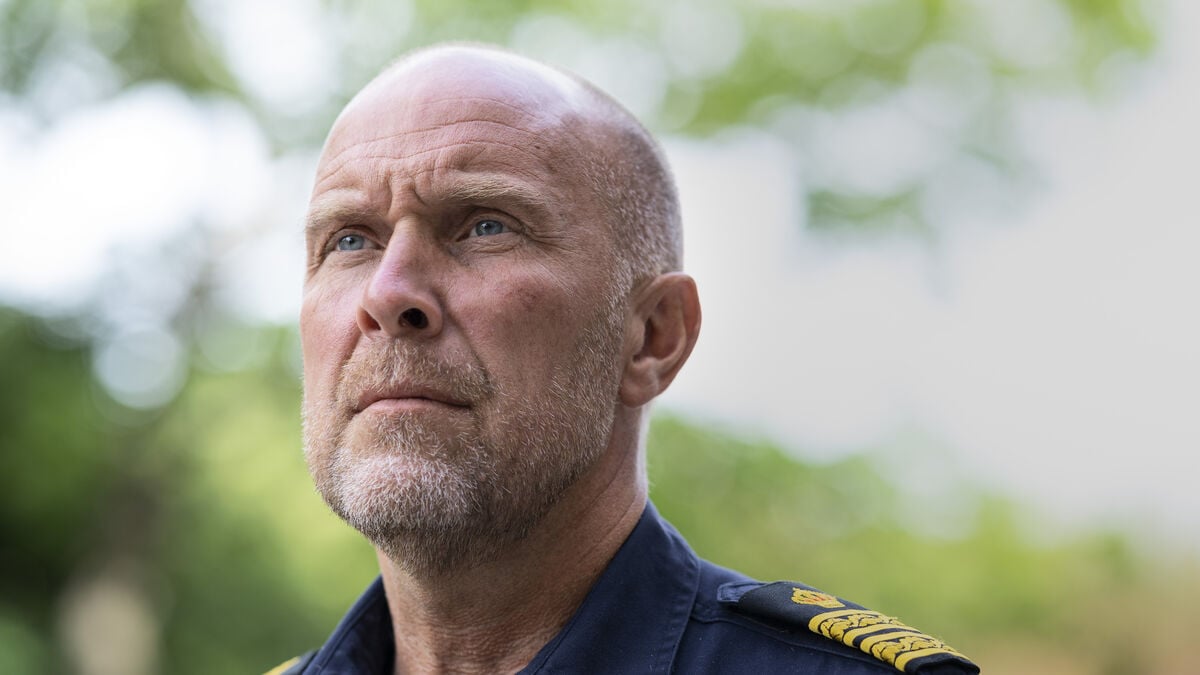
"We haven't cracked anything, but right now we are successful," says Stefan Hector during an interview in Almedalen in Visby.
He has quickly replaced National Police Chief Petra Lundh, who broke her foot just before she was due to go to Gotland while playing with her 35-kilogram Labrador.
The number of fatal shootings in Sweden has decreased since the record year of 2022, when 63 people were shot to death. This year, two calendar months - January and May - have been recorded without any fatal shootings at all, which is an unusual sight in the statistics.
"Barely left"
Stefan Hector says that the police have become better at preventing crime by, for example, pairing an escape from a youth shelter or youth home with contracts made in encrypted chats.
"The worst violence has been driven by three leading networks, and we have worked on several fronts to reduce their capacity. It has been relatively successful."
The police chief is referring to the Dalen, Rumba and Foxtrot gangs that have dominated Sweden's violent crime scene.
"We perceive that the first two barely exist, while the Foxtrot network has been severely restricted, and we believe that this is another circumstance that has suppressed the violence."
The police have also broken with old structures of oppression and succeeded in incapacitating leaders, especially in the Middle East and North Africa.
"We've had to abandon a lot of old truths, slaughter sacred cows, try new things we've never done before," says Hector.
Lowered age of criminal responsibility
At the same time, gangs continue to recruit children, and when politicians lower the age of criminal responsibility to 14, he sees a danger that recruitment will drop to even younger ages.
"We don't want to push the perpetrators down to even younger ages; that's what speaks against it. What speaks in favour is the protection of the public. But mainly it's a political issue that we're adapting to, while at the same time we can see that the solution we've had so far hasn't been favorable. It's worth trying."
The number of explosions also remains at high levels and the criminal economy has a turnover of 350 billion SEK annually, of which 185 billion is in profit.
For the next term, Hector hopes that politicians will refrain from detailed control of the authority and introduce a new law on secret preventive coercive measures. Or that, for crime-prevention purposes, they will be allowed to strike against, for example, a server in the Netherlands that sells drugs.
"That is perhaps the most important wish," he says.