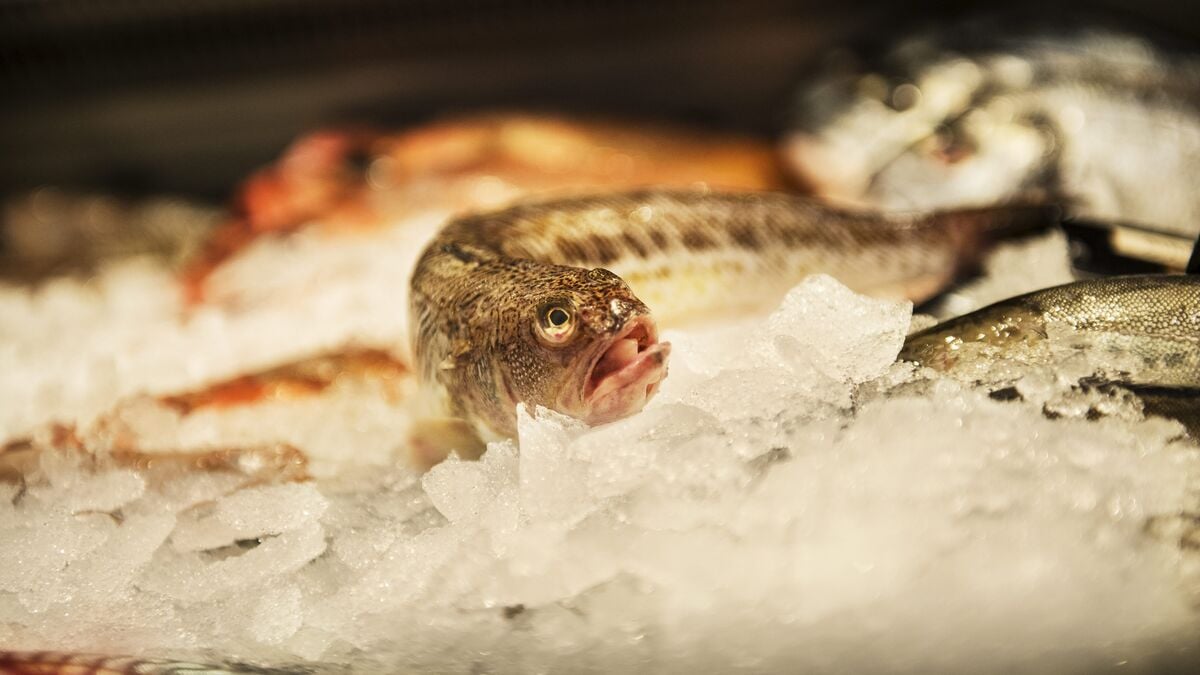
In just a few months this year, Danish fishermen have caught 800 tonnes of ling, writes Politiken .
There have probably never been as many ling in the Kattegat as there are now, says Henrik S Lund, biologist at the Danish Fisheries Association, to the newspaper.
Cod is declining
One possible explanation is that cod, which has haddock on the menu, has declined sharply. Mathias Ivarsson, fishing expert and chairman of the Swedish Fishermen's Producers' Organization, thinks that sounds reasonable.
It could very well be because cod is not found to the same extent that it does not have a natural enemy. But that is speculation.
Swedish fishermen have not seen the same enormous increase as their Danish colleagues, says Ivarsson, but they do not fish in the same targeted way.
In some places you get a lot of bycatch of scad when fishing for lobster, but then you try to avoid those places. Even those who fish for mackerel with a hook have problems with scad, because it bites before the hook reaches the mackerel.
“Sea Viper”
The weever fish is perhaps best known for its poisonous spines, which are extremely painful to prick against and have been called the “viper of the sea.” The pain and swelling can last for a long time, sometimes several months.
"She didn't say much, she screamed," Politiken quotes a meeting with the weever fish.
The poison of the weever fish is only in the spines, the fish is not inedible. In Denmark, the possibilities for commercial fishing of weever fish are now being investigated. In Sweden, there has previously been directed fishing for weever fish, but this has ceased as the waters where it was done are protected, says Mathias Ivarsson.
It is a very good food fish. Now that quotas are decreasing for other species, whiting could be used much more. But then it is important to find gear that does not catch cod, for example, but catches whiting.
The weever fish (Trachinus draco) is found along the Swedish west coast in limited areas. During the day it likes to lie buried in the sand and wait for its prey.
The weever fish is the only fish in Sweden that has a dangerous poison. It has poisonous spines on its gills and front dorsal fin. Even dead fish have poison in their spines.
A sting from a wasp is extremely painful. The pain can last for several days and the swelling for months.
If you are stung by a wasp, immediately hold the stung part of your body in warm water, as hot as possible without burning it - 40-45 degrees. Hold the part of your body in place for up to an hour or until the pain subsides.
If the swelling and pain do not subside and become worse, you should seek medical attention. The same applies if you cannot remove the remains of the stinger or the wound becomes swollen and pus-filled. If you experience a headache, dizziness, chills, sweating or nausea after the sting, you should seek medical attention immediately.
Source: havet.nu, 1177.se