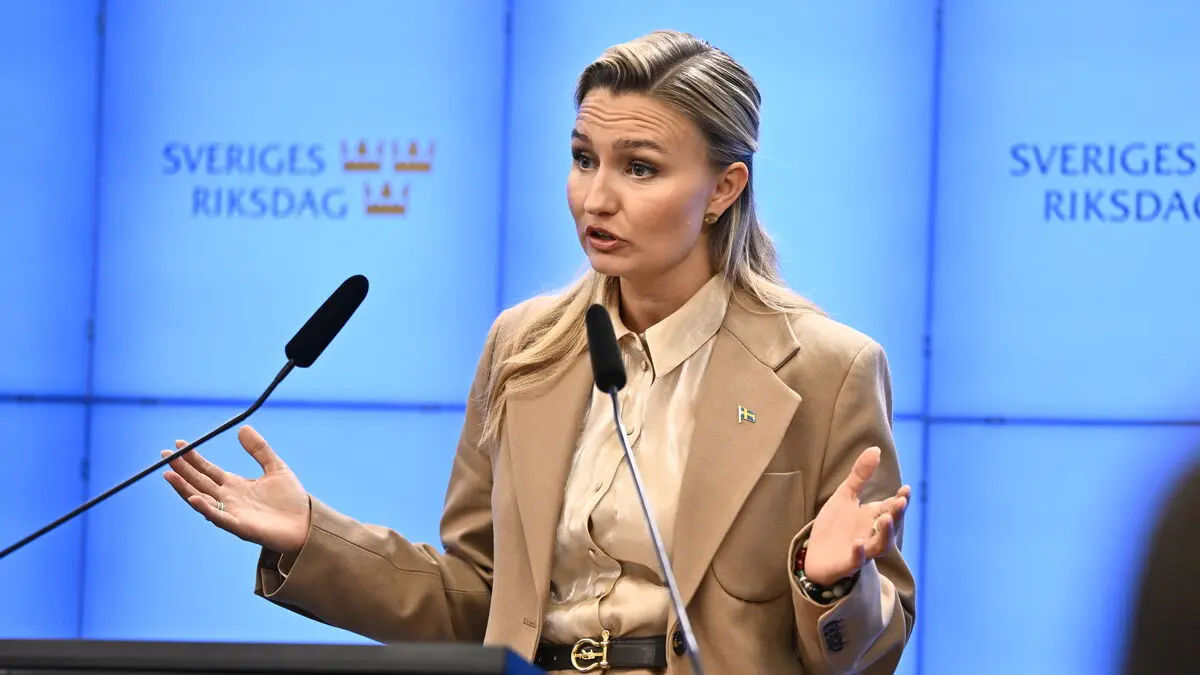
Gunnar Strömmer has called the penal reform "the largest in modern times".
It includes increased penalties for around fifty crimes, from aggravated assault and aggravated rape to aggravated breaches of confidentiality.
But the biggest change is a proposal to double punishments for gang-related crimes under the Tidö Agreement. The government is now moving forward with a bill that proposes a new provision to increase penalties targeting all crimes related to criminal networks.
The provision is broad and will affect everything from explosions, shootings, drug sales and fraud to crimes targeting the welfare system, says Henrik Vinge (SD), chairman of the Justice Committee.
Depends on the connection
As a starting point, the punishment would be doubled, but depending on how strong a person's connection to the criminal group is, the punishment can be more or less than double.
A couple of examples are that a series of serious frauds committed in a gang context could result in six years in prison, compared to today's three, and a gang member caught with a live weapon risks a prison sentence of eight years, compared to today's four.
The law is intended to target organized crime but also more loosely organized networks. An outsider who carries out assignments for the group can also be targeted.
It's not about first assessing whether a person is a gang criminal; what you look at is the specific crime and whether it was committed in an organized context, says Vinge.
Already this summer
Another part of the change is that repeated aggravated rapes will be punishable by life imprisonment. Repeated cases of particularly serious assault and aggravated rape of children will also be punishable by life imprisonment.
This major restructuring is based on an important shift in perspective - from an overly one-sided focus on the perpetrator to a clearer focus on victims of crime and society's need to protect itself against serious crime, says Gunnar Strömmer.
Simply put, we want criminals to be in prison so that law-abiding people dare to be out, he says.
When the government's investigator, National Police Chief Petra Lundh, presented the investigation, she said the proposals could come into effect in 2028, but the government now wants them to take effect on July 3 of this year.
We believe it can be done in such a way that the Prison and Probation Service's expansion matches this, says Strömmer.
Further proposals include harsher assessment of multiple crimes and tighter rules for when someone can be detained.