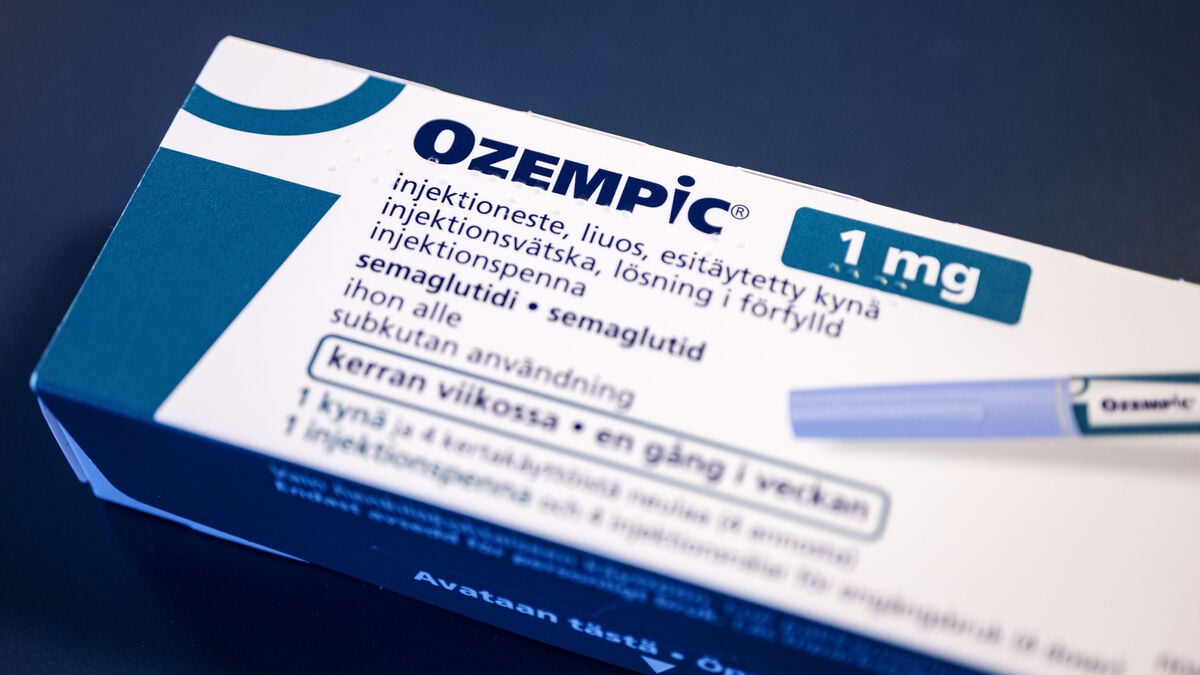
Medicines containing the active substance semaglutide, such as Ozempic and Wegovy, are used to treat type 2 diabetes and, in some cases, obesity, and have become extremely popular in a relatively short time.
In 2024, 176,059 unique people collected medicines containing semaglutide, according to statistics from the Swedish National Board of Health and Welfare.
However, their use may be associated with certain risks. Common side effects include nausea and constipation, but there are rarer, more serious conditions - although they are extremely rare.
“Consider the risk”
The European Medicines Agency's safety committee (PRAC) has reviewed the medicines after two studies showed people taking semaglutide are at increased risk of developing the eye disease NAION. The disease is caused by reduced blood flow to the optic nerve and can lead to vision loss. There is no treatment for the disease.
"The possible increased risk with Ozempic treatment is small, but it should be taken into account that it exists," says Frank Träisk, senior physician at St Erik's Eye Hospital.
"As with all drug treatment, the risks must be weighed against the benefits," he continues.
In Denmark, four people who suffered from nausea after taking Ozempic or Wegovy have together received the equivalent of over 1.1 million kronor in compensation from the state. In total, around 40 Danes have claimed compensation.
Money has also been paid out in Sweden.
A person has been granted compensation from the Swedish Pharmaceutical Insurance - where you can turn if you believe you have been harmed by a medicine - after developing NAION.
"There are a total of five reports. One is reimbursable and the other four are under investigation," says Anders Hultman, CEO of Läkemedelsförsäkringen, to TT.
It is not known how much money the person is entitled to.
"It's standard Swedish tort law," says Hultman.
"It's the same if you are injured elsewhere, for example in traffic. It's about how the individual is affected. There will be more money if, for example, you can no longer work," he adds.
“Serious damage”
Anders Hultman does not know whether more claims are expected to the Swedish Pharmaceutical Insurance, which is jointly owned by a large number of pharmaceutical companies, regions and other players in pharmaceutical management.
"I hope that those who may be affected will report it to us," he says.
The eye disease NAION (non-arteritic anterior optic neuritis) is caused by reduced blood supply to the optic nerve and can lead to vision loss. The progression is slow, but there is currently no treatment for NAION.
According to the Medical Products Agency, patients with type 2 diabetes may inherently have a higher risk of developing the condition.
In two studies, researchers have pointed out that people who received Ozempic or other drugs with the active substance semaglutide had twice the risk of developing NAION as those treated with other drugs.
The researchers do not believe that patients should stop their treatment. NAION is very rare and, based on the results, the risk for someone treated with Ozempic is around 0.2 per thousand per year.
The European Medicines Agency (EMA) has recommended that the product information for the drugs be updated and that NAION be included as a very rare side effect.