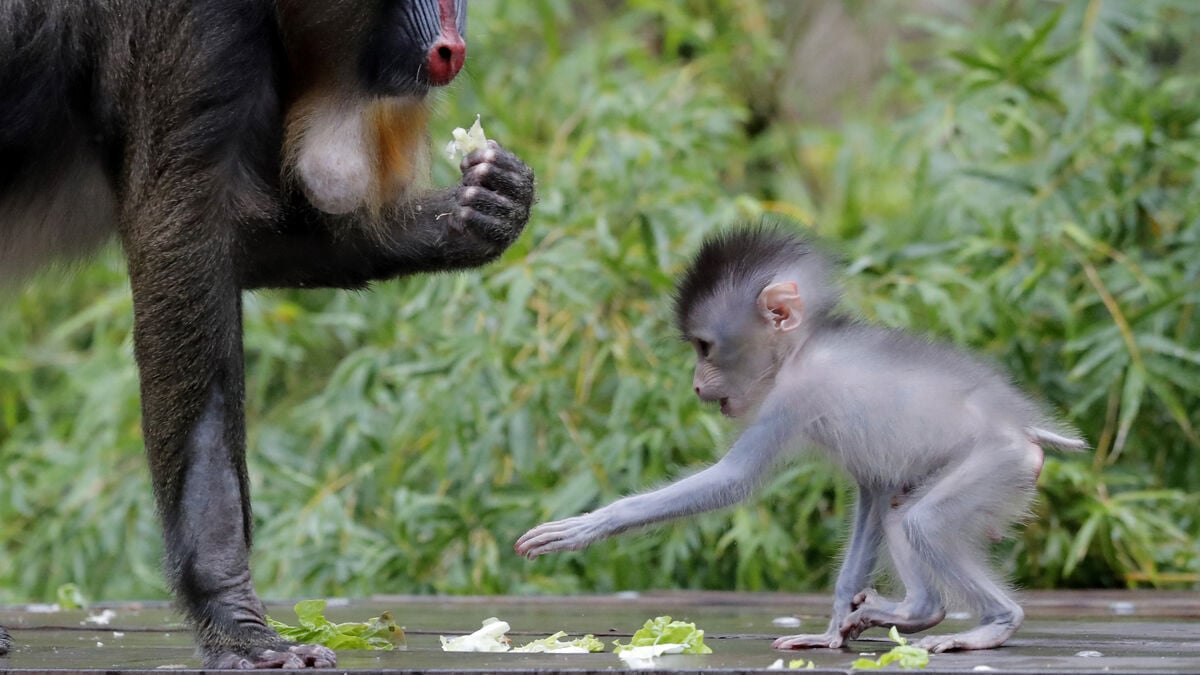
Conservation work helps keep vulnerable and endangered species alive and is an important part of zoo operations. But researchers from Switzerland, Germany and Denmark who analyzed 774 mammal populations in zoos in Europe and North America between 1970 and 2023 found that the animals are getting older and producing fewer young. This problem is also seen in Sweden.
"We are getting better and better at taking care of our animals and making them live longer. This problem was not seen so clearly 50-60 years ago," says Ellen Holm, zoologist at Kolmården.
Decreased sharply
Some examples of species where the age structure has changed drastically are Grevy's zebra, mandrill and fishing cat - species that are vulnerable or highly endangered in the wild.
Ellen Holm also sees that the coronavirus pandemic has played a role, along with the disease bluetongue, which has meant that zoos have not been able to exchange animals as much as before.
Many zoos are hesitant to let their animals reproduce because they don't know if they can move them. This helps keep older animals that don't reproduce to avoid having more individuals than they can handle.
They often still have great value for education and research, but if you instead keep individuals that have young, you also contribute to a long-term sustainable conservation population.
Natural behavior
Reproducing and having young is part of the animals' natural behavior and is important for them to thrive. At the same time, zoos have limited space. The solution the study advocates is to euthanize older individuals and animals that cannot be housed in other parks. Ellen Holm agrees.
It may sound strange to remove animals from endangered species, but perhaps we should be extra careful and prioritize animals that have the best genetics and can reproduce.
She emphasizes that euthanasia is never an easy decision to make and that it is always assessed on a case-by-case basis. Even older animals can serve a purpose.
For example, we have an older giraffe, but she is a very good mother, so we would like to keep her so that younger giraffes can learn. She is important so that the entire giraffe population in the future will have more mothers taking care of their calves.
The study looked at 774 mammal populations in Europe and North America from 1970 to 2023.
Of the 361 populations from North America and 413 from Europe that were included in the data in 1970, 14 and 3 percent, respectively, no longer existed by 2023.
Of the remaining populations, 40 percent of the North American and 63 percent of the European populations showed an increasing trend in the proportion of older individuals.
The number of actively reproducing females has declined sharply - by 49 percent in North American populations and 68 percent in European ones. In some cases, there are no longer any females capable of reproducing.
The study has been published in the scientific journal PNAS.