"Threads" opens on January 22, 2027, at the museum in Stockholm.
You won't be able to experience anything like this again. This is truly "once in a lifetime," says museum director Sanne Houby-Nielsen.
A web of signs
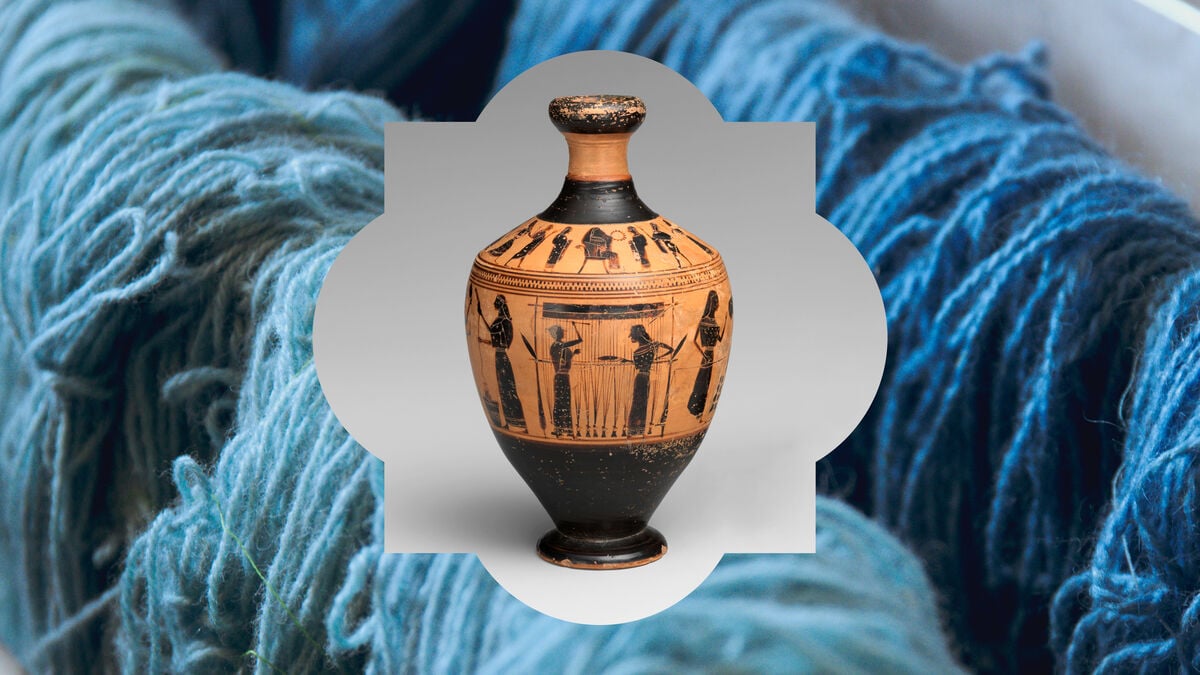
Highlights include a pair of objects from ancient Greece. One is an oil bottle that The Metropolitan Museum of Art in New York has agreed to lend to the Nordic Museum. This is the first time it has been shown in the Nordic countries.
The oil bottle shows paintings that depict the entire weaving process of the time. They are detailed and meticulous and show how girls take care of and wash the wool and spin it, says Sanne Houby-Nielsen.
The second object is a famous figure-painted drinking vessel, from 440 BC, on loan from the Chiusi Archaeological Museum in Italy. The drinking vessel depicts two well-known scenes from the Odyssey. One shows Penelope sitting at her loom in conversation with her son Telemachus. The second scene shows the moment when the disguised Odysseus is recognized by his nurse.
Redress for the girls
In addition to clothing, tools for textile production and fabrics, the exhibition, which is the Nordic Museum's largest since the exhibition "Nordbor" opened in 2024, includes photographs and newly produced films.
I want to emphasize that "Threads" is not a "cute" exhibition. It is dramatic. It is also a vindication for all the women who have been anonymous throughout history, and not least for the little girls who have stood at the loom. Now we are making their fates visible, says Sanne Houby-Nielsen.
The exhibition focuses on how textiles and weaving have united people for thousands of years. Textiles and how they are created have been vital and highly valued - symbolically, socially and economically.
Through "Threads", textiles and textile tools are brought together for the first time from the Nordic Museum and a number of other museums in the Nordic and Arctic regions. The exhibition also features world-famous Greek antiquities.
"Threads" also highlights how our rapid desire in a consumer society - with rampant consumption of low-value textiles - takes a toll on people, animals and nature.
Source: Nordic Museum.