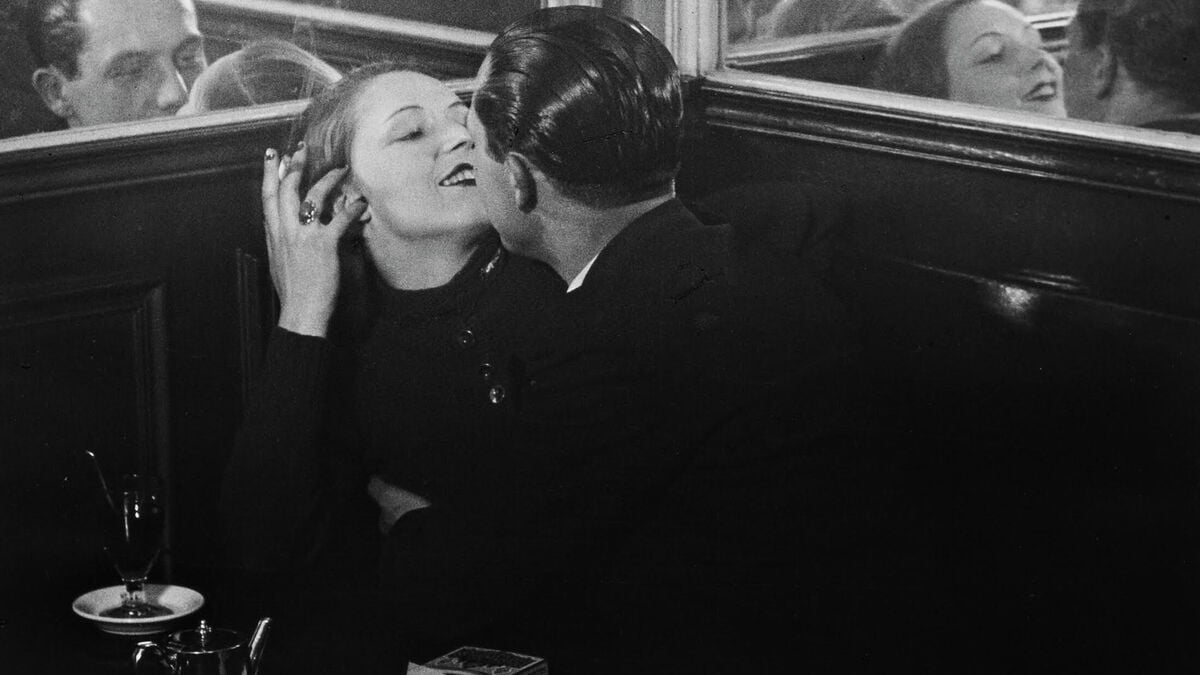
Paris was still lit by gas lanterns when Brassaï, probably in a coat and bow tie, walked at night with his large box camera along the Seine and Pont Neuf. The analog technology made the hazy light of the black-and-white photographs even softer.
These are simply wonderful images. I think the image of Paris, the Paris that you dream about and want to discover when you go there for the first or tenth time, is this, says Anna Tellgren, curator at Moderna Museet in Stockholm, which is now showing 160 of Brassaï's photographs.
Originally from Hungary, Brassaï was a fully trained artist when he came to Paris in 1924. He began taking photographs to support himself and built a darkroom in his apartment.
It also became a way for him to preserve what he experienced in Paris as a young man; the photographic medium could translate what he saw. These night images are magical.
Spy
“Albert the Great’s” petty thieves are immortalized. Likewise “Fat Claude,” or Violette Morris as she was actually called, a prominent female athlete who during the war became a spy for Nazi Germany and was killed by the French Resistance. But here is also a young, beautiful Salvador Dalí and Pablo Picasso when he had hair.
Brassaï took his most important pictures during the artistically expansive 1930s. During World War II, he chose to remain in his Paris apartment to protect the archive that would later become photographic history. By then, he had already had his breakthrough with the beautiful night scenes published in 1933 in the book “Paris de la nuit.”
The images from the lesbian bar Monocle, from transvestite balls, opium dens and brothels had to wait because of the stricter censorship of the post-war period. It was not until the 1970s that they reached a wider audience, when Brassaï published a new book in which he also wrote texts about his subjects.
Pimps
At Les Bals Musette he had photographed young Parisians in a harsh environment where pimps recruited new prostitutes.
He had friends who introduced him; not just anyone could step in, and it was not completely harmless, says Anna Tellgren.
But some think he aestheticizes the vulnerable.
I still think there is a kind of respect, and he never took photos in secret. But it's clear - he was the photographer and the one who made the decisions; many of these women were at a disadvantage, of course. But there is still a kind of pride in them.
Facts: Brassaï
Lived: 1899–1984.
Background: Born Gyula Halász in Brassó, Transylvania, then Hungary. Trained as an artist in Budapest and Berlin, moved to Paris at the age of 25. Never returned to Hungary. Took the artist's name Brassaï after his birthplace.
The exhibition at Moderna Museet in Stockholm is called “Brassaï – Paris’s Secret Signs” and will be on display from March 28 to October 4. It also includes Brassaï’s images of Paris graffiti.