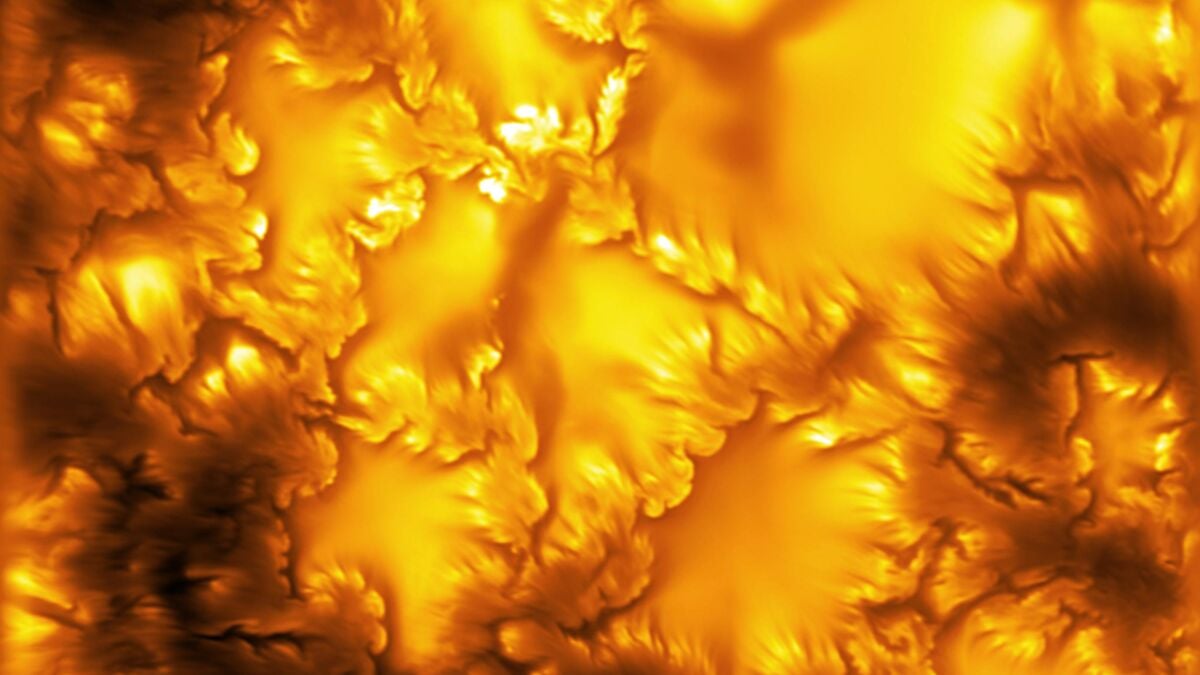
The world's largest solar telescope is located on the Hawaiian island of Maui, where it is hoped that new images will reveal secrets about the star. A first breakthrough is presented in the journal Nature, where an international team of researchers describes wave-like movements - small vortices - in the sun's photosphere. By comparing models and images, the researchers have been able to see how the vortices interact with each other.
This so-called Kelvin-Helmholtz instability may be one of the reasons why the sun's outer atmosphere becomes so hot, with links to solar flares that can affect satellites and power grids on Earth.