
Already in 2022, the first major step was taken in the handling of complex DNA traces from criminal investigations, mainly so-called mixed DNA, where several people have left traces of varying strengths. NFC then gained access to new software, DNAxs, developed in the Netherlands.
Before that, it was basically impossible to identify individuals from mixed DNA, as the complex calculations required could not be carried out by a person.
Unfortunately, in many cases we could not use the results at all, says Staffan Jansson, former head of forensics at NFC and now a group manager.
“Game changer”
However, the introduction of DNAxs, which is based on an advanced statistical model, made it possible to identify up to four people, and in some cases five, from a mixed DNA sample. But to get a match, investigators needed named individuals to compare against.
Even then, it was described as a “game changer”. Suddenly we could use at least twice as many of our results, says Staffan Jansson.
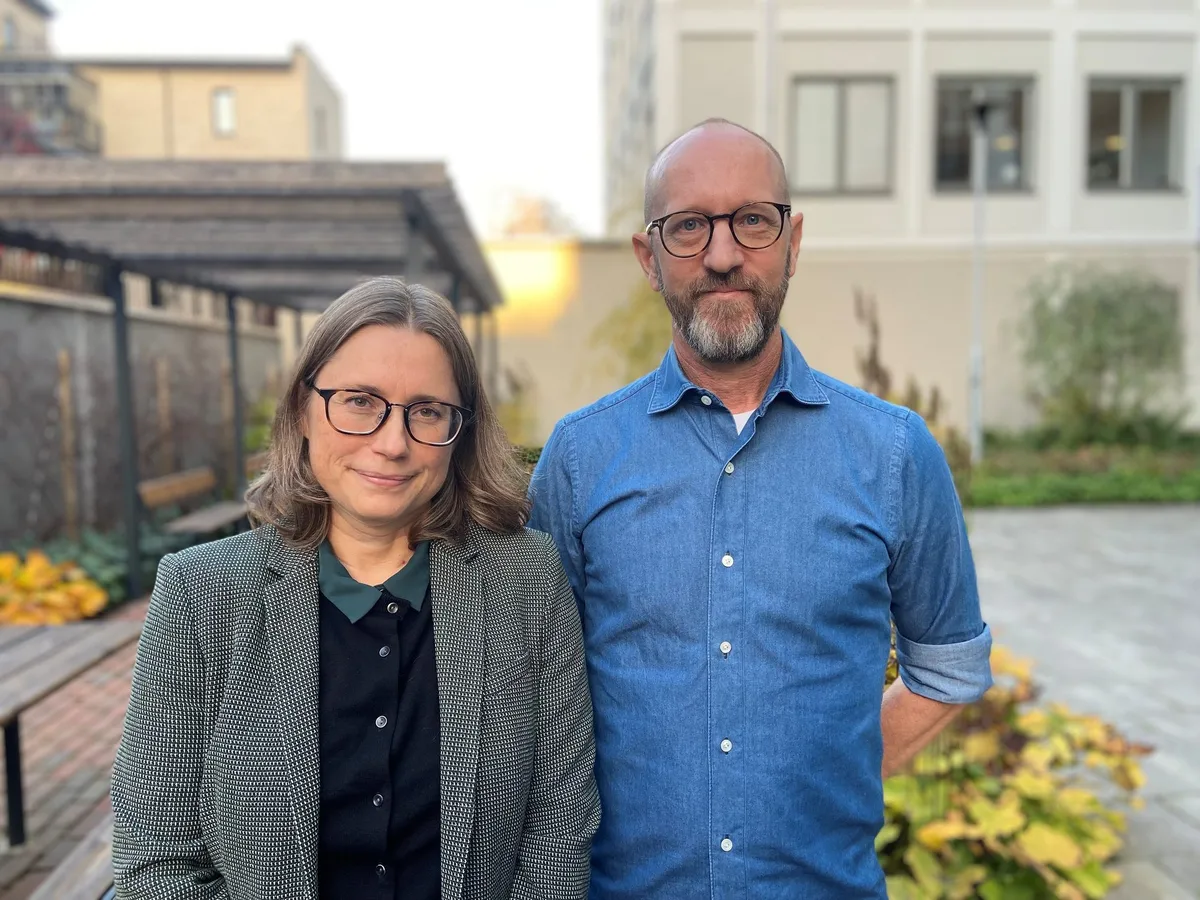
Malin Sanga and Staffan Jansson at the National Forensic Center (NFC).
In May last year, the next major step was taken, when NFC gained access to a new module within DNAxs called Probrank.
Previously, it was only possible to establish whether traces from people already identified in an investigation were present in a mixed DNA sample. Now NFC can compare the results against the entire police DNA register.
Now we can largely “fish out” people in the DNA register based on complex DNA traces, says Malin Sanga, who has been project manager for DNAxs at NFC.
This means we can find people the investigation does not already know about and point investigators in the right direction, which was not possible before, she adds.
Great effect
The technology is used for all crimes, regardless of classification. Since Probrank was introduced, NFC has delivered just over 5,800 unique personal matches to investigations, and the number of search hits has increased by 150 percent.
It is not possible to say exactly what all the matches have led to in terms of prosecutions and convictions. But a large number of suspects who probably would not have been found without the new technology have been identified.
What we see is that our prisons are overcrowded. Of course, DNAxs and Probrank are not the only factors behind this, but our assessment is that they have had a very significant effect, says Staffan Jansson.







What do you think?