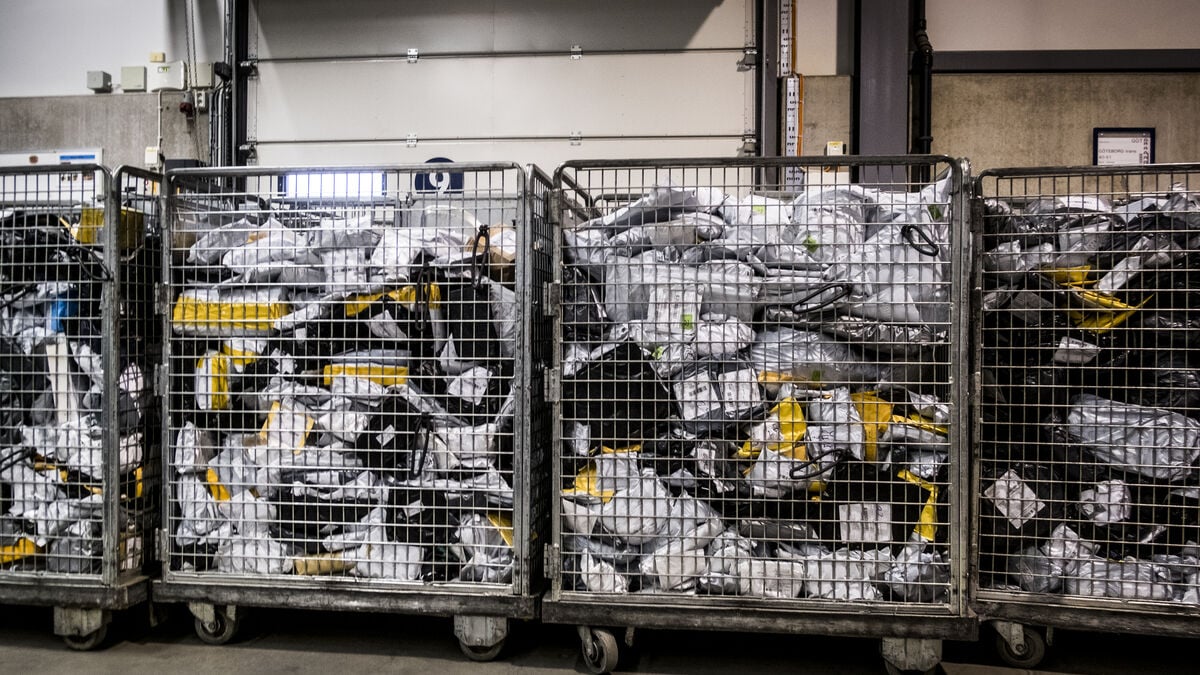
The introduction of the tariff is intended to counter the flow of cheap imported goods from companies such as Shein and Temu and the fee will be introduced from July 1, 2026.
The decision comes a month after the EU abolished customs exemption for packages worth less than 150 euros (just over 1,600 kronor) that are imported directly to consumers in the 27 member states, in many cases via Chinese platforms.
The tariff exemption rules do not come into effect until 2028, but France has pushed to introduce the temporary tariff in anticipation of that.
“Worrying”
Maria Wiezell, a consumer expert at the independent organization Consumers of Sweden, says that it will mean higher prices for goods, but she does not see it as a major consumer problem.
"There's a lot of garbage. There's a lot of unapproved products, non-CE marked or products with dangerous chemicals," she says.
Then of course it can be worrying for those who have very little money and who feel that this is the only place they can shop.
Martin Kits, head of business policy and opinion formation at Swedish Trade, sees customs as "a necessary evil."
"We are not fundamentally friends with customs, but in the current situation it is unfortunately absolutely necessary. We would have liked to have seen the level be higher, but a quick decision is better than no decision at all," he says.
Want to see a permanent solution
He considers the problem of importing goods that violate EU rules to be acute and Swedish Trade wants to see a permanent solution.
The basic problem is that EU legislation has made it possible for unscrupulous players to establish themselves. You are welcome to compete in the European market, but then it must be with products that comply with the applicable regulations, says Martin Kits.
Last year, 4.6 billion such small packages, targeted by the new tariff, entered the EU. 91 percent of these packages originated in China. A figure the EU expects to rise.
European retailers claim they face unfair competition from foreign platforms, such as AliExpress, Shein and Temu, which they say often do not comply with the EU's strict product regulations.