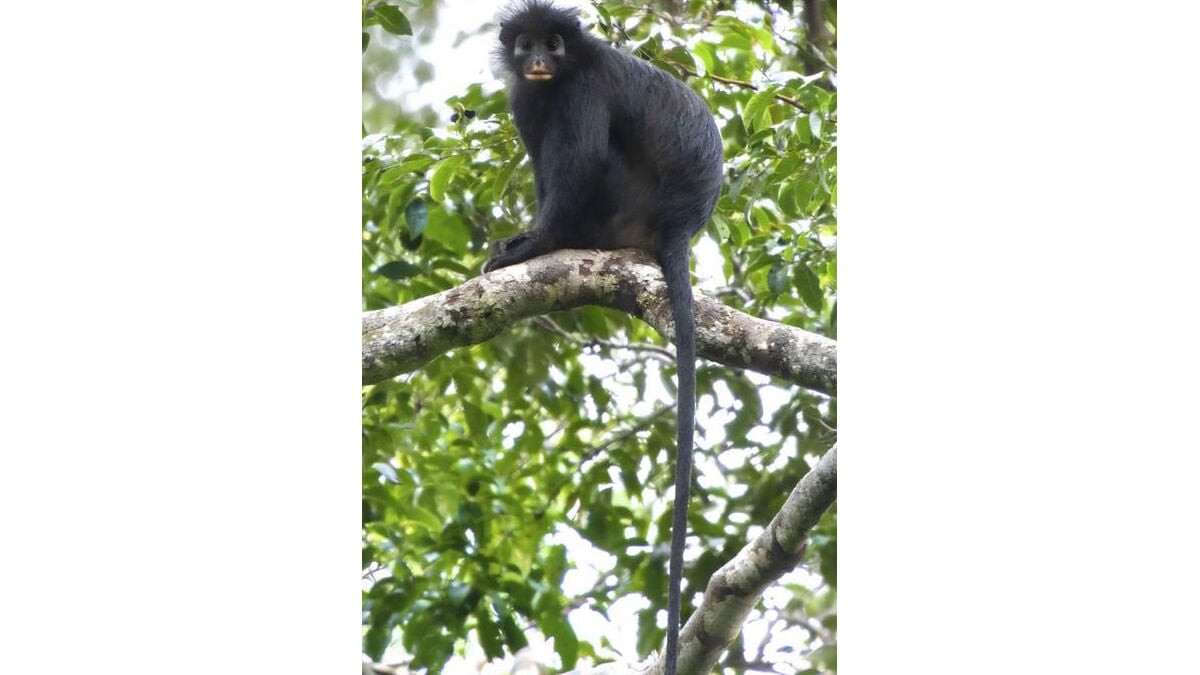
It is not particularly unusual to discover new species of mammals, but these are usually shrews, bats, rodents or other small animals.
A new monkey is far rarer - in Africa, only five new monkeys have been described in the last 75 years.
Photo synthesis
The new species, named Colobus congoensis, has largely escaped notice due to its restricted range. It appears to be found only in the area between the Lomami and Lualaba rivers in the east-central part of the country. But back in 2008, a photograph of the species mystified scientists.
However, it was partially obscured in the image, and it was not until ten years later that better images were obtained, leading to more intensive investigations. Now, genetic, anatomical and acoustic analyses have confirmed that it is a distinct species that separated from other species within the genus four to five million years ago.
The researchers, led by biologist Kate Detwiler at Florida Atlantic University in the USA, publish their findings in the scientific journal PLOS One.
May be threatened
They note that Colobus congoensis is slightly smaller than other species in the genus, weighing about seven kilograms, compared with weights of 8-13 kilograms in other colobus monkeys.
It also has unique vocalizations, including a deep roar that is similar to the calls of other Colobus species but with a distinct acoustic structure.
Scientists warn that the species may be endangered. Its range is small, although a large part is formally protected in Lomami National Park. The biggest threat is hunting for bushmeat; in the region, many primates are killed for food.