The patience of Swedes has been severely tested in recent years as food prices have skyrocketed. At the same time, producers have been squeezed between large food chains that are pushing down prices and rising costs.
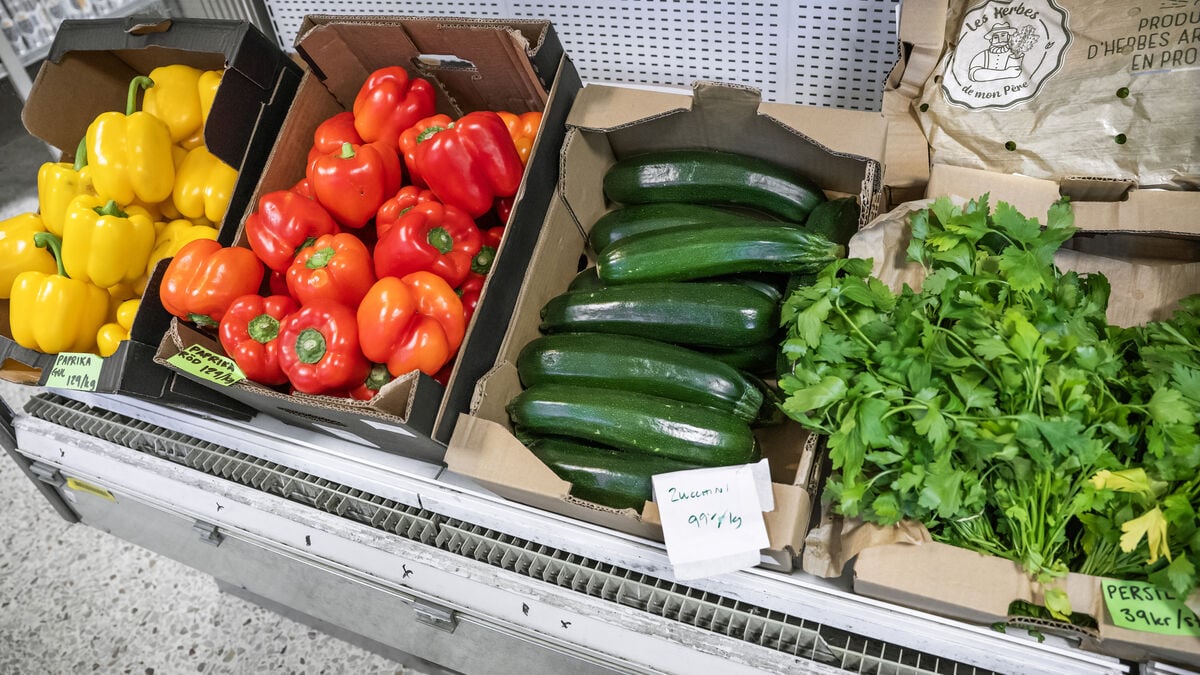
It is clear that there is great dissatisfaction among consumers. But also among producers. That is how Mylla started, says Jens Thulin, CEO and founder of Mylla, a digital marketplace where more than 125 producers sell fresh food directly to consumers' doorsteps without intermediaries.
He explains that farmers and small food entrepreneurs have difficulty getting into the big chains, and once they do, they are put under great pressure. The chains' own brands in particular mean that anyone who has grown produce, baked goods or raised animals is squeezed. The chains' power means that there is little money left for the producer, according to Thulin.
But Mylla is growing rapidly now, he says. In 2025, its turnover increased from just over SEK 11 million to SEK 24 million.
Consumer power
Consumer power is starting to shine again, says Jens Thulin.
There are also so-called Reko-rings around the country, where customers can buy directly from producers. Reko-rings began appearing in 2016, and have since spread across the country.
In Stockholm, baker, chef and author Sébastien Boudet is opening a new grocery store, Livs. The purchases are made directly from farmers and the entire store will consist of only organic products.
"There are so many middlemen. Only 9 to 10 percent of what the customer pays goes to the producer," says Sébastien Boudet.
He sees himself as a food activist and talks about building a completely new model, different from the wholesaler-distributor-store system that, for example, ICA and Coop have created.
Building Livs is building an alternative. Sweden needs a different model, he says.
The question is whether the established chains will become fearful in the face of new competition.
No, all diversity is good. What is good for customers is good for the industry, says Per Bygdeson, CEO of Livsmedelshandlarna.
Price is most important
He explains that during the inflationary years customers have been very focused on price, and grocers' margins are under severe pressure.
The overall profit level for the entire food retail industry over a year is on par with a major bank's over a quarter.
Regarding producers' criticism of the chains' own brands, he emphasizes that cheap private-label brands are important for the stores' competitiveness.
Only a small portion of private-label products come from small Swedish producers; the majority come from very large producers.
Facts: New paths for food
Several different new concepts have emerged in recent years.
Reko-rings have been around for almost ten years, and mean that the farmer can take orders digitally and then deliver at a pre-determined time and place.
Mylla started in southern Sweden, and allows producers to join for a fixed monthly fee. Mylla handles marketing, sales and distribution to customers' homes. Approximately 130 producers are affiliated. Mylla had a turnover of 24 million SEK in 2025 and is aiming for around 40 million SEK in 2026.
Sébastien Boudet plans to open more Livs stores. The entire range comes directly from producers to the store and is organic.
Some operators only sell their food online, without any physical stores, such as Matsmart, Mathem and Etnomat.
In many places where there are no grocery stores, unmanned stores have appeared. For example, the Never Closed chain has 30 stores now, but plans to grow to 65 through acquisitions.