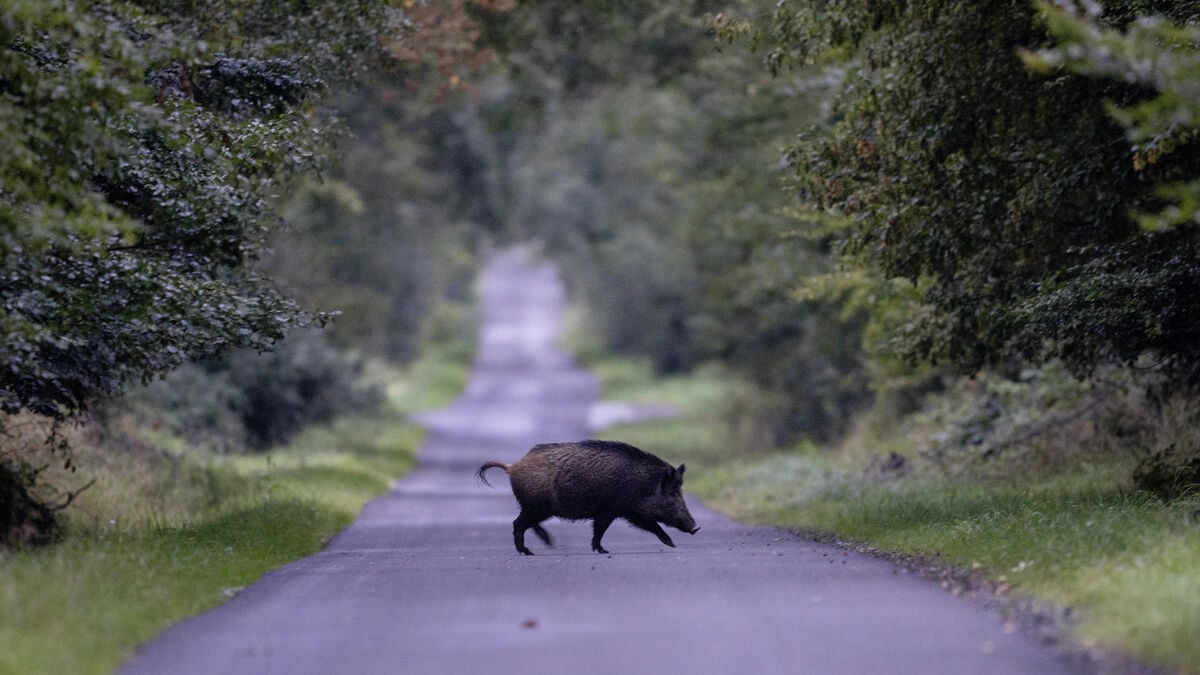
The Finnish Food Authority reported on July 30 that the infection had been detected in three wild boar piglets just a few kilometres from the Russian border.
The Swedish Veterinary Institute (SVA) has now carried out a rapid risk assessment of whether the infection could spread to Sweden. The assessment is that the cases in Finland do not change the current risk level.
It's probably wild boar that came from Russia. In Finland they have very few wild boar, so there can never be a major outbreak in Finland, Karl Ståhl says.
It can take several months before the infection is detected. In 2023, Sweden was infected in the Fagersta area.
Infection was confirmed on September 6, 2023, and the area was declared free of infection in September of the following year.
We do not know how the infection entered Sweden. But it is likely that the infection came with some type of non-heat-treated pork product that ended up in the environment, for example in a landfill or in a forest where wild boars ate it, says Karl Ståhl.
The risk of the infection this time coming in via food from Finland is assessed as low. The country applies EU regulations to prevent this type of infection from spreading via food.
Trade in food from an infected area is stopped.
The countries within the EU are transparent about how they control and combat infections of this type. Therefore, meat from infected animals in the EU can never enter the food chain, says Karl Ståhl.
Facts: African swine fever
After cases of African swine fever have been discovered in Finland, the Swedish Veterinary Institute (SVA) assesses that the introduction of the infection to wild boars in Sweden is low (rare, but occurs) and the risk level for introduction to domestic pigs is assessed as very low (very unusual, but cannot be ruled out).
SVA writes in a press release that the authority is monitoring the situation and, if necessary, makes a new risk assessment.
The virus infects wild boars and pigs with a serious and often fatal disease. There is no vaccine or treatment.
The disease does not affect humans.
Sweden experienced its first outbreak of African swine fever in the fall of 2023. Infected wild boars were found in Fagersta and Norberg municipalities in Västmanland.
Sweden was officially declared free of the disease in September 2024.
The cost of the outbreak in Sweden has been estimated at 96 million SEK.