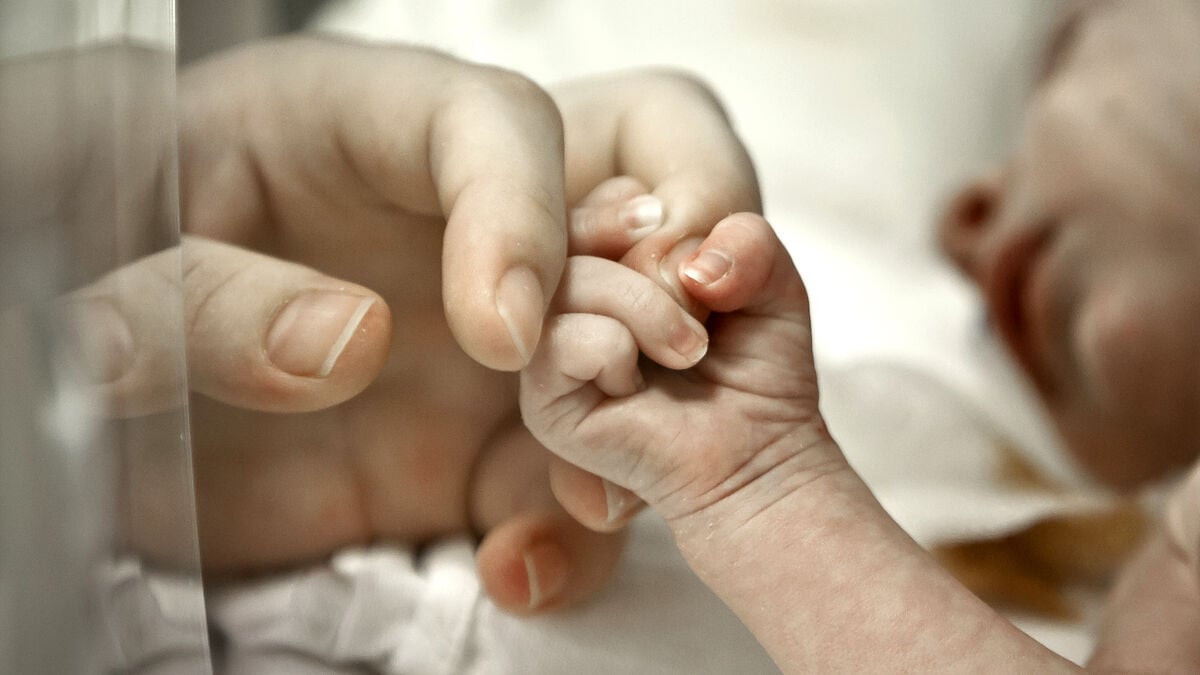
In Sweden, approximately 300 children are born per year before week 28 of pregnancy. Every day and week earlier brings an increased risk of a number of serious illnesses and disabilities – if the child survives.
The Swedish Council for Medical Ethics (Smer) has issued a new statement with recommendations for both healthcare providers and parents. Anders Castor, a member of Smer and pediatrician, says that the trade-offs have been difficult.
It wasn't that long ago that all these children died.
Gray zone
Advances in healthcare have meant that more and more babies born at 28 weeks or earlier are surviving. But there remains a gray area for those born at 22–23 weeks, around 50 per year in Sweden.
In essence, Smer's new advice builds on existing "consensus documents" from 2024. However, when it comes to the gray area, the advice has been clarified:
For babies born at the beginning of week 22, “palliative care without a focus on saving or prolonging life” is recommended. For those born at the end of week 23, the recommendation is the opposite.
At the same time, the weeks are not everything.
The will of the parents should also be taken into very great consideration. Do they have a strong, clear wish? Some will not want to take the risk of their child suffering, others will weigh it differently. Both positions are just as morally acceptable.
Sharp border
Smer also proposes in its statement that the government should instruct the National Board of Health and Welfare to develop national guidelines in this area.
We understand that there is a desire for a sharp border.
But then you remove individual assessment. And it is always an individual assessment that should be made, both by the healthcare provider and by the parents.
Although healthcare has developed in recent decades and given more premature babies a chance at life, Castor believes that a limit is approaching.
Before week 21, the lungs are so underdeveloped that it will be difficult to survive.
Today, the one-year survival rate for live births in the 22nd week of pregnancy is approximately 45 percent.
For children born in week 23, the figure rises to 65 percent. For children born in week 24, the figure is 70 percent.
Children born in these weeks also have an increased risk of somatic, neuropsychiatric and developmental neurological conditions as well as disabilities.
For example, 75 percent of children born at 22 or 23 weeks have one or more developmental neurological diagnoses such as cerebral palsy, language disorder, hearing loss or deafness, visual impairment or blindness.
Source: State Medical Ethics Council