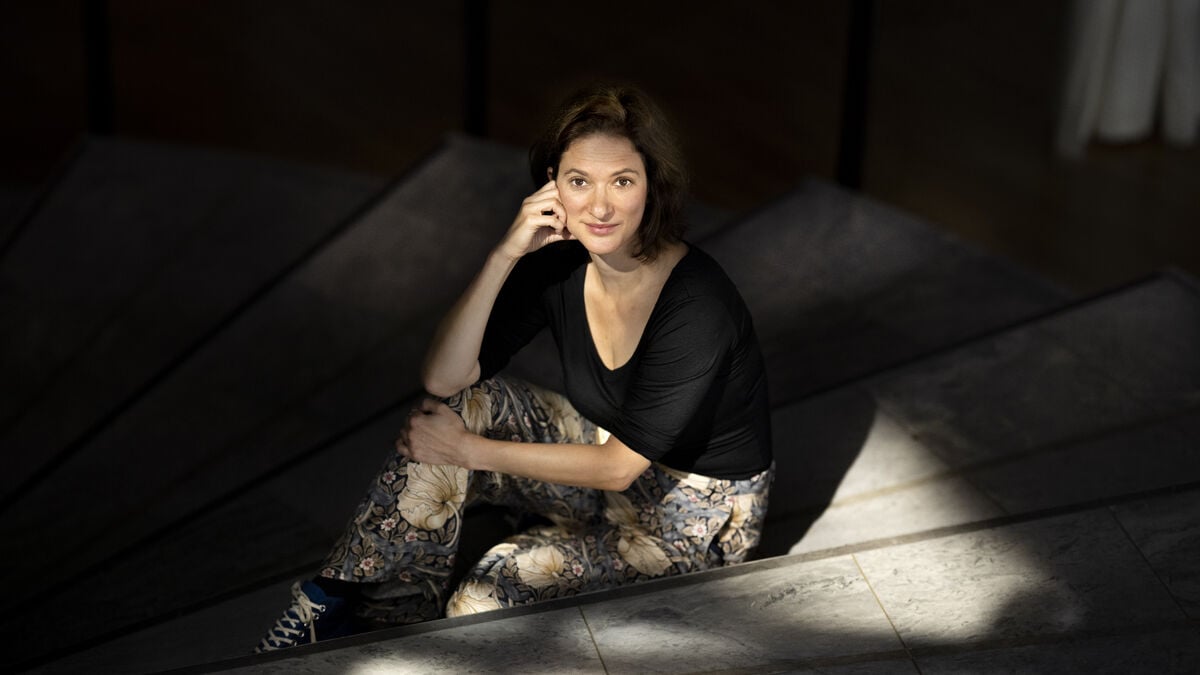
As a cultural journalist and reviewer, Lisa Boda was constantly surrounded by them. Women, often with clearly visible earrings and distinctive glasses, often over 50. The ones who fill theatre halls and library reservation lists.
In a time when so many people want to say things and reach out, I started thinking about those who actually take the time to receive. They are the cultural aunts.
She wanted to find out who the culture aunt is. And perhaps most importantly - is she on the verge of extinction?
Is omnivorous
Lisa Boda quickly realized that there was not much research or statistics on cultural habits among older people, especially not broken down by gender. The Swedish Agency for Cultural Analysis had to start completely new types of searches for her sake.
The numbers are clear. Women over 50 go to the theatre, read and watch dance to a significantly greater extent than their male peers. But it is a group that is not only dedicated to fine culture. In general, culture aunts see themselves as anything but elitist. “Culture aunts go for everything”, as one person in the book says. Mothers are also the ones who have the greatest influence on children’s cultural habits.
Working on the book "They Call Us Cultural Aunts" has taken Lisa Boda on literary cruises and home to enthusiasts in small communities.
Above all, it has become clear to me how extremely dependent the cultural offerings in the country are on these driven women.
Want to give back
The book is a declaration of love for the culture aunt, but it also doesn't hide the fact that there are those who are demanding. Overall, however, Lisa Boda thinks that the bearers of culture receive too little positive attention.
They are often described as unwanted, as if it is a bad thing that “only culture buffs” come to an event. But if they stop showing up, who will come?
What about the next generation - is a new generation of cultural carriers ready? Lisa Boda feels hesitant.
Many of those I met express a sense of civic duty. They feel that they have received a lot from society and want to give back with something they know and enjoy - culture.
What I might be a little worried about is that we live in a time with very strong individualism and brand thinking - “what's in it for me?” The question is, will the next generation want to give back to the same extent?
At the same time, she adds, both culture and its traditions will take on new expressions.
Since one of the most distinctive traits of the cultural aunt is being interested in and keeping up with the times, I am hopeful after all.
While working on the book, Lisa Boda has come across several pieces of information that were unexpected to her.
Mothers are crucial: For example, it has been known that the parents' level of education is crucial for how active children become in culture. But it turned out that only the mothers' education plays a role. The influence of fathers is statistically negligible.
In the dictionary: In the press archive, the term "kulturtanten" appears for the first time in 1996 as a signature on a submission. In 2015, it was included in the Swedish Academy's dictionary.
In Norway, the group is referred to as "culture old women" and in France as "culture vultures".
Theatre enthusiasts: Theatre is the cultural form where women are most overrepresented. In 2025, 46 percent of all women had seen at least one performance, while the corresponding figure for men was 32 percent.
The review date for "They Call Us Cultural Aunts" is September 9.