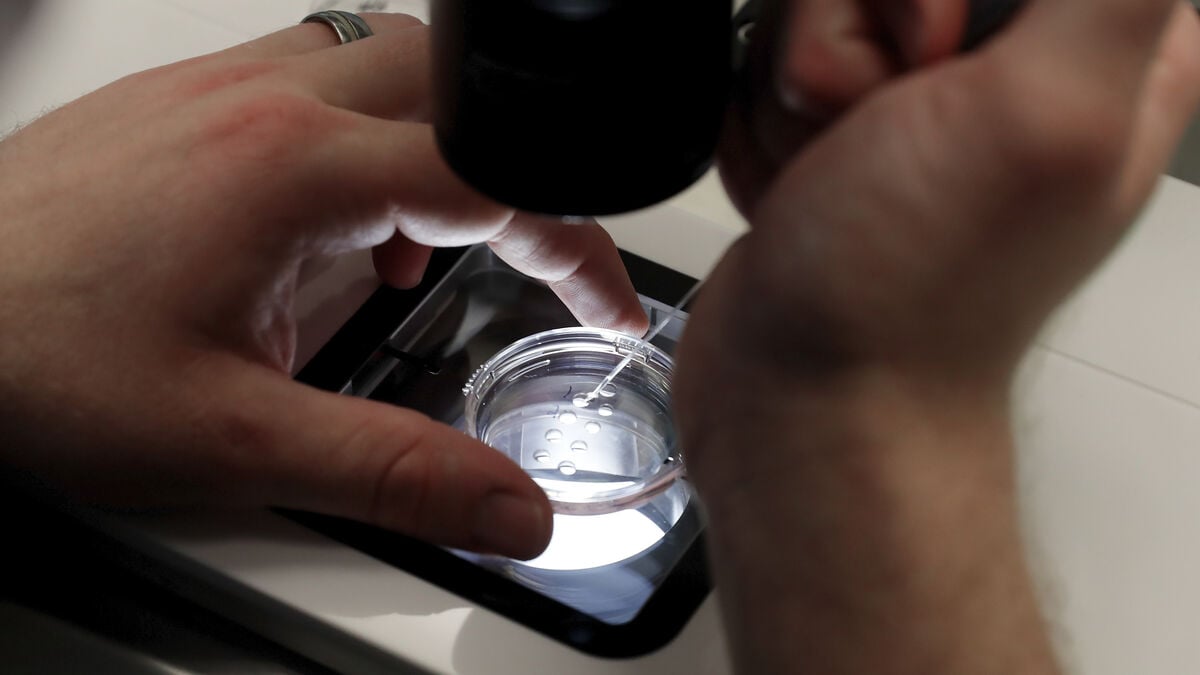
Endometrial scratching, plasma injections and acupuncture. Anyone looking for ways to increase their chances of getting pregnant through IVF will quickly find a vast selection. Treatments and techniques with complicated medical names and abbreviations such as PICSI and PGT-A are sold as ways to optimise the conditions.
But few of these add-ons increase the chances of conceiving a baby, according to a large review of studies published in the Lancet Obstetrics, Gynaecology, & Women's Health.
Bad control
But we don't know how common the use of add-ons is in Sweden because clinics do not consistently report it to our quality register, says Christina Bergh, senior physician in obstetrics and gynaecology and professor emerita at the University of Gothenburg.
Abroad, additional treatments, “add-ons,” are increasingly common, and Swedish patients are also turning to other countries for help.
Christina Bergh believes there are several explanations for why clinics offer different methods without proper scientific support. One is ignorance, that those offering the treatments do not critically review the existing research and that many studies are also of poor quality. It is difficult to get a good overview of all the methods that are marketed.
But a big reason is commercial, there's a lot of money to be made, she says.
Freeze eggs
According to the study, there are three methods that may have some effect. They are embryo glue - allowing the embryo to grow in a special liquid that is said to increase the chance of it attaching, endometrial scratching, where an irritation is made of the uterine lining to make it more receptive to the embryo, and PICSI, a technique where sperm are selected based on quality. But for none of these was the evidence particularly robust. And only endometrial scratching showed some effect on the birth rate.
Christina Bergh still wants to give hope to those trying to get pregnant with IVF.
What increases the chances is to make another attempt, there are no sub-methods.
What you can also do is freeze your eggs before you turn 40.
If you are 32 and think you want to have children later, it might be a good idea. Closer to 40, both the quantity and quality of eggs deteriorate, she says.
Facts: IVF supplements
The study found no effect on fertility, or unclear results, due to limited data and study quality for the following IVF supplements:
Acupuncture – suggested to increase blood flow to the ovaries and uterus as well as reduce stress.
Corticosteroids – reduce inflammation and inhibit immune system activity.
Endometrial receptivity test (for example, ERA test) – biopsy of the uterine lining to assess when the uterus is most receptive to the embryo.
Intralipid infusion – fluid containing fats that is given into the blood. Marketed as having a positive effect on the immune system.
Intraovarian injection of platelet-rich plasma (PRP) – Injection of plasma into the ovaries. Suggested to increase blood flow and improve egg quality.
Intrauterine infusion of platelet-rich plasma (PRP) – introduction of plasma into the uterus. Suggested to increase the chances of embryo attachment.
Preimplantation genetic testing for aneuploidy (PGT-A) – screening test to check if the embryos have the expected number of chromosomes.
The review found weak support for some benefit in three IVF supplements:
Embryo Glue – an embryo transfer medium containing hyaluronic acid, which is thought to be important for embryo attachment. The evidence review showed that it may possibly increase the likelihood of pregnancy but not live births.
Endometrial scratching – a procedure that is done to scrape or irritate the lining of the uterus. The review study shows that this may slightly increase the likelihood of pregnancy and live birth.
Physiological intracytoplasmic sperm injection (PICSI) – used to select sperm. There is weak evidence that this may reduce the risk of miscarriage but no effect on birth.
Source: Study and Christina Bergh