Every year, around 22,000 people in Sweden suffer a heart attack. Around 17,300 of them survive and need to take medication to reduce the risk of another heart attack.
This refers to lipid-lowering, blood pressure-lowering and blood-thinning medications.
But a study, based on data from the Swedish registry Swedeheart, shows that more than half of patients stop taking their medications after a while.
May be felt unnecessary
Patients who stopped their drug treatment within the first year had up to twice the risk of dying over the following three years compared with patients who continued.
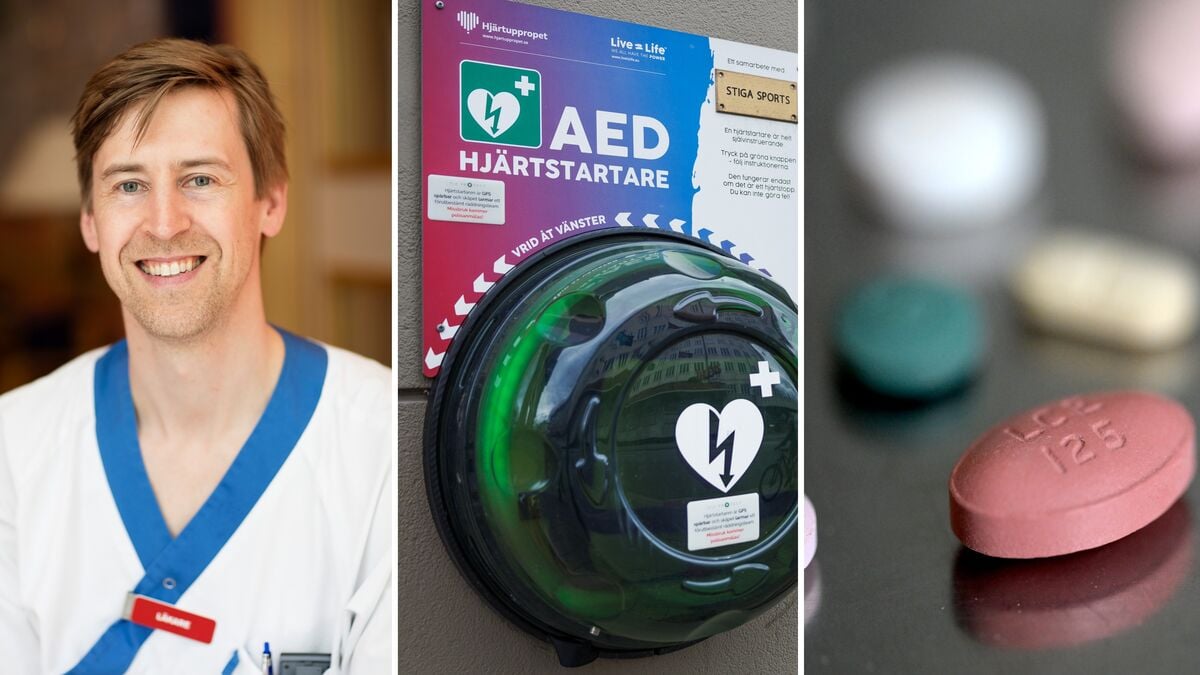
Quitting can be due to many different things, you may not feel sick anymore, you may feel the medications are unnecessary, or they cause side effects, says Emil Hagström, senior physician at the Academic Hospital and one of the researchers behind the study.
One challenge is that most patients are moved from specialized cardiac care to primary care one year after the infarction. In the transition, there is a risk that information is lost and that follow-up of, for example, blood lipids and medications becomes poorer.
We don't know why people stop taking their medications, but the important thing is that they themselves understand the importance of the treatment, says Emil Hagström.
Checking target values
He says that healthcare is working to ensure that patients know their own target values for things like blood pressure and blood lipids.
It is not only high-risk patients who smoke or have diabetes who need to continue treatment, it applies to anyone who has had a heart attack.
Lifestyle habits are also an important part of treatment. Quitting smoking, being physically active and eating healthily can reduce the risk of another heart attack.
Since it is an observational study, it is not possible to say for sure that it is the lack of treatment that causes the increased mortality. The results are nevertheless worrying, according to Emil Hagström.
Large clinical studies have shown that these drugs reduce the risk of another heart attack and death.
The study has been published in the European Journal of Preventive Cardiology and the research is partly funded by the Swedish Heart and Lung Foundation.
After a heart attack, treatment with several medications is needed. Here are some common ones:
Antiplatelet agents reduce the risk of new clots.
Beta blockers make the heart work more calmly and efficiently.
Statins and ezetimibe lower blood lipids and reduce the risk of the narrowing becoming more frequent or more severe.
ACE inhibitors dilate blood vessels and relieve the heart in the long term.
Long-acting nitroglycerin dilates blood vessels throughout the day so you can be active.
Short-acting nitroglycerin dilates blood vessels immediately if you experience symptoms.
You may need some or all of the medicines on the list. You may also need other medicines. This depends on how you feel and whether you have other illnesses.
It is common to need to continue taking at least some of the medications for the rest of your life.
Source: 1177