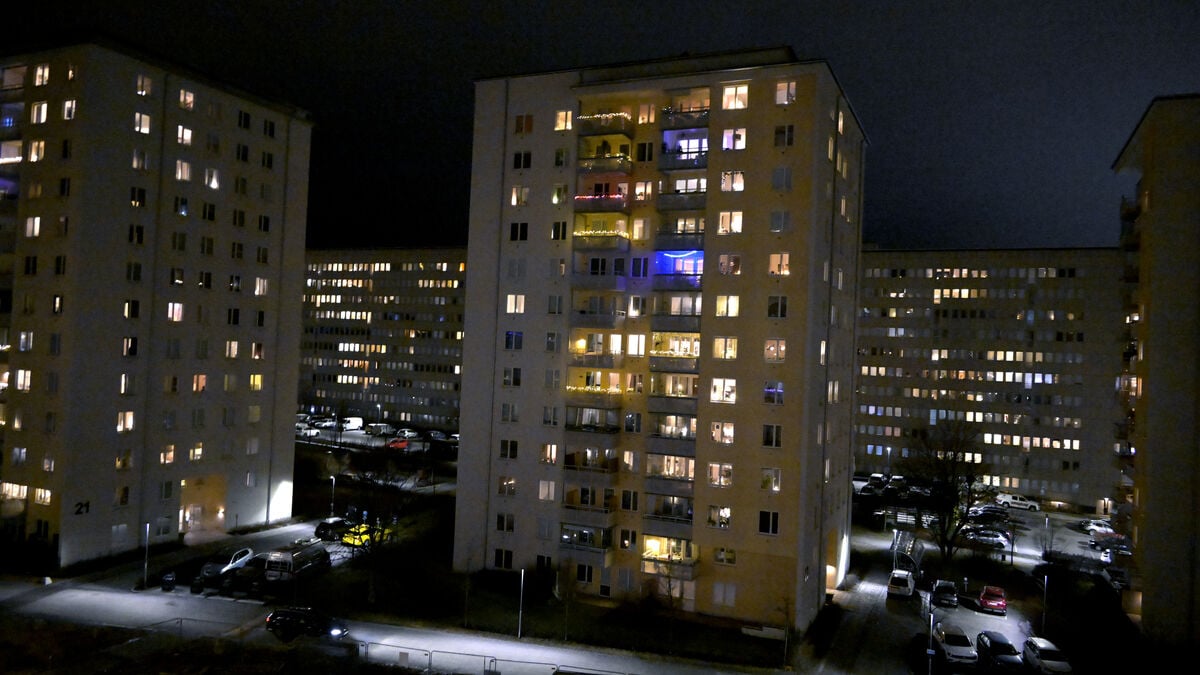
Last year, 3,330 people were evicted by the Swedish Enforcement Authority. This is an increase of nine percent compared to the year before, more than in any year since 2005.
In nine out of ten cases they cannot pay the rent.
"Then the process has progressed very far and people have often lived with small margins for a long time," says Reza Baars, head of unit at the Swedish Enforcement Authority.
Last year, Swedes' debt also reached record levels.
In economically difficult times, the number of people in debt and the amount of debt increase, and thus we also see an increase in the number of evictions.
“Very vulnerable situation”
A total of 824 children were affected by evictions last year. This is the highest number since Vision Zero was introduced in 2008. No child ends up on the streets, but an eviction is still serious, according to Reza Baars.
"It's their home, everyday life and security. Children who are affected by eviction are in a very vulnerable situation," says Reza Baars.
Eskilstuna is a municipality where the number of evictions increased last year, despite three people working full-time to prevent them. If the municipality finds out that someone is at risk, a member of the group goes to their home.
"Usually, it's not just anyone who gets into arrears with rent and gets evicted. Rather, it's something that has happened in life that means that you are currently unable to pay your rent," says Linda Göransson at the social services department.
They may have lost their job, suffered from substance abuse or mental illness. Once the municipality has made contact, the problems are mapped out. The employees can contact the landlord, help contact relatives or apply for income support.
Other help may be housing support, or the municipality being the first-choice contract provider.
Coming too late
Göransson wishes that landlords would give notice the first time a rent is missed. Perhaps it would be possible to relocate the tenant to a cheaper apartment.
Many times it's just that we get the information too late. It's like it's over.
The Swedish Enforcement Authority is tasked with working with municipalities and landlords to prevent children from being evicted. Despite this, the numbers are going in the wrong direction. However, Reza Baars points out that without the efforts, things would have been even worse, and in Eskilstuna they are on the same track:
"We have done a great job for quite a few years. If we hadn't had our eviction prevention workers, the numbers would have been significantly worse," says Göransson.
Facts: Children and evictions
In 2008, the then coalition government introduced Vision Zero against child evictions. In the same year, the Swedish Enforcement Authority began keeping statistics.
After that, the number decreased steadily - from 716 to 387 per year. But in 2017, the trend was broken and in 2025 the number was 824, the highest since statistics began and 16 percent more than in 2024.
Being affected by eviction means that the child is either registered at the address or had a parent who was.