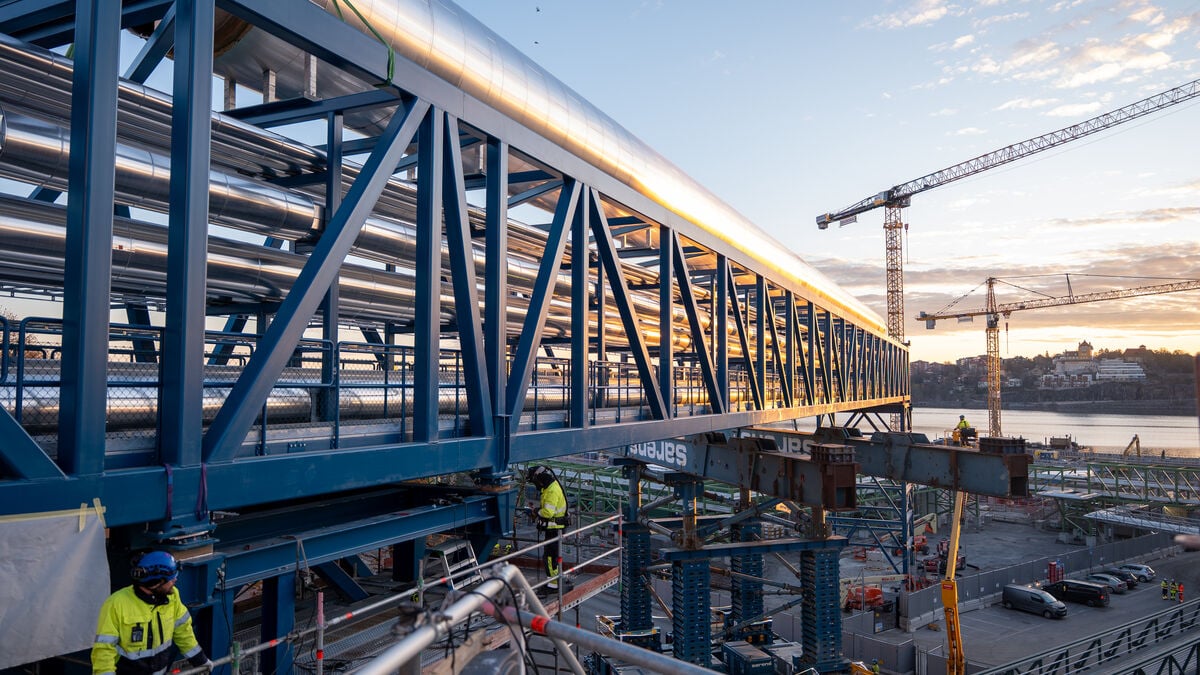
A 92-meter-long, 300-ton tubular bridge is being built in Värtahamnen, Stockholm. Here, carbon dioxide from the combined heat and power plant will be transported in Sweden's first large-scale capture and storage, known as CCS. Of the 800,000 tons that will be collected annually, 500,000 will be purchased by Microsoft in the form of carbon dioxide credits.
The American tech giant is by far the largest customer in the global market, and has so far purchased 79 percent of all credits, according to CDR.fyi, which follows the industry. According to data from Heatmap, which was confirmed by Bloomberg and The New York Times, Microsoft employees have now informed some projects that they are pausing future purchases.
Signals like this have two effects. One is that it makes it more likely that already planned projects will fail, but it also discourages investors and project planners from new ventures, says engineering professor Jessica Jewell at Chalmers.
Based on volunteerism
Today, the concept is based on voluntary agreements, with companies buying negative carbon emissions to offset their own. Microsoft's $11.9 billion deal essentially carries the entire industry on its shoulders.
"If there is a dominant player, it can really drive investment. But if the one that is now backing off, it really has a strong effect on the market," says Jewell.
Her research already indicated in 2024 that the scaling up of carbon dioxide capture is going too slowly to reach the goals of the Paris Agreement. Since then, several high-profile projects have failed, slowed down or been postponed.
If anything, it's worse now, there hasn't been any major shift in the industry.
Needs adjustment
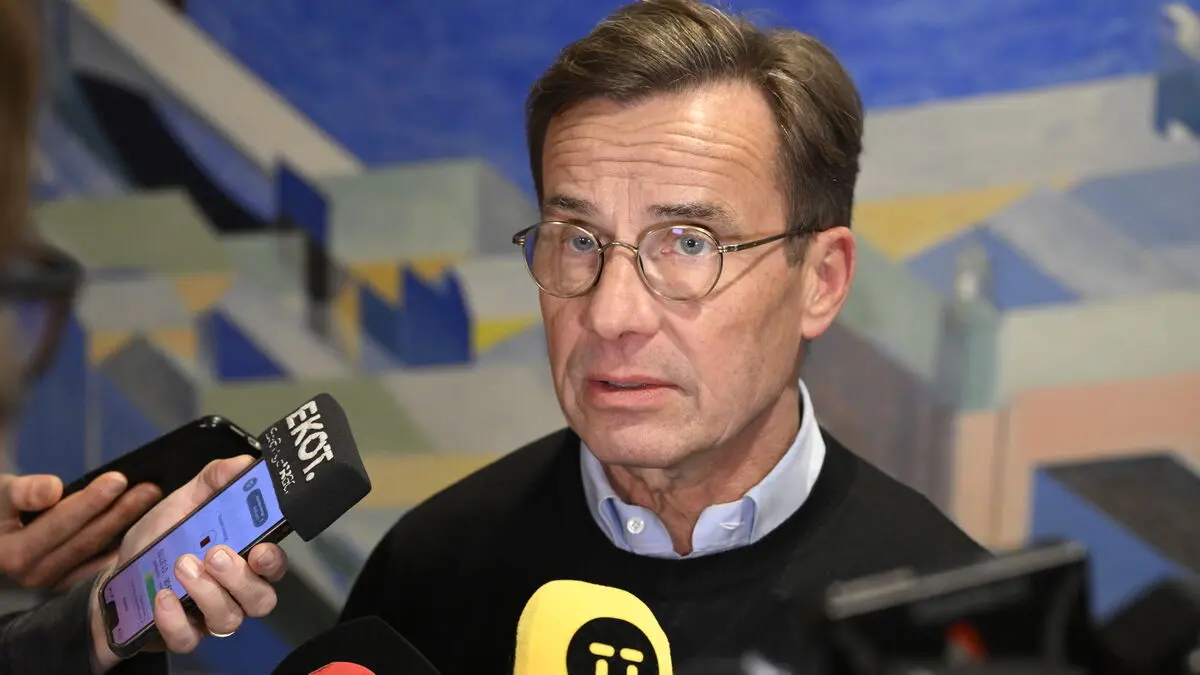
Microsoft's sustainability manager Melanie Nakagawa says in statements to several media outlets that the company's climate pledge continues, and that carbon dioxide capture remains a part of it.
"However, from time to time we may need to adjust the pace or volume of our carbon purchases as we continue to refine our approach to sustainability goals," she says.
At Stockholm Exergi, which is building the plant in Värtan, Erik Rylander, business manager for negative emissions, notes that the agreement is still valid.
He says that Microsoft's commitment to carbon removal has been crucial for the industry.
"When such a significant buyer pauses further purchases, it naturally risks slowing down, at least in the short term, how new projects can reach investment decisions."
Facts: Carbon storage
CCS stands for carbon capture and storage, that is, the separation and storage of carbon dioxide.
The carbon dioxide is separated from flue gases and compressed under high pressure so that it becomes liquid.
It is then moved to a permanent storage site one to several kilometers below the seabed.
If the carbon dioxide comes from renewable sources, such as biomass, it leads to negative emissions and is called BECCS (bioenergy carbon capture and storage). If the carbon dioxide is separated from the atmosphere, it is called DACCS (direct air carbon capture and storage).