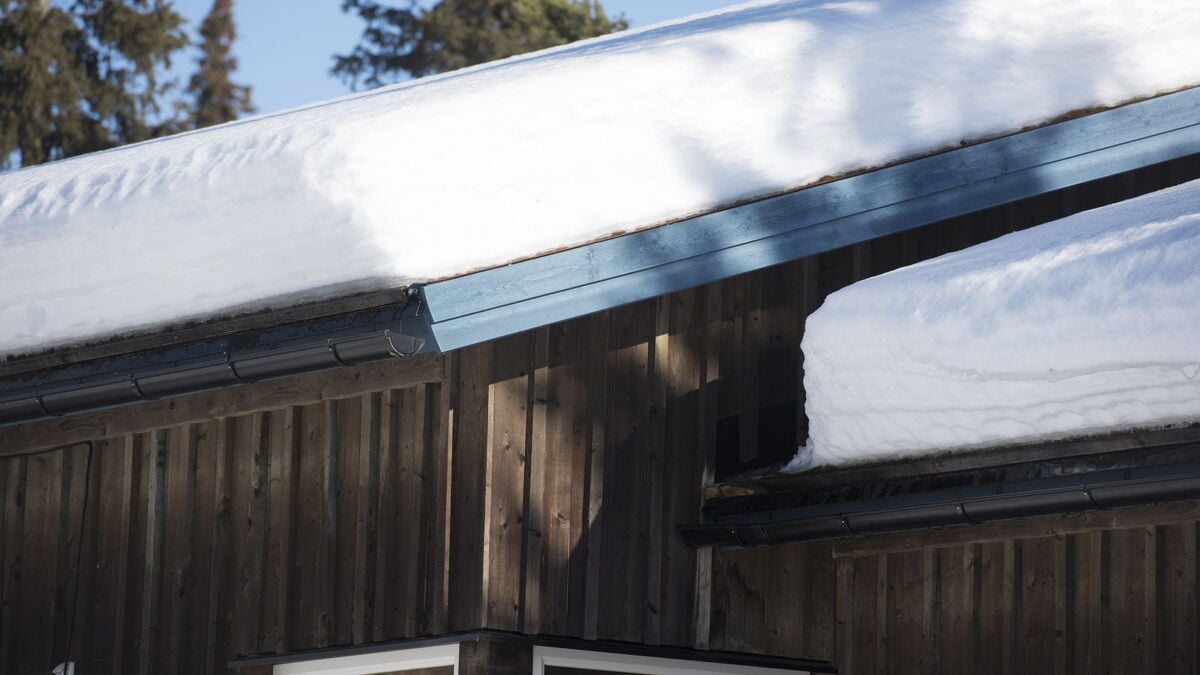
The danger arises when a period of heavy snowfall and prolonged cold weather transitions into milder weather.
In cold weather, the density of snow is low, but when the snow gets wet, its weight can increase by up to three to five times, according to Folksam. This increases the risk of snow pressure damage when heavy snow puts pressure on roofs.
"A normal roof can handle this unless it's an extreme amount. But the most common are patio roofs, flat garage roofs and lighter structures that, when things get heavy, tend to crack," says Erik Arvidsson, damage prevention specialist at Folksam.
"Look at it"
The amounts of water released in mild weather can also cause problems, not least if ice damages or blocks gutters and downspouts.
"Water always finds its way out, and if it doesn't come out through downspouts and such, it will find another way. There is every reason to be observant of your home and do an inspection. Look at it, make sure it doesn't leak," says Erik Arvidsson.
When it comes to water leaking into the house, home insurance coverage is normally limited, he points out. In the case of snow pressure, damage to the roof of the residential building itself is covered, but not to patio roofs, balcony roofs or similar.
Therefore, it is extra important to be attentive, says the damage prevention specialist.
Shovel the roof
For those who want to maintain the roof themselves by shoveling the roof, it is important to proceed with caution.
Safety first and foremost. But the most important thing is the balcony roof, where you can safely shovel the snow down using a shovel or an inverted rake from a ladder. You can also stabilize the roof with props.
Use a safe ladder and equipment such as a safety helmet, safety harness and shoes with good grip.
Use a shovel that won't damage the roof. Avoid metal shovels. Leave 10–20 centimeters of snow if there are solar panels.
Shovel off in layers if there is a lot of snow. For example, if half the roof is shoveled, there is a risk of uneven loading that will damage the load-bearing structure.
If possible, sweep or rake snow off patio roofs, greenhouses and other small buildings from the ground.
Source: Folksam