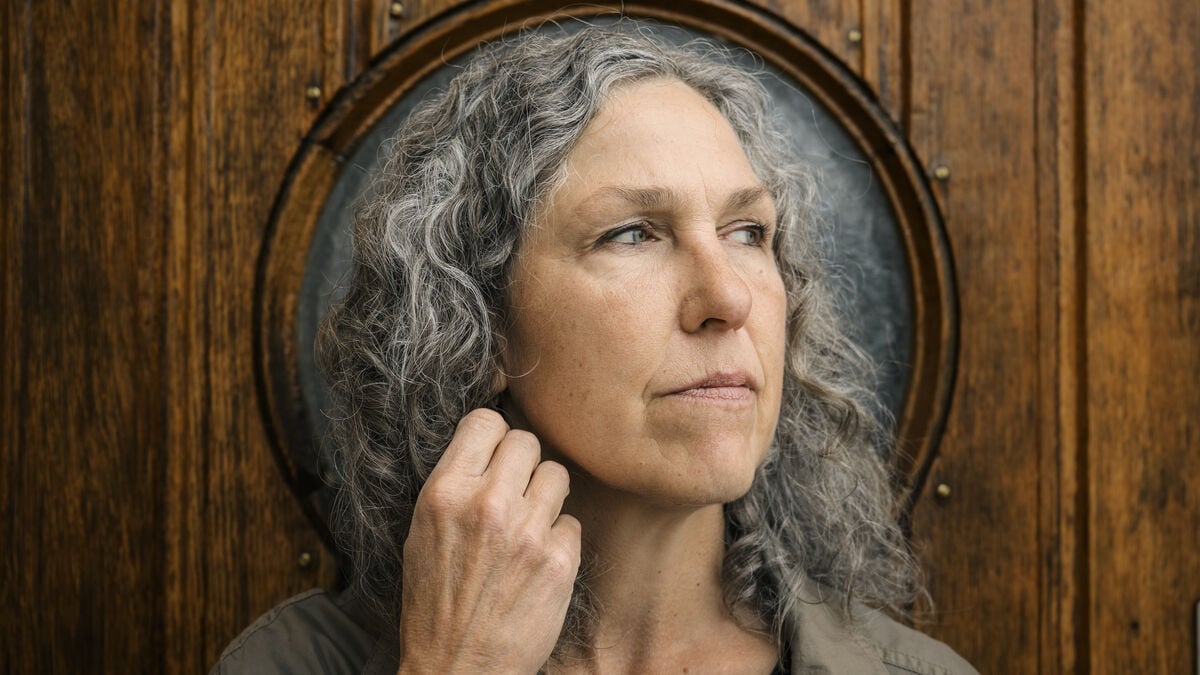
Marit Kapla didn't really intend to write about the tragedy. She says in her new book: "I gave birth to two children, I got sick, one child died." What more was there to say?
But after she made her debut with the book "Osebol", for which she was awarded the August Prize, she thought again. She wondered what had really happened. And all the people in her journals - who were they, and how did events like this affect them?
I thought this was a private story, but it's also universal. Everyone who gives birth is going through something very extreme for their body.
Used journals
8.5 million women worldwide suffer from preeclampsia every year. Marit Kapla describes the condition through concise journal entries. She was inspired by the American poet Charles Reznikoff, who wrote a book based on court documents.
While she was reading about the horrific crimes, she began digitising her own hospital records.
It was a bit of a dark winter, actually.
But finally reliving the memories of the birth did both her and the children's father good. She allowed herself to dwell on what had gone wrong - nowadays, for example, labour is induced earlier in cases of preeclampsia.
I started asking the questions we also asked then: why wasn't labour induced three days earlier, when the issue was on the table? Today it feels like that was the defining moment.
In the shadows
Marit Kapla couldn't bear to read her daughter's medical records. They show how one of the twins, Lisa, suffered a lack of oxygen and as a result suffered brain damage. She died at the age of ten months, says Marit Kapla, tears welling up in her eyes.
She herself suffered seizures and kidney failure and was treated in intensive care. But it has been overshadowed by her daughter's fate. Sometimes it still affects her, like when she read about a British obstetrician in Gaza in 2024, where maternity care had more or less ceased due to the war.
Then a woman came in in full convulsions and she had a massive brain haemorrhage. The doctor was there for two weeks and the woman was in intensive care the whole time, they don't know how it happened. I started crying when I read it. I felt like it could have been me.
In the book, Marit Kapla also makes a case for maternity care. Several of the healthcare staff were present at the book launch, where she introduced the paediatrician to her daughter Doris, who survived.
It was one of the most beautiful moments of my life.
Facts: Marit Kapla
Occupation: Writer and cultural journalist
Age: 56 years.
Lives: Gothenburg
Background: Former journalist at SVT's "Filmkrönikan" and artistic director of the Gothenburg Film Festival. Received the August Prize in the fiction category for her debut "Osebol" in 2019. Has also written "Kärlek på svenska" based on Staffan Julén's film of the same name.
... home births:
"I was a first-time mother and pregnant with twins. I hadn't been able to give birth at home. Then it's clear that for me it happened very quickly, I became very sick, you can follow in the book how my blood pressure rises. I actually feel sick myself when I read it. It's very unusual but it can happen and there are major bleedings that are difficult to predict.
"But maternity care should ask itself the question, what are we doing that makes some women not want to come here and give birth? I think they should ask themselves that more instead of just dismissing everyone who wants to have home births."