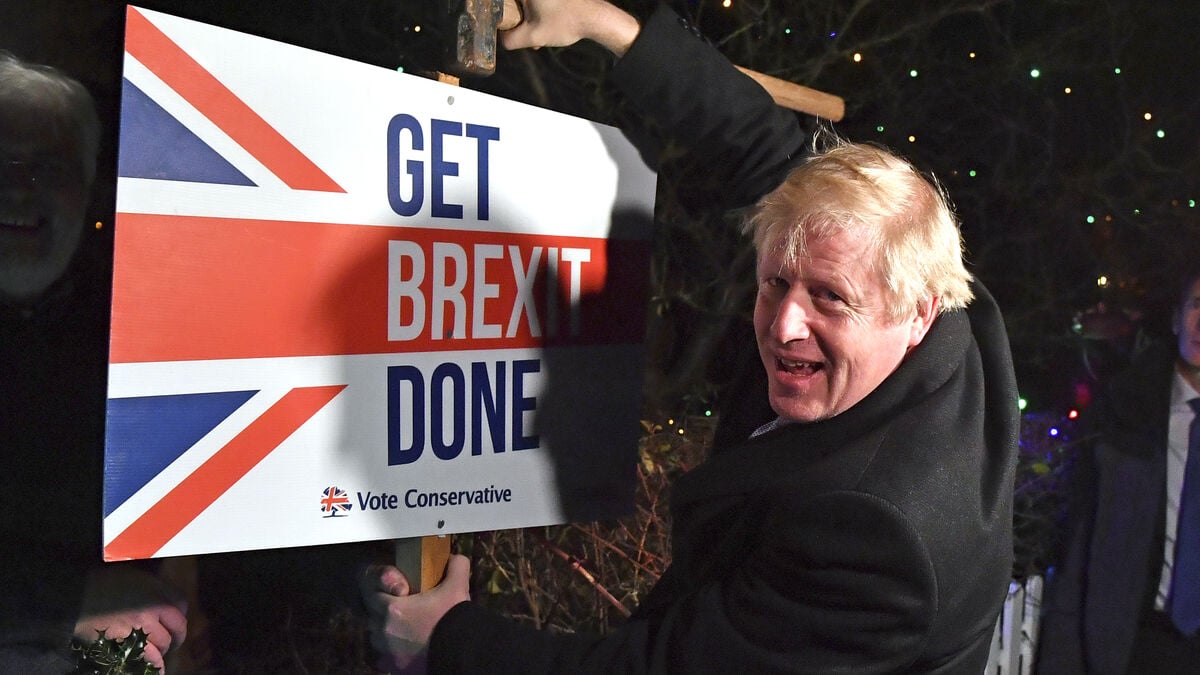
Britain's exit from the EU was grueling and protracted, and ultimately a complete disaster for the country's then-leaders in the Tories - the Conservative Party.
That the issue is still just as hot is shown by the uproar in recent days after the recently resigned health minister, Wes Streeting, said he would campaign to rejoin the EU.
Streeting wants to take over as both prime minister and party leader of the social-democratic Labour Party instead of the hard-pressed Keir Starmer and is apparently hoping for support from EU friends.
Support in public opinion
Public opinion gives him some support. In an April poll for The Guardian newspaper, 53 percent of respondents wanted to rejoin the EU, including over 80 percent of Labour voters.
Yet the mere thought of a "brejoin" arouses horror among many in the party.
Manchester mayor Andy Burnham, who has long been seen as the frontrunner to replace Starmer, has immediately made it clear that he does not support rejoining the EU.
"It would undermine everything I've said about strengthening democracy if we don't respect that the 2016 referendum," Burnham said.
Resistance in the countryside
EU opposition is still strong in rural areas and in old mining and industrial towns - for example, in the very constituency that Burnham must win in June to take a seat in Parliament and thus be able to challenge Starmer.
A large part of the influential British press is still clearly Eurosceptic.
"Backlash against Brexit betrayal," the Daily Mail wrote this week.
Sweden hopes
The EU friends, in turn, emphasize how much Britain has lost economically from the exit. GDP has fallen by 6-8 percent, according to the US-based research institute NBER. British analyses point to a 4 percent decline in productivity and 15 percent for trade.
At the same time, it is not a given that the rest of the EU would welcome Britain with open arms. Countries such as France and Germany have gained greater influence after the exit and have often disagreed with Britain on many EU issues.
If Sweden were allowed to decide, readmission would be a given.
"Whether it was a Conservative government or a Labour government, we were very much of the same mind on how big the EU budget should be, the view on regulations and free trade. So it's clear that they are a missing player in EU cooperation," says Trade Minister Benjamin Dousa.
* January 1, 1973: Great Britain - along with Denmark and Ireland - became members of the then EC.
* June 23, 2016: 52 percent of Britons voted to leave the EU in a referendum. As a result of the Remain side's loss, Prime Minister David Cameron of the Conservative Party resigned and was replaced by then Home Secretary Theresa May.
* October 17, 2019: An agreement was reached on a withdrawal agreement after negotiations between the European Commission and Britain's new prime minister, Boris Johnson, who had replaced May during the summer.
* January 31, 2020: The United Kingdom formally left the EU, albeit with various transitional rules until the end of December of the same year.