Telephone calls are just one of many examples of new challenges awaiting staff at Kumla prison from July 1, when the prison will begin accepting children and young people convicted of serious violent crimes.
Drawing the line
In early May, the Riksdag decided that prison should replace closed youth care for children aged 15-17 who commit crimes such as murder - and recently the debate about lowering the age of criminal responsibility has been heated. Now a proposal is before the Riksdag that 14-year-olds should also be able to be sentenced to prison.
For us, there is no difference in age. We must constantly think about what is best for the children in this environment. The children are deprived of their liberty, under the same legislation as everyone else who is, but they are minors. We need training so that this goes hand in hand with the Convention on the Rights of the Child, says Johan Fritioff, deputy director of correctional services.
Like the issue of the telephone. Should we be lenient about which conversations are appropriate, compared with adults? If the conversation is beneficial to the child, even if it may not actually follow the rules, then we can probably move the line a little, he continues.
According to the Convention on the Rights of the Child, all children have the right to express their opinions, and adults must listen to and take into account what the child thinks based on their age and maturity.
The best interests of the child must come first.
Something that can be difficult to reconcile with the institution's rules and guidelines.
We are doing correctional work here. We have to assume what is best for the children in this environment. And I think we can achieve that by having a good school environment, by having extra staff, six times more than in the adult departments, and by having good treatment programmes.
New cells
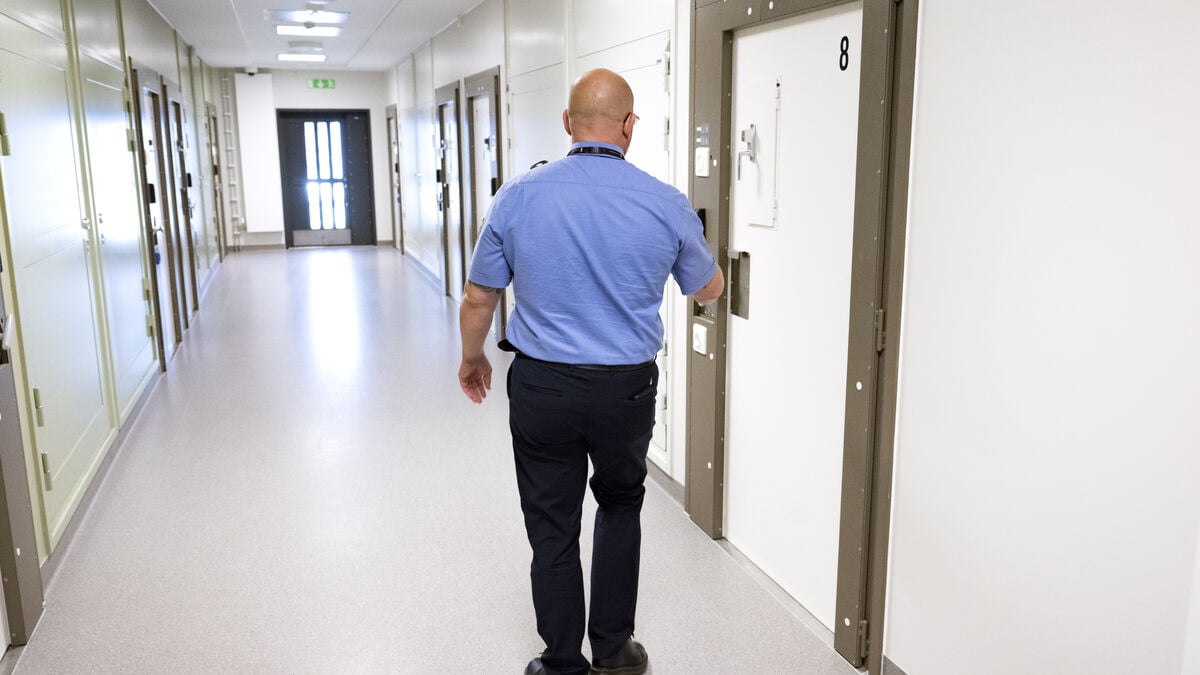
The prison in Kumla is the only class 1 institution, with the highest security classification, that will accept children. There will be 16 living quarters divided into two sections, and the children will live separately.
The cells that Johan Fritioff shows are newly renovated. Behind the heavy doors, the walls are light-coloured. A bed, a table, a chair. A bookshelf. Nothing more than that.
The children detained will have their own shower and toilet, which is not always the case for adults, who often share cells.
The units have exercise rooms and an outdoor courtyard - but the smoking area there has been removed.
The children will not have any contact with adult inmates; the wards are separate.
The walls around the facility are several metres high, and additional fences and barbed wire make escape attempts basically impossible.
Visibility is non-existent.
The opening hours are different compared with those for adult inmates. There will be staff on site at all times, says Fritioff, adding that all staff who will work with the children have received special training.
Many also have relevant education and experience from before. Then you have to keep in mind that everything here is individually adapted. We can have adult inmates here who are at the same level as children mentally. I am confident that we will be able to meet the children's needs in a good way.
Humble
Johan Fritioff says that the institution's goal is for children to have a say in as many processes as possible. And that is something that is significantly different from what it is like for adult inmates.
We need to be humble about the fact that this is a new situation and that we need to test ourselves. We may need to get help from other actors to ensure that we are doing the right thing. There should be as much self-examination as possible on our part.
In the prison environment, intervention by staff against inmates can be everyday. This also applies to the children's unit.
We have to assume that it will happen. Every time we do something that is considered restrictive for the child, we will offer conversations and we will need to follow up in a completely different way. If children are sitting separately, we must have staff presence and we will offer schooling even if they are separated.
“Standing ready”
Many of the children sentenced to prison come from broken homes and are often themselves victims of various types of crime. Johan Fritioff is aware that extra support may be needed for the children to be rehabilitated in a good way.
"Here we can learn from the Sis homes. But it's not really any different from how many of the adults in the institution have it. We have good staff who will ensure that the children and young people get the support they need," he says.
We are well equipped to receive individuals who have great difficulties.
Facts: Youth prison
The Riksdag decided on 6 May 2026 that prison will replace closed youth care as a custodial sentence for children and young people between the ages of 15-17 who commit serious crimes. The legislative amendments will enter into force on 1 July 2026.
Preparations are underway at six prisons to establish special children's and youth departments: Högsbo, Kumla, Rosersberg, Sagsjön, Skenäs and Ystad.
Source: Swedish Prison and Probation Service
The Tidö parties originally proposed lowering the age of criminal responsibility to 13 years from August 2 for the most serious crimes.
The proposal attracted criticism from many quarters, including from the Legal Affairs Council, as it may contravene the Convention on the Rights of the Child.
Some time ago, the government and the SD backed down and instead presented a proposal to lower the age of criminal responsibility to 14 years. That proposal is expected to receive broader support in the Riksdag and according to Minister of Justice Gunnar Strömmer (M), the proposal will be considered during the summer and then put to a vote.
Crimes that can result in imprisonment for 14-year-olds include murder, explosions or aggravated rape.