What is Kharg?
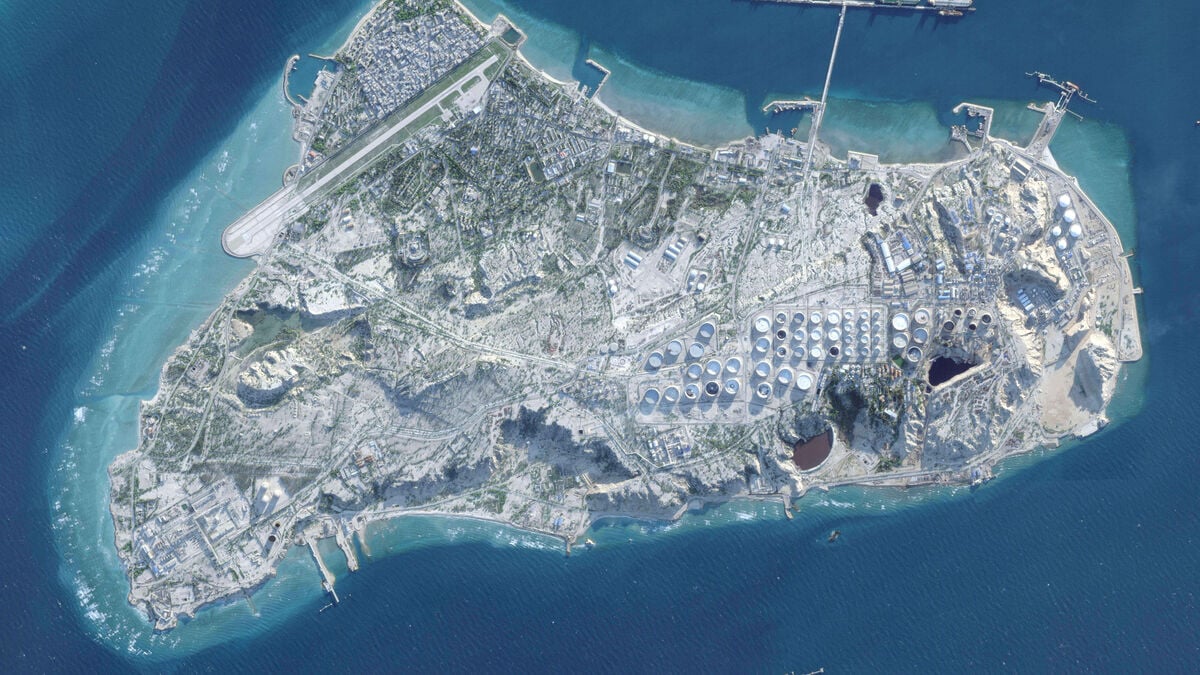
A small island, a few miles off the coast of Iran in the northern Persian Gulf. It is only 25 square kilometers in size - slightly smaller than Visingsö in Sweden's Lake Vättern - and has a population of fewer than 10,000 people.
The island has a unique location in the region and became central to the growth of Iran's oil industry. The seas along Iran's coast are too shallow for the largest tankers to dock there, but the waters around Kharg are deep enough.
Up to ten giant tankers can be loaded there at a time, with flows of up to seven million barrels per day.
Kharg is reportedly nicknamed "the forbidden island" because it is under strict military control.
Why is the US targeting Kharg?
Almost 90 percent of Iran's oil is transported by pipeline to Kharg, where it is picked up by tankers or stored in depots. It is a crucial hub for Iran's most important source of revenue - but also a bottleneck that is perhaps the country's biggest Achilles heel.
The US and Israel's war against Iran has largely become focused on economic pressure or coercion. Iran has halted shipping traffic in the Strait of Hormuz, thereby effectively closing the Persian Gulf, with skyrocketing global energy prices as a result.
By taking control of Kharg and most of Iran's oil exports, the US would put more economic pressure on the Iranian regime.
When the US government also says it wants to end the war within a few weeks, an invasion of Kharg could be a relatively limited undertaking.
What happens during a seizure?
The US president has threatened to "wipe out" Kharg, among other places, if Iran does not meet his demands. Military targets on the island were bombed in March and, according to Donald Trump, it can now be taken "very easily" - but holding it is not straightforward.
Thousands of American paratroopers are deployed in the immediate area, but the issue of larger commitments on the ground in the Middle East is sensitive in the United States after previous wars. Landed soldiers trying to occupy Kharg would quickly become targets for attacks from the adjacent coast.
If the flow of oil is stopped, it will strangle Iran's revenues, but also global supply, where prices have already soared.
Iran is threatening to strike back harder than before against its energy-rich neighbors across the Persian Gulf. Iran's allies in Yemen, the Houthi movement, are also threatening to strangle shipping in the Red Sea, and with it about a quarter of global seaborne trade.
Today, the island is dominated by the oil industry, with depots and terminals and tankers in shuttle service. It is also home to up to 10,000 people.
The island is made up mainly of limestone, is one of the few islands in the Persian Gulf with freshwater springs, and is also home to many gazelles that roam freely.
The earliest traces of human habitation on Kharg have been dated to a few hundred years before the Common Era. There are ruins of one of the region's first Christian monasteries, as well as a fort built by Portugal during the colonial era. The Dutch East India Company had an outpost there in the 18th century.
Under the first Shah of modern Iran, in the early 20th century, political prisoners were held on the island.