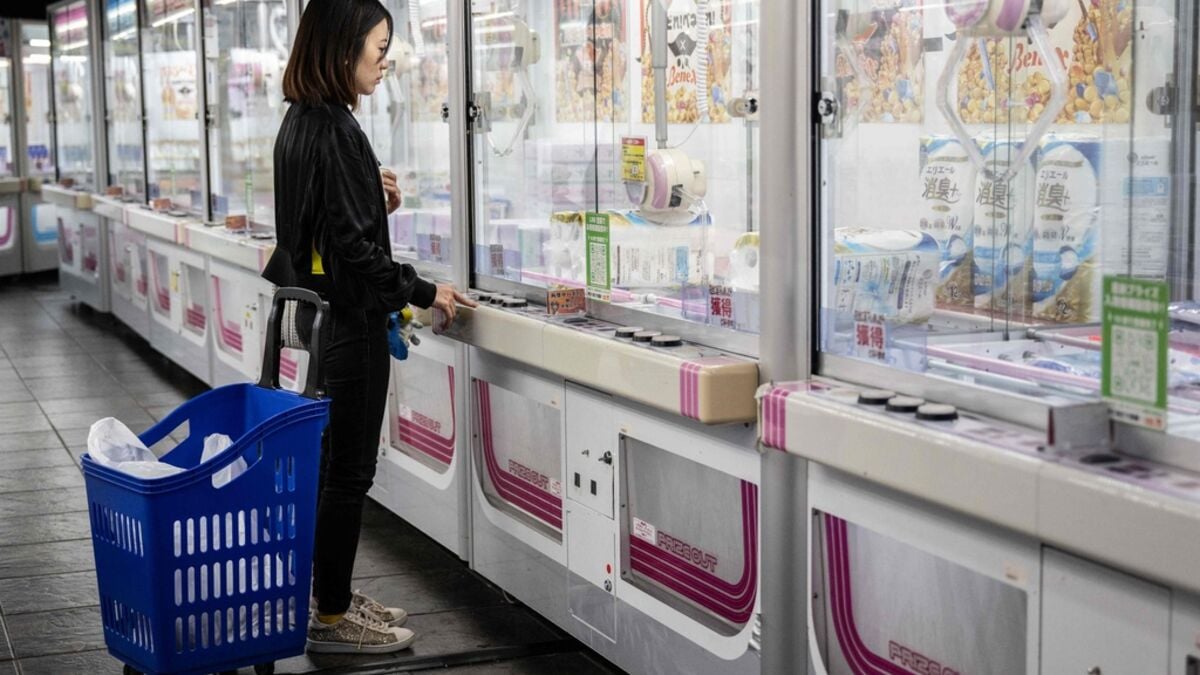
The AFP news agency has interviewed a number of Japanese people about the new phenomenon, including Minae Kamata. The 25-year-old housewife skillfully operates the claw used to retrieve prizes from the machine. This time, however, she is trying to win a package of toilet paper.
"If you're lucky, it'll cost the same as buying it on sale," she says after succeeding on her second try.
Concerns about inflation
Each attempt costs 100 Japanese yen, equivalent to about six Swedish kronor. These machines are traditionally a popular pastime in Japan, generating annual turnover of several billion kronor. But now people are combining fun with practical benefits.
Inflation in Japan is around 2 percent - still very low by global standards - but many Japanese households are finding it much harder to cope than they are used to. As a result, the machines are now being stocked with eggs, rice and detergent to entice people to play.
"A family can spend 10,000 yen on a day of karaoke or bowling and have fun, but that's all. Here you can go home with toilet paper, bottles or toys," says Teruaki Tsuchiya, CEO of Tisco, a company that owns a large number of the machines.
Full shopping cart
Chiaki Sugai is one of those who has now spent a couple of hours at one of the machines. She has filled a shopping cart with goods that cost her 8,000 yen.
"I used to buy a lot of candy in convenience stores. Now I get it here instead," she says.