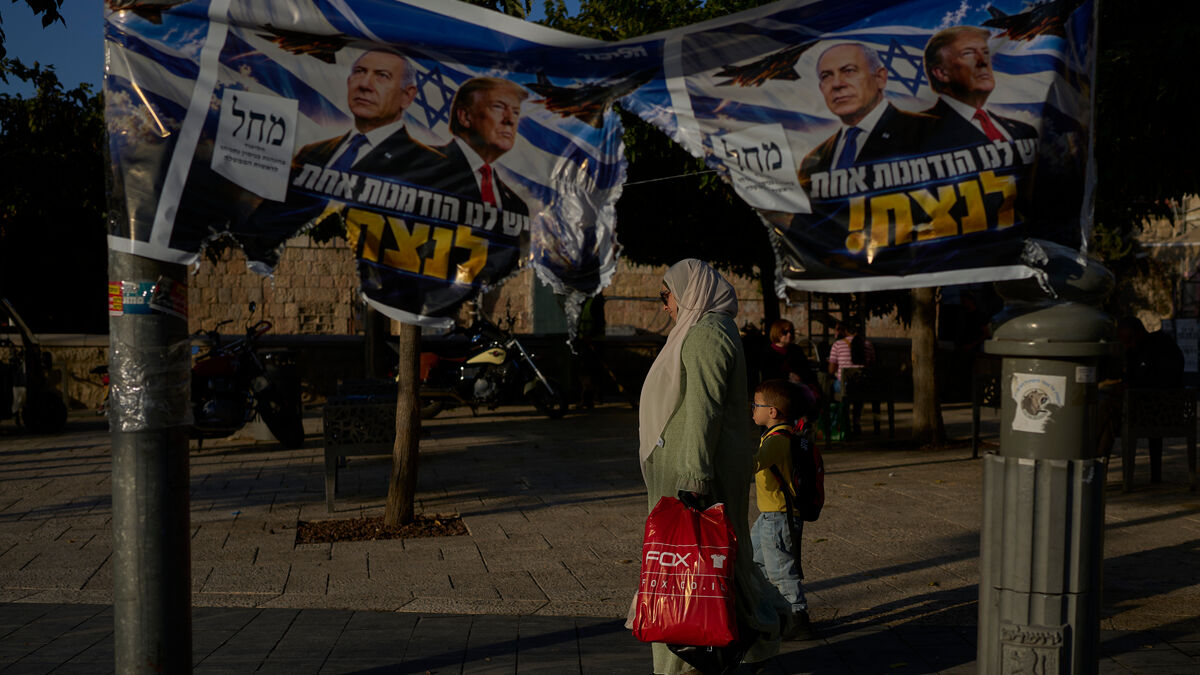
Prime Minister Benjamin Netanyahu's party and current coalition continue to have an advantage in terms of the number of seats in the Knesset. But their total of 53 seats is eight short of a majority.
Opposition leader Gadi Eisenkot's coalition has 48 seats.
The growth of the Arab-Israeli opposition was already clear on election night. The Joint List and Ra'am will receive 19 seats together, the largest share Arab parties have won in an Israeli election. They could play a kingmaker role, depending on how the larger blocs choose to act. So far, neither side has expressed a willingness to invite the parties.
Divided opinions
Prime Minister Benjamin Netanyahu has ruled out any cooperation with the Arab parties and has consistently described them as a threat. The day after the election, his Likud party accused them of “stealing” the election through various crimes.
The election authority has dismissed the allegations, and the Israeli police say there is no basis for them. However, the Shin Bet security service will investigate the information. Gadi Eisenkot, meanwhile, accuses Netanyahu of orchestrating a campaign to invalidate the election results.
Eisenkot has left open the possibility of taking power with passive support from the Arab-Israeli parties, but there are sharply divided opinions on the matter within his intended coalition.
Democrats leader Yair Golan came out early in favor of a new alliance with Arab parties to oust Netanyahu. The more nationalist Yisrael Beiteinu has opposed this and, according to Israeli media reports, is more interested in a unity government with Likud.
May need both
The Arab parties are also not united. The Joint List is an alliance of left-leaning and secular parties that have so far been skeptical of negotiating with the government.
Ra'am, on the other hand, is a conservative, moderate Islamist party that has taken a more pragmatic approach to government issues and was part of the broad coalition that took power from Benjamin Netanyahu in 2021–22.
The Joint List is currently projected to win 12 seats and Ra'am seven. If the large opposition bloc turns to them in the upcoming government negotiations, the Joint List will also need to be on board this time for them to tip the scales.
The parties in Israel's parliament, the Knesset, are split into two main blocs. Before the October 27 election, Prime Minister Benjamin Netanyahu governed with a narrow majority.
Netanyahu's bloc has included Likud (Netanyahu's right-wing conservative party), Shas (an ultra-Orthodox religious party), the Torah Party (also an ultra-Orthodox right-wing party), Jewish Power (Otzma Yehudit, a far-right, ultra-nationalist party led by Security Minister Itamar Ben-Gvir), Religious Zionism (a right-wing nationalist party led by Finance Minister Bezalel Smotrich), and Noam (a small, ultra-conservative religious party).
The opposition “change bloc” includes Yashar (a newly formed centrist party led by former commander-in-chief Gadi Eisenkot), Beyahad (“Together,” a centrist party formed through a merger of Yair Lapid’s Yesh Atid and former Prime Minister Naftali Bennett’s party), the Democrats (a left-wing party led by Yair Golan), and Yisrael Beiteinu (a secular right-wing party).
Outside the two blocs are two Arab parties: Ra'am and the Joint List alliance.



What do you think?