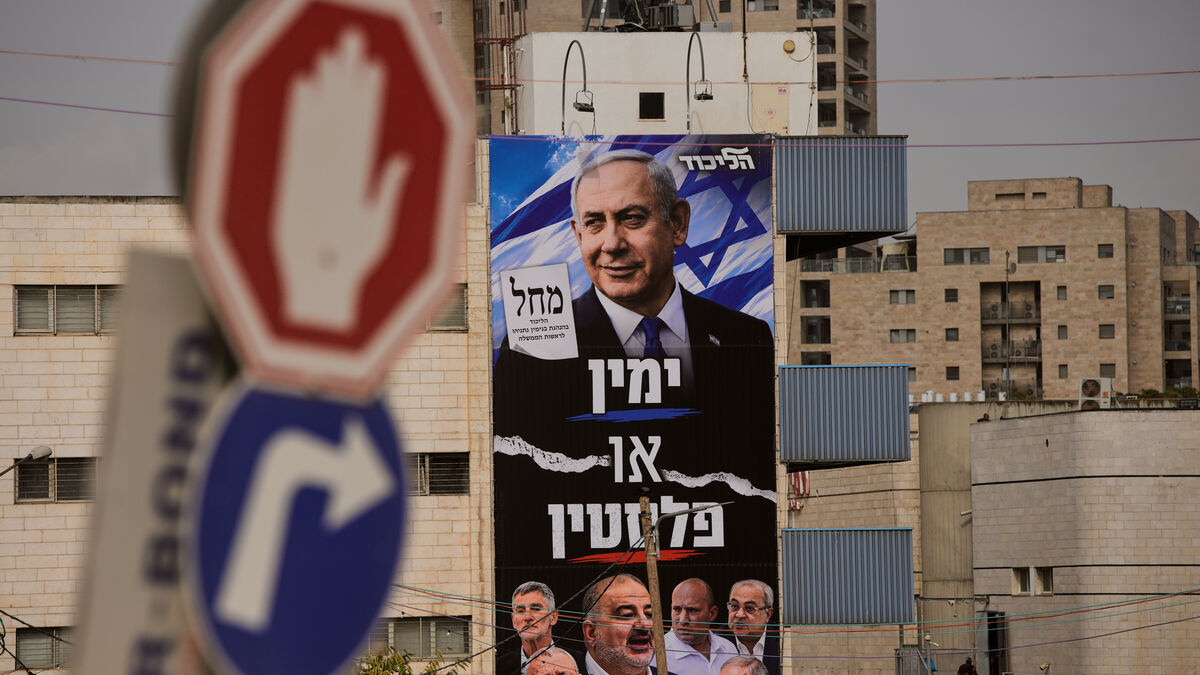
The country is more divided than ever. When Israelis go to the polls on Tuesday, it will be the first time since the Hamas terror attack on October 7, 2023.
At the center of the election debate is Prime Minister Benjamin Netanyahu’s handling of the attack and his ability to prevent similar security threats in the future.
But that’s not what makes this choice unique, says Shomer.
It is about the future character of the entire state of Israel, whether the country will move in a more liberal and democratic direction, or an authoritarian and religious one.
Deadlock between the blocs
According to Shomer, several controversial bills are on the table that the next government could either block or push forward, including an amendment to the Judicial Selection Committee that would give politicians greater influence over the appointment of judges to the country’s Supreme Court.
“I can give you a hundred other examples of similar bills,” she says.
Two main blocs have taken shape in the election, one for and one against Netanyahu. But the opposition is fragmented and is described as united only by its opposition to Netanyahu.
In addition, opinion polls suggest there will be a dead heat between the blocs, with neither gaining a majority without support from the two Arab parties, the Joint List and Ra’am.
The problem is that there are parties in the “against” bloc that have said they will never cooperate with them, either in government or as a supporting party, says Shomer, adding that there is therefore an imminent risk of a new election.
High voter turnout
Given how close the race is, combined with the perceived seriousness of the election, there are indications that voter turnout could reach historically high levels.
Among the country’s Israeli Arabs (Palestinians with Israeli citizenship), there is a rare willingness to make their voices heard - not least because of increased violence by Israeli settlers in the West Bank.
At the same time, an unusually large number of Israelis living abroad are expected to travel home to vote - which requires being there in person.
According to Shomer, that group of voters - who are expected to vote left-wing - could also play a decisive role.
There are estimates that about 60,000 are expected to travel to Israel. They are not represented in the opinion polls. I personally know people who are traveling just to vote. The fact that so many are expected says something about how important this election is.
Israel will hold elections on October 27. According to opinion polls, the two main blocs, for and against Prime Minister Benjamin Netanyahu, are neck and neck.
Both blocs are projected to win 51 seats each, according to a poll by Zman Yisrael. To gain a majority in the Knesset, Israel’s parliament, 61 seats are required. The electoral threshold is 3.25 percent.
Netanyahu’s right-wing and religious bloc includes Likud (Netanyahu’s right-wing conservative government party), Shas (an ultra-Orthodox religious party), the Torah Party (also an ultra-Orthodox right-wing party), Jewish Power (Otzma Yehudit, a far-right, ultra-nationalist party led by Security Minister Itamar Ben-Gvir), Religious Zionism (a right-wing nationalist party led by Finance Minister Bezalel Smotrich) and Noam (a small, ultra-conservative religious party).
The opposition “change bloc” includes Yashar (a newly formed centrist party led by former commander-in-chief Gadi Eisenkot), Beyahad (“Together,” a centrist party formed through a merger of Yair Lapid’s Yesh Atid and former Prime Minister Naftali Bennett’s party), the Democrats (a left-wing party led by Yair Golan), and Yisrael Beiteinu (a secular right-wing party).
Outside the two blocs are two Arab parties, the Joint List and Ra’am, which have made common cause and could play a unique role as kingmakers.



What do you think?