Since the US and Israel began attacking Iran on February 28, Iran has on various occasions struck neighboring countries in the region - several times citing the countries as harboring American military bases or personnel.
But according to media reports and the Iranian state news agency Tasnim, there is also another stated strategy on Iran's part: To attack American tech giants and their data centers in the region, in order to knock out the cloud services used by both the American military and large parts of the Western economy.
Cybersecurity
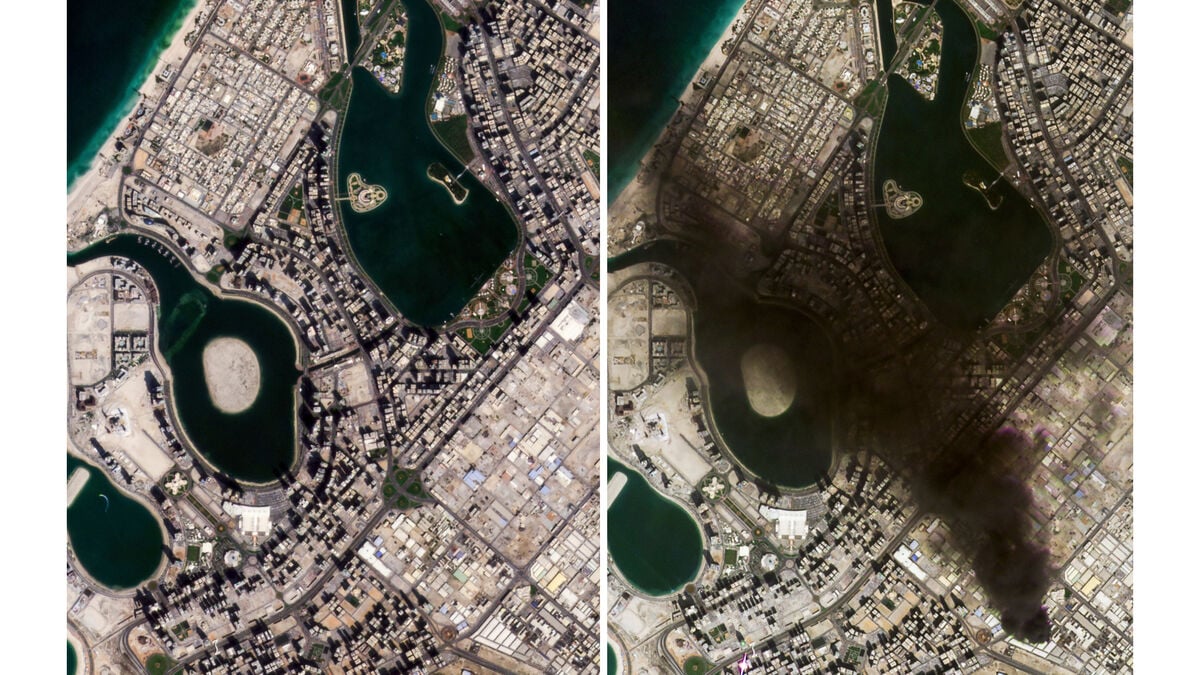
Attacks on the United Arab Emirates and Bahrain, among others, were some of Iran's first counterattacks. In a total of three attacks, data centers belonging to Amazon were damaged, which, through Amazon Web Services, has "aided the enemy's military," according to the pro-regime Iranian news agency Fars.
A tech expert who worked in Joe Biden's administration tells The Guardian that the development puts the region's role as a hub for data centers in a new light.
Previously, we thought of it in terms of security guards and good cybersecurity. But if you are really going to establish yourself in the region, maybe it is time to have air defenses to protect the data centers.
International cables
Last May, US President Donald Trump made a brief visit to Saudi Arabia, Qatar and the United Arab Emirates. During the trip, several economic deals were announced, including promises of an AI headquarters in the UAE and US easing of previous restrictions on chip shipments to the Gulf countries.
As data centers have been built, undersea cables have also been laid in areas such as the Red Sea and the Strait of Hormuz to carry data traffic between Europe, Asia and Africa. Both areas are currently under de facto Iranian control.
Closing both bottlenecks at the same time would be a disruption on a global level, Doug Madory, head of internet analysis at American network monitoring company Kentik, told the tech site Rest of World.
As far as I know, it has never happened before, Madory says.
On February 28, the United States and Israel attacked Iran, without the support of the UN Security Council. The attack was described by the United States as a preemptive strike to prevent the country from developing nuclear weapons. Iran's Supreme Leader Ayatollah Ali Khamenei and several other leaders were killed in the bombings.
A year earlier, in March 2025, US President Donald Trump sent a letter to the Ayatollah seeking to initiate negotiations over Iran's suspected nuclear weapons program. Five meetings were held but without any results.
On June 22, the United States entered the then ongoing war between Israel and Iran and bombed three nuclear energy facilities.
In September, previous UN sanctions on Iran were reimposed. The economy deteriorated and popular protests erupted before the turn of the year. Trump said he was prepared to intervene on the side of the protesters when they were killed in their thousands - but that did not happen.
In early 2026, US military forces gathered in Iran's vicinity.
New negotiations with the regime began on February 3, without results.