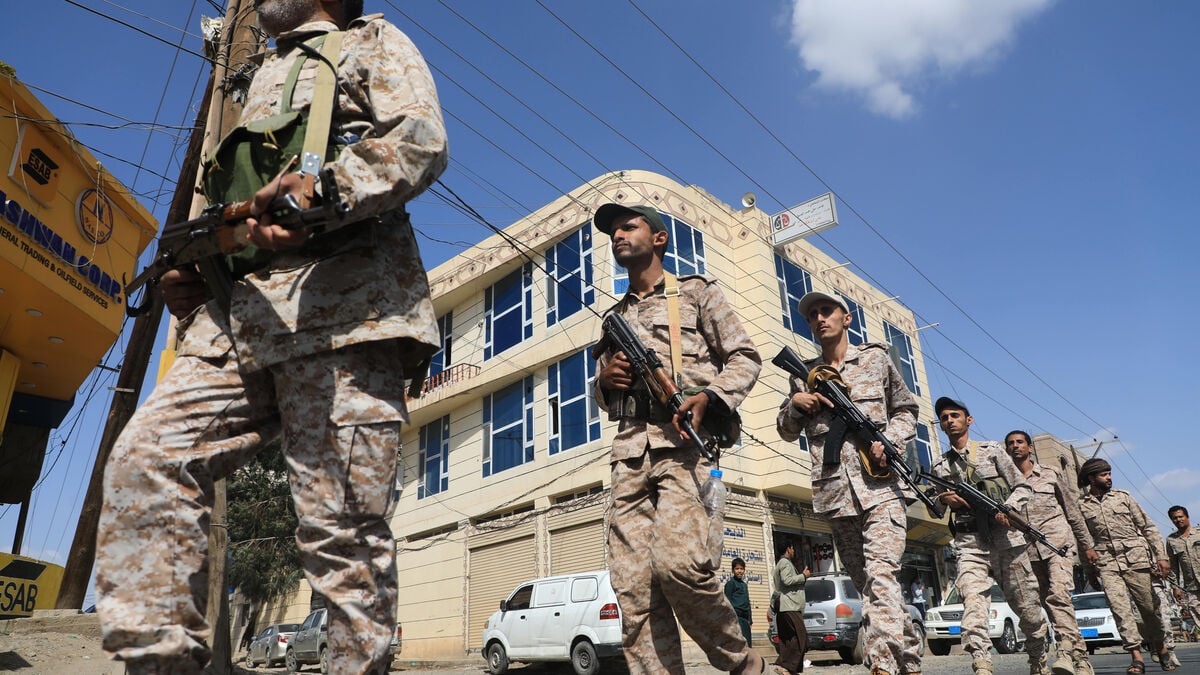
The Houthi movement has escalated the long-running war in Yemen. In a rapid offensive, its forces have captured the coastal city of Mocha on the Red Sea, and then islands in the strait beyond.
The Iranian-backed forces have effectively established control over the Bab al-Mandab strait - a route that has long been a crucial shortcut for seaborne trade between Europe and Asia.
This has been moving in a dangerous direction since the war began. This has been a card that Iran has signaled it has up its sleeve, which it is now starting to play out, says Fredrik Meiton, who heads the Middle East and North Africa Program at UI.
Sailing around Africa
According to the Houthi movement, a blockade in the strait applies only to Saudi Arabia, but the mere threat of attack has already caused traffic there to decrease significantly during the wars in the Middle East in recent years. The Houthis have fired on about a hundred merchant ships and most shipping giants choose to take a detour around Africa.
In the war against the United States this year, perhaps Iran's main counter-move has been to similarly stop traffic in the Strait of Hormuz, in and out of the Persian Gulf, and with it a large part of the world's oil exports.
It has had a strong deterrent effect and the US has been forced to agree to a number of concessions to try to open the strait again, says Fredrik Meiton.
He believes that Iran has waited to avoid playing all its cards at once.
Now that they are facing escalated economic warfare from the US, they may have decided to escalate in turn by activating the Houthis.
“I know it won't work”
The price of oil has once again risen above $100, which Meiton sees as a pain point that will force US President Donald Trump to act.
The question is how. According to media reports, Trump declined a Saudi request for help with airstrikes. To tangibly stop a drone threat will likely require forces on the ground. The latest bid - as peace talks have stalled - has been for the US to escalate “economic warfare”.
I think Trump is aware that it cannot produce the results he wants, says Fredrik Meiton, who believes that the pressure on the president is growing sharply ahead of this fall's midterm elections in the US.
He is not prepared to go in with ground troops. Nor is he prepared to compromise as required. Then he pretends to believe that economic warfare will do the job.
The so-called Houthi movement - officially Ansar Allah (approximately Followers of God) - has ruled a large part of war-torn Yemen for a decade.
The Shia Islamist movement originated in the Zaidi al-Huthi clan, which has historically held sway in northwestern Yemen. It grew and radicalized in opposition to Yemen's involvement in the US war on terror in the 2000s.
In the wake of the Arab Spring, the movement went to war with Yemen's internationally recognized government, in a situation shaken by popular protests and southern Yemeni separatists. The Houthis were supported by Iran, while the government was supported by a Sunni coalition led by Saudi Arabia. Hundreds of thousands of people have died in a conflict that is still ongoing. Houthi forces seized power in the capital Sanaa in 2015.
The Houthi movement, part of Iran's regional coalition with Palestinian Hamas and Lebanese Hezbollah, has shelled Israel and cargo ships in the busy shipping lanes off Yemen in recent years of war in the Middle East.