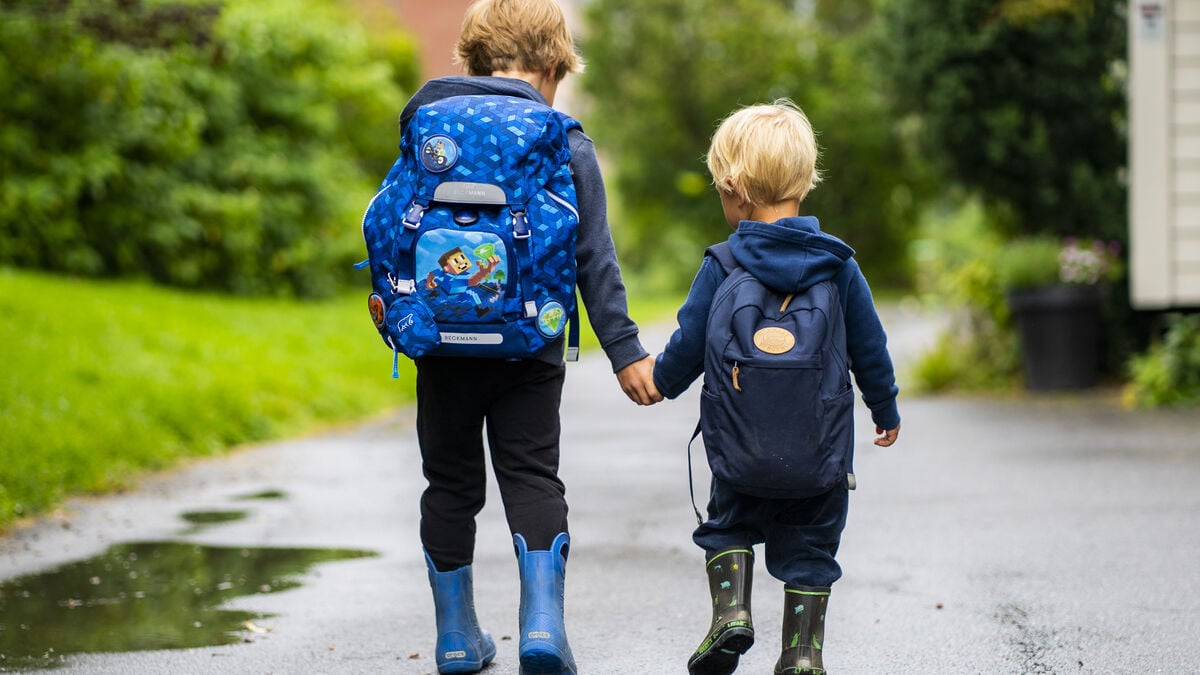
Autumn jacket, backpack, activities and mobile phone.
The list of what parents need to provide their children with before school starts can be long.
As a savings economist at loan broker Lendo, Sharon Lavie often encounters questions from worried parents who are struggling to make ends meet in connection with the start of their children's term.
Individually, the expenses may not be that large, but when they pile up, they can feel overwhelming for many households.
Buy second hand
Even though as a parent you may have to set a limit on what needs to be purchased, children need things you cannot avoid, notes Lavie, who gives tips on how to navigate expenses as a family.
Take inventory. Make sure you don't automatically buy things because you think you need them. See if you can borrow clothes from friends, swap or buy second hand, she says, and also advises spreading out the costs.
You may not need to buy winter overalls in August, so prioritize the most necessary things first.
One-time costs for replenishing a child's everyday wardrobe after the summer can cost anywhere from a little over a thousand to 7,000 kronor, depending on whether you buy new or used, Lavie points out.
In addition, the ongoing costs for leisure, preschool and extracurricular activities all come together at the start of school.
Reduced fee
Many parents may find it difficult to say no if their child wants to start a new activity.
But you may not have to refuse. Sometimes you can investigate whether, for example, the sports club can let the child join at a reduced fee, or even for free. Most sports clubs can agree to waive the fee, especially for younger children, says Sharon Lavie.
A little respite for parents who are struggling financially is also available in the form of a new exemption for after-school care fees and an after-school card for children between the ages of 7 and 16 of SEK 550 per semester.
Sharon Lavie also recommends the Leisure Bank, a kind of "gadget library" that some municipalities offer, where everyone, regardless of income, can borrow sports and leisure equipment for free for 14 days.
Since July 1 this year, a tax-free amount of SEK 10,000 has been applied to the after-school care fee.
This means that the first 10,000 SEK of the household's total monthly income before tax is deducted before the fee is calculated.
Since September 15th of last year, the Leisure Card has been in effect for children aged 7–16, a financial support that can be used as payment for various leisure activities.
Children aged 7–16 can receive a basic amount of SEK 550 per calendar year.
Households that received housing allowance the previous year can in turn receive SEK 2,500 per child per calendar year. The money must be used no later than November 30 of each year.
Sources: Lendo and the Swedish Public Health Agency.