
The Philippines' electricity system leaves a lot to be desired. It can be summed up as expensive and unreliable. Residents have had to get used to both planned and sudden power outages. For Vincent Saipudin, who works from home on a computer, the intermittent power was a major concern.
Outside the metropolitan area of Manila, power outages are usually quite severe. We also have voltage fluctuations in the grid that destroy home electronics.
I have previously broken a fairly expensive washing machine and a TV as a result of these fluctuations.
After a long period of deliberation, he took the plunge in November last year and got solar panels and a battery for his house outside the city of Iloilo in Western Visayas. All in all, it cost the equivalent of SEK 50,000.
He is now self-sufficient in electricity, has switched from a gas stove to an induction one and has acquired an electric quadricycle.
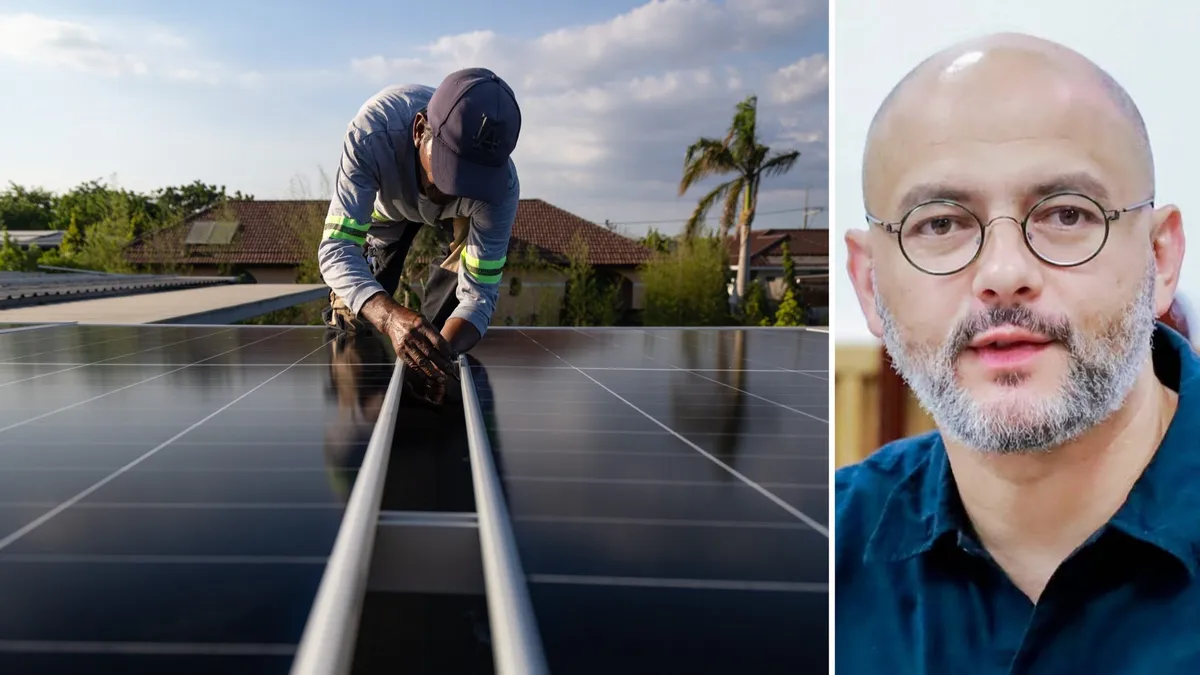
A solar installer in the Philippine capital Manila installs panels. The country has experienced a solar boom after the Hormuz crisis. Tarek Ketelsen sees several reasons why.
“Incredibly expensive” electricity
Just months after Vincent Saipudin’s solar panels were installed, the Hormuz crisis hit with full force. The Philippines, which imposed a coal moratorium in 2020 and planned to invest in fossil gas instead, found itself in a difficult situation.
The closure of the Strait of Hormuz showed the inherent geopolitical fragility of that approach, says Tarek Ketelsen, international director at Australian energy consultancy Amperes.
Unlike neighboring countries such as Vietnam and Indonesia, which subsidize electricity, customers in the Philippines are directly hit by the cost increases. And the structure of the electricity system means that rising fuel prices translate directly into rising electricity prices.
Electricity was incredibly expensive, which put pressure on customers and led to widespread dissatisfaction, as prices were higher than in neighboring countries.
The most affordable option simply became solar panels.
When this crisis hit, there were few available options to turn to, he says.
A year-long doubling
The pace has been rapid. In April of this year, green think tank Ember estimated that 1,300 megawatts of rooftop solar capacity had been installed. That may not sound impressive, but it represents a doubling of capacity in just one year.
The combination of sunshine, high electricity prices and a fragile grid - along with Chinese solar panel manufacturers seeking new markets after their domestic market was saturated - created the conditions for the Philippines’ solar boom.
Government-backed solar loans and leasing have also contributed to the boom.
“For households and small businesses that can afford the cost and have a suitable roof, rooftop panels have become a rational investment,” said Alnie Demoral, an energy analyst at Ember, in an email interview.
The Philippines has also become one of the largest importers of solar panels from China. In some periods, it has even been the biggest.
Scams and gaps
Installers are overwhelmed with work - one survey records an increase from two requests a week to 80. They can’t keep up, and the boom has given scammers an opportunity. Others are installing systems without sufficient skills. Electricity giant Meralco complains about “guerrilla solar” and calls for regulation.
Alnie Demoral says the boom also raises questions about what happens when a growing portion of the population generates its own electricity.
“One concern is how it could affect grid operators and traditional business models. Another is whether there could be an energy gap if solar power is primarily available to those who can afford it.”
A third concern is that dependence on oil is being replaced by dependence on Chinese solar panels.
“China dominates global solar power production, so most countries rely on Chinese-made equipment because it is affordable and available at scale. The difference is that a solar panel is a one-time import that generates electricity for 25 years or more, whereas fossil fuels have to be bought over and over again,” she says.
No solar blip
Alnie Demoral doesn’t think the solar boom is a blip that will disappear as soon as the Hormuz crisis is over.
“Although fuel prices fall significantly after the crisis, the prices of solar modules also fall as production scales up. And once the panels are installed, the savings on the electricity bill continue regardless of what happens to oil and gas prices.”
Vincent Saipudin, who also runs a discussion group on Reddit, says the number of posts has tripled in three months. He is also noticing the trend in real life, with an increasing number of neighbors' roofs now covered in panels.
He expects the current system to have paid for itself within three years. He is already planning to expand it in a few years and buy an electric car.
When the energy crisis hit, I told my wife that we were really lucky with the timing. Because the energy crisis not only made electricity expensive, it has also driven up the prices of solar panels and peripheral equipment. So we were right on time when we took action, he says.





What do you think?