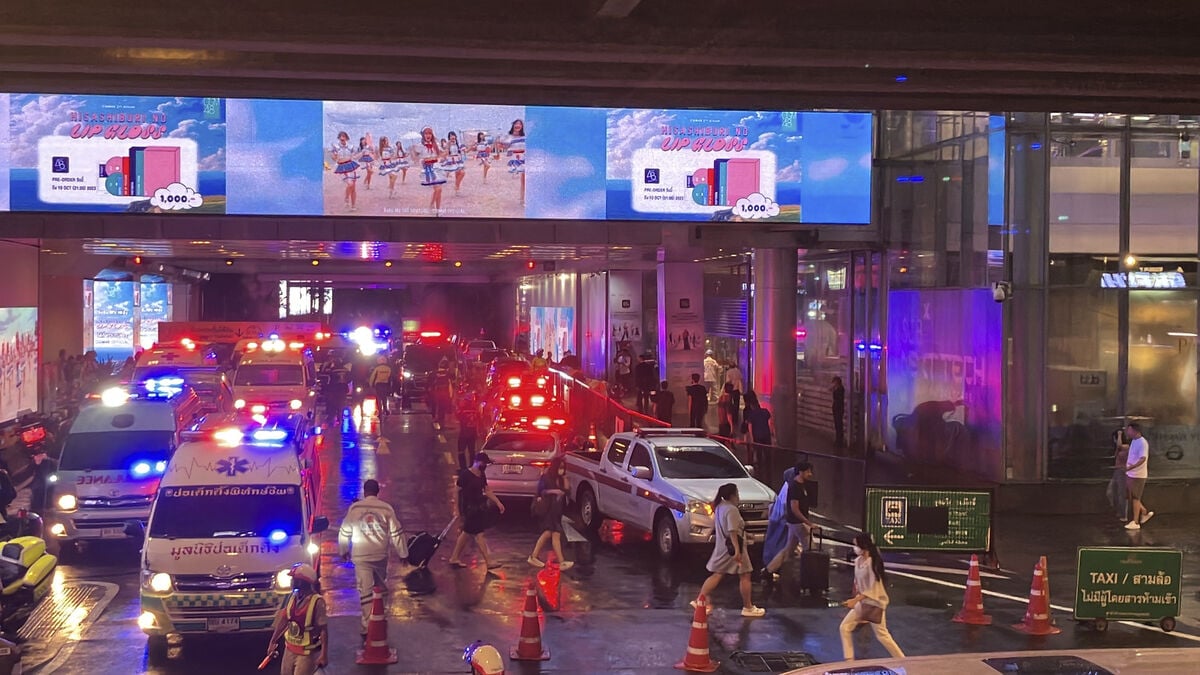
In recent years, radicalized youth have carried out violent attacks in Indonesia, Malaysia and Thailand, writes the think tank Soufan . In Singapore, attacks have been stopped before they could take place.
In all cases, the perpetrators were young, between 13 and 17 years old, and they had been radicalized with a mixture of propaganda for different ideologies that are not traditionally aligned with each other.
Several acts have also been linked to the phenomenon in the United States, where young perpetrators are accused of absorbing violence they see online and being inspired by it in real-life acts of violence.
The cases are attributed to what is often called “nihilistic violent extremism” (NVE) internationally. Within this category, violence is encouraged, promoted and celebrated for the sake of violence and chaos. The driving force is often a desire for status and recognition, writes the US-based think tank.
“These extremists eschew a coherent set of beliefs in favor of ideological sampling, drawing content from right-wing extremism, neo-Nazi ideas, anti-Semitic conspiracies, pro-IS ideas, misogyny, incelism, and anti-LGBTQ themes,” Soufan’s analysis states.
“Pick 'n' mix”
It is sometimes called “pick 'n' mix”, or “salad bar extremism”, a sign that ideologies in the traditional sense are not always at the forefront, but that different ideas can be picked up and combined in different ways.
Some young people are lured into games and social media to become involved in contexts where violence and violent acts are celebrated. Most children and young people who view the material do no more than that, but a small percentage take the step and carry out violent acts themselves after being radicalized.
The phenomenon has also been seen in Sweden. The Expo report “When Lives Don’t Count” discusses associations such as No Lives Matter and the 764 network.
Several cases of unprovoked violence have been linked to the violent online cult, including a violent attack in Hässelby in northwest Stockholm, where a man in his 80s was attacked in a high-profile knife attack last year. A 14-year-old has been found guilty of attempted murder.
But labeling the environments is not easy. The loose ideology and lack of a specific common ideology make it complicated to define new extremist groups.
Will to harm
But if you still have to look for common threads, it is that you often see a strong interest in violence, and the desire to harm and be destructive. Then it can be framed within an ideological framework and given some kind of ideological veneer, says Morgan Finnsiö, researcher at the Expo Foundation.
At the same time, there are clear ideological traditions and expressions in the context.
They are expressed through, for example, the choice of targets, the language used in manifestos, internal jargon and also what, for example, underage perpetrators have been caught with in Sweden. When the police look in their notebooks from, for example, school, they scribble a swastika and white power stuff. So the ideology is there, but it is true that it is not primarily a political form of extremism.
Games and social media
Radicalization often occurs through social media and online games, such as the messaging service Telegram and the games Roblox and Minecraft. In Southeast Asia, radicalization has previously mainly occurred within the family or at school. But today, with young people spending a lot of time online, they are easily exposed to new ways of thinking.
"They come into contact with people who have more extreme ideas and may have plans for violent acts. They feel a sense of belonging and then it can be easier to become radicalized," says Joanna Lindström, who does research at Uppsala University on extremism, political activism and intergroup relations.
Previously, individuals were radicalized as members of a specific extremist group, where one had to be social and function in a group. Today, it is often about new individuals who are young, more vulnerable and who have difficulties in social interaction.
Many extremists – whether it's right-wing extremism or Islamist extremism or misogynistic extremism – feel disadvantaged in some way, or feel that their group is disadvantaged, and these acts of violence almost become a way of taking back power, says Lindström.
A lot of damage
In recent years, the Western world has begun to cooperate more internationally in terms of police to tackle the phenomenon, but the picture of the phenomenon is still quite unclear, says Morgan Finnsiö.
Fortunately, it seems to be a relatively small extremist environment internationally compared to the large extremist environments such as traditional right-wing extremism or radical Islamism. Unfortunately, it has been shown that even this small minority can do a lot of damage, not least to individuals.