
It wasn't intended to be a story about AI, but a story about people who feel they need AI, says Kore-eda when TT meets him at the Cannes Film Festival.
The 64-year-old filmmaker has been considered one of Japan's leading directors for many years. His best-known work is the 2018 Palme d'Or winner and Oscar-nominated film "Shoplifters". Kore-eda's films are characterized by humanism and compassion, while also addressing social problems.
"Sheep in the Box" is about the married couple Otone and Kensuke, whose seven-year-old son has died. The couple rents a robot modeled on their deceased son, both in appearance and behavior. But can the robot replace a real child?
On the one hand, AI gives us the opportunity to expand our possibilities, as with all technology. But at the same time, it shrinks our possibilities, which is something we must be extremely vigilant about, says Kore-eda.
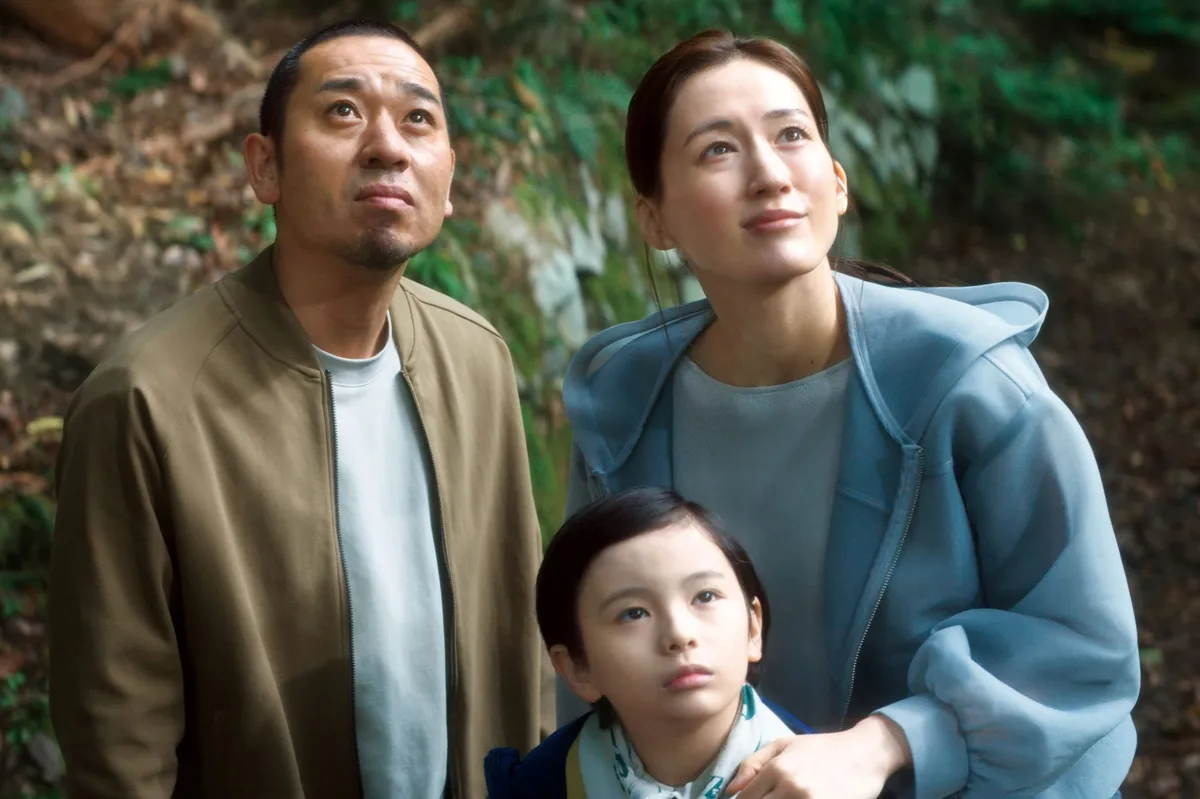
Daigo Yamamoto, Haruka Ayase and Rimu Kuwaki in "Sheep in the box".
Humans and Robots
The film explores the relationship between humans and robots and questions how much humanity there is in humans.
The married couple in the film only choose good, pleasant memories for their robot. And in this way they create a void, they create something that is comfortable for them.
Being able to recreate people we have lost - is that positive or negative?
I do not deny that it is a human weakness to want to do this. By “recreating” the son, they can make some discoveries. And it is not only negative but also positive. But if you hold on to it, it becomes a curse. You have to be prepared to let go and be able to admit your grief.
The child in focus
In Kore-eda's films, there are almost always children at the center.
I believed for a long time that two things were important in my films: the eyes of the child looking critically at adult society, and the eyes of the dead viewing society from the outside. This time, the two are united. The child is the dead character, says Kore-eda and continues:
I think that all families are broken in a way, that something is always missing. At first, I didn't have the goal of making films about families. I started thinking about it when my father died. I started thinking, "What is a father, what is it like to be a father, can I become a father?"
In just a few months, Kore-eda's "Look Back", about two girls who become manga artists, will premiere in Sweden.






What do you think?