The weather forecast points to sunny weather with temperatures of 30 degrees in Kansas City, whose metropolitan area with two million residents stretches across the state border between Missouri and Kansas.
This is the time of year that Valeria, whose real name is something else, likes most.
Now I can't wait for it to be over. I wish I didn't have to. Summer is my favorite season. So hiding under it feels hard, because I know winter is coming.
Kansas City is hosting four group stage matches in the World Cup, a round of 16 and a quarter-final.
"But there are many who won't go to the matches because they are so scared. They don't feel safe in their own city and are worried about what will happen during the World Cup," she says.
Hundreds of thousands are being deported
The United States has a record number of illegal immigrants, 14 million, living in the country. 8 million of them have no protection from deportation at all, according to the Pew Research Center . That's a broad group of people and includes those who entered illegally or whose visas have expired, whom the Trump administration has targeted. More than 600,000 have been deported so far, according to the White House.
Valeria, who is originally from Mexico and has lived in Missouri for half her life, wouldn't reveal her exact visa status other than to say she's not a U.S. citizen, and said she was worried.
Anyone who is not a U.S. citizen is at risk of deportation, she says.
With the World Cup comes more police and other security personnel, and more random checks. There is always a risk that local police will notify the dreaded immigration agency, ICE, if they suspect that people are in the country illegally.
It's like putting my life on hold. I'm just a normal person who wants to work, have a coffee with friends, watch a movie - or even go to a game. But I don't dare risk it, she says.
“Very tense”
Jennefer Canales-Pelaez works at the organization ILRC in Houston, Texas, where Sweden is playing the Netherlands. ILRC works to strengthen the rights of migrants. She says that it is mainly local police who are a concern, since a stop for a broken taillight on a car can result in a report to ICE and deportation.
It's very tense, she says.
Valeria thinks it is important that World Cup visitors know what is happening beyond the drama on the football fields.
The host cities are sacrificing a lot. We are not angry at the visitors, but at this hyper-security and the pressure that this festival puts on our cities.
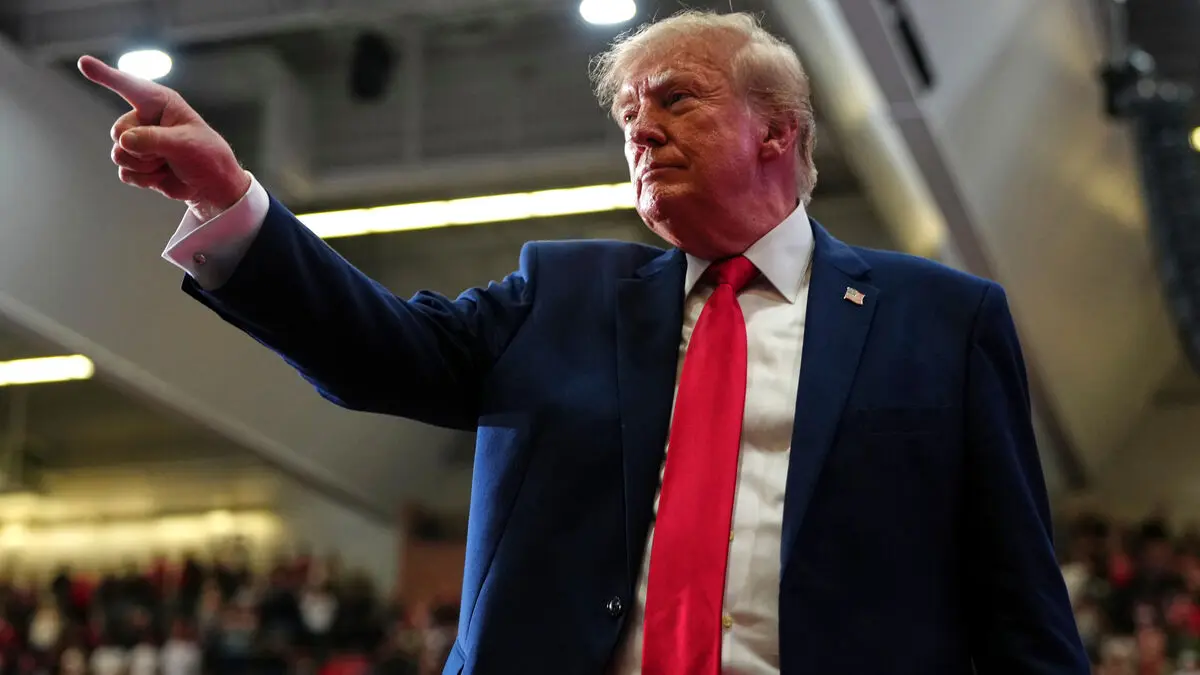
The Trump administration has stated its goal of stopping migrants who do not have permission to enter the country at the southern border.
Similarly, the government aims to deport people who have no right to be in the U.S. The group is large - 14 million people, of whom 8 million have no protection from deportation at all.
Around 10 million people work in the country, which is 6 percent of the total workforce. Many work in the construction industry, restaurants and hotels.
According to the White House, more than 600,000 people have been forcibly deported so far during Trump's term.
Sources: White House, Pew Research Center.