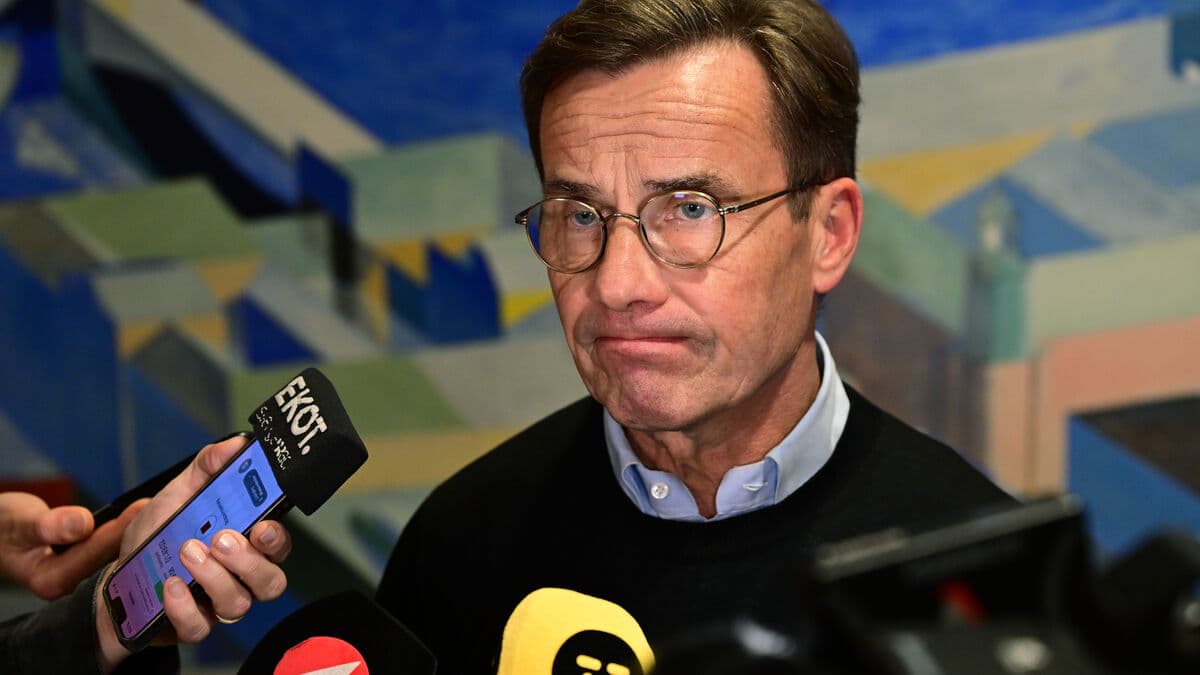
We should not have a society where people fall below a reasonable standard of living and become desperate, says Jonas Rydberg, secretary-general of Sweden's City Missions.
The Poverty Report 2026 paints a dark picture. Five percent of the population has debts with the Swedish Enforcement Authority or is undergoing debt restructuring - an increase of 13 percent since 2019. Young adults' debts with the Swedish Enforcement Authority have doubled in the past ten years.
Some companies’ business model is to lend money on poor terms to people with limited financial means, notes Ann-Sofie Henriksson, associate professor of law, in the report.
“Eroded welfare”
We have had a long period of erosion of the welfare and social insurance systems, at the same time as Sweden has liberalized parts of the credit market, says Jonas Rydberg.
He believes over-indebtedness can be seen as a symptom of poverty. At the same time, the debt trap deepens poverty.
He challenges the impression that luxury spending causes people to become over-indebted, an image that can be conveyed in the media. Municipal budget and debt advisers paint a very different picture, he emphasizes.
It is incredibly common to take on debt to pay rent and buy food - basic things like this. People even take out loans to settle debts to the public sector, for example to repay housing benefits. That makes up a large part of the debt mountain, says Jonas Rydberg.
“Can stand his ground”
The City Mission believes loans to people who are unable to repay them should be declared void.
“The credit check must be very precise. If it is not done, the company will be left in the lurch,” says Jonas Rydberg.
Another requirement is that it should be easier to qualify for debt restructuring. The City Mission also believes that, under a debt restructuring plan, the debtor should be allowed to pay off the principal first, and only then pay interest and fees.
Just over a fifth of Swedes cannot afford an unexpected expense of 14,000 kronor (about $1,300).
About one in ten people had difficulty or great difficulty making ends meet in 2025.
The proportion of people experiencing material and social deprivation increased from 3 to 7 percent between 2021 and 2025.
This means being forced to go without at least 5 of 13 welfare and consumption items, such as keeping the home warm enough, replacing worn-out clothes or having internet at home.
Indebtedness has increased in all age groups.
Large debts often arise after unemployment, illness or divorce.
The risk of becoming over-indebted is higher for people with low incomes, insecure employment, disabilities, mental health problems or weak social networks.
Source: Poverty Report 2026, Swedish City Missions