The border gate in Gyirong, where Nepal meets Tibet, was 20 metres high. Every day, hundreds of tourists and traders passed through there. Now not a trace of the building is visible.
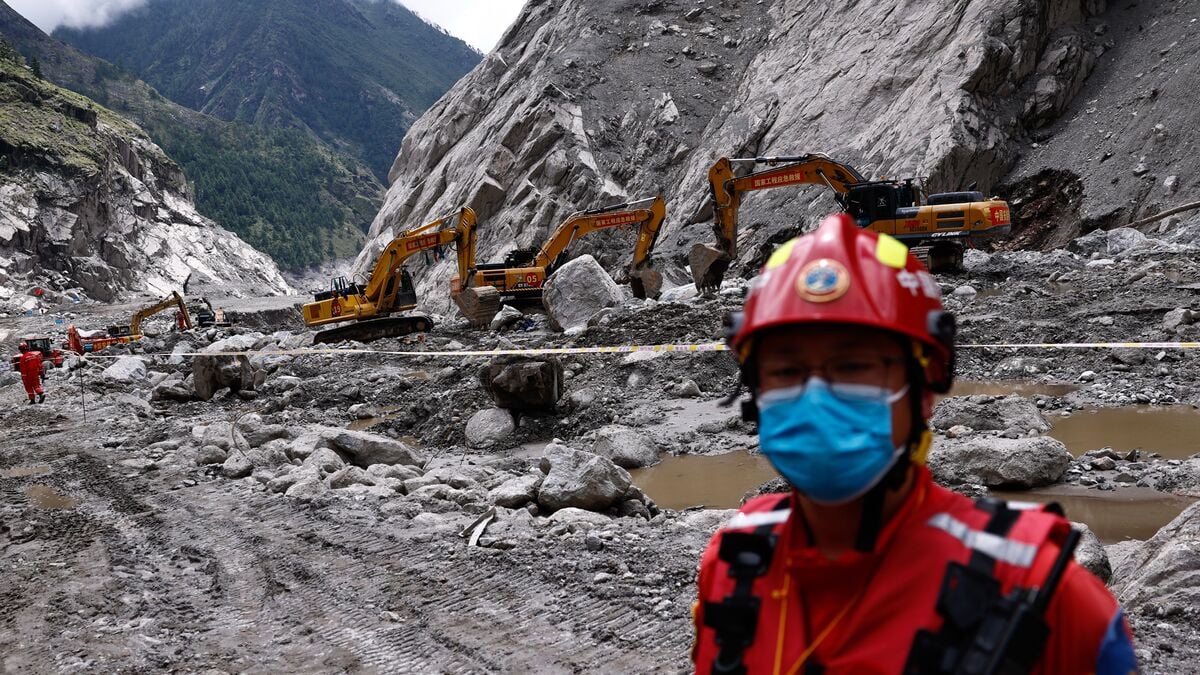
What remains is a lunar landscape of compacted clay and scattered boulders. Heavy excavators and Chinese rescue workers move slowly across the area.
"I can't stop searching. If I pause, I start thinking about my brothers and sisters and all the memories from here," border worker Gui Xinwei told Chinese state television CCTV, as reported by the South China Morning Post (SCMP).
All gone
The first dramatic images of the disaster on August 26 came from here. In a widely shared
from a surveillance camera high on the hill, people were seen running for their lives as the border post was swallowed by a massive, brown wave of mud.Gui Xinwei was on vacation when the huge mass of rock and ice collapsed in the Himalayas, sending a powerful wave downstream through the Bhote Koshi River.
When he returned, everything was gone. Only a lone conifer on a hill reminded him of the place where he had worked for over 20 years.
No survivors
It feels like he has been thrown into a “parallel universe,” he tells CCTV.
With every little thing I dig up, a piece of clothing, a piece of jewelry, makeup, or just something small - maybe a charging cord or a phone case - I wonder if they belonged to my colleagues. But I know they belonged to someone.
No survivors have been found in Gyirong. A pile of yellow flowers placed in the mud honours all those lost.
The total death toll in Nepal and Tibet has reached 1,400, while more than 5,300 people are missing. Among them are hundreds of foreign tourists and pilgrims.