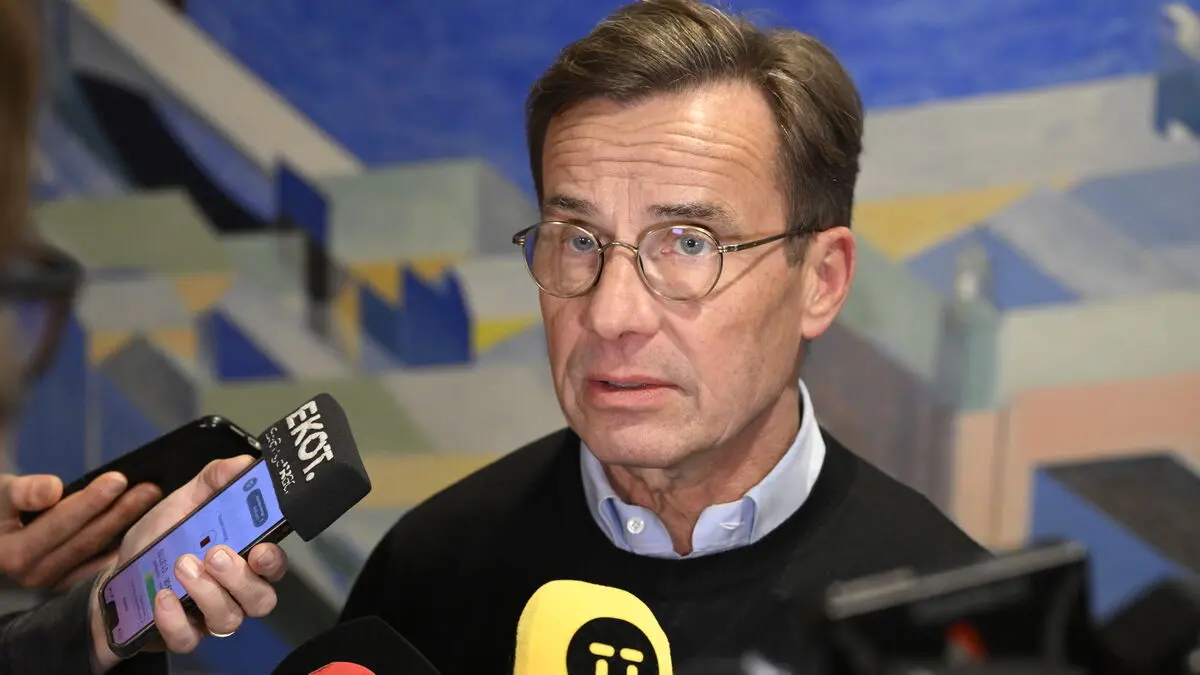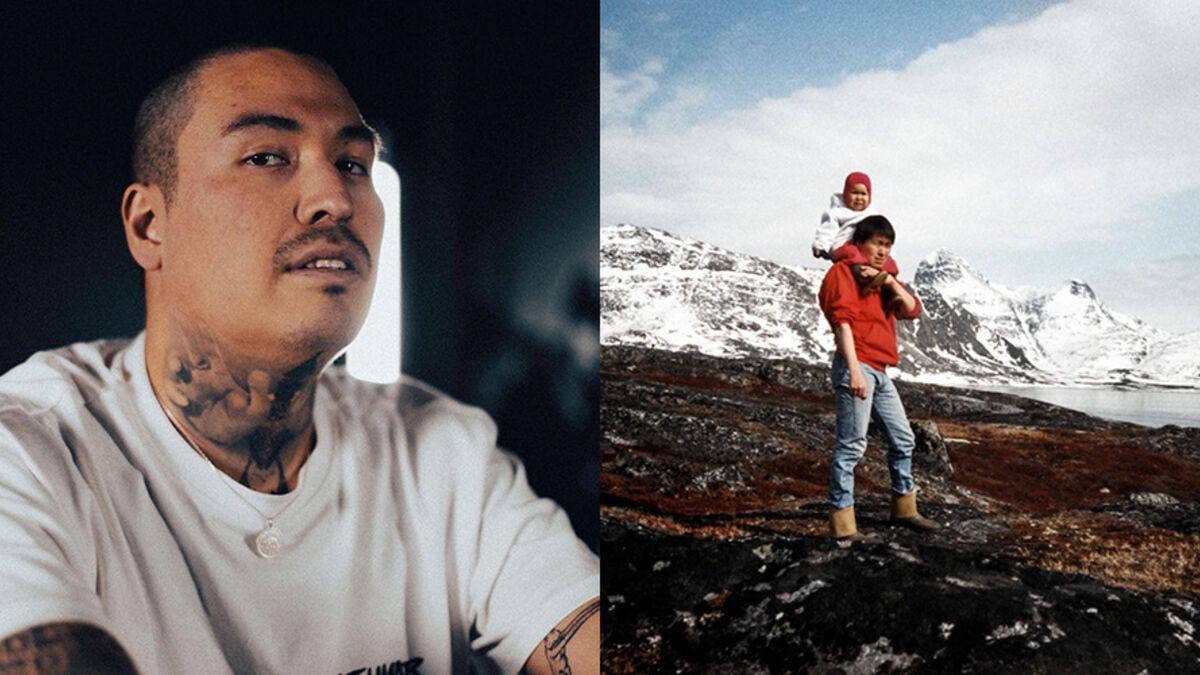
Even before the interview, he made it clear that he does not want to discuss Donald Trump's threats to buy or invade Greenland. His answers are brief but friendly, and he still agrees that it felt good to see Danes demonstrating with Greenlandic flags in their hands.
It's nice to get support.
For his part, Inuuteq Storch wants "everyone to have the best possible life, especially friends and family back home." However, he does not expect that the increased interest in Greenland after Donald Trump's threats will lead to anything good.
We'll see what happens afterwards.
Not protesting
The exhibition at Hasselblad Center (6/2– 3/5) is titled “The rise of the sunken sun”, which can be interpreted as a reference to the red sun on the Greenlandic flag rising above the ice. It could perhaps also refer to an indigenous culture that is rising. Inuuteq Storch lets the audience decide.
The return of the sun after the midwinter darkness has always been a major event for the Inuit, he explains.
Definitely. There are many references to the sun, the presence of the sun or the longing for it.
This also applies to his own artistry. In the series “Soon summer will be over” from Greenland’s northernmost town, Qaanaaq, there is a sunlit hand making a hard-rock hand sign among large icebergs.
The Gothenburg exhibition is the same as at the Venice Biennale 2024. As the first artist from Kalaallit Nunaat, or Greenland, he was allowed to take over the entire Danish pavilion two years after artists from Sápmi premiered the Nordic pavilion.
Global
He sees the growing interest in both the Sami and Inuit cultures as part of a global movement.
This development applies to the world's indigenous peoples, not just in the northern hemisphere. Their own culture is more respected and understood.
On Kalaallit Nunaat, indigenous culture has always been crucial, he emphasizes.
That's part of the reason we've survived in this part of the world. The Inuit are creative and good at adapting to places and situations. There has always been strong art in the Arctic.
He was born in 1989, raised in the town of Sisimiut in western Greenland, and moved back there after education in Copenhagen and New York.
Before leaving for Gothenburg, he completed work on his seventh photo book, which deals with graffiti and text messages in Nuuk's apartment buildings.
He prefers to photograph everyday situations with analogue cameras, but also uses family albums and historical photographs. In the exhibition in Gothenburg, he reflects his own images in the work of Greenlandic photo pioneer John Møller. During a time when the Inuit were most often photographed by visiting foreign photographers, Møller took pictures of foreign people who had settled on the island.