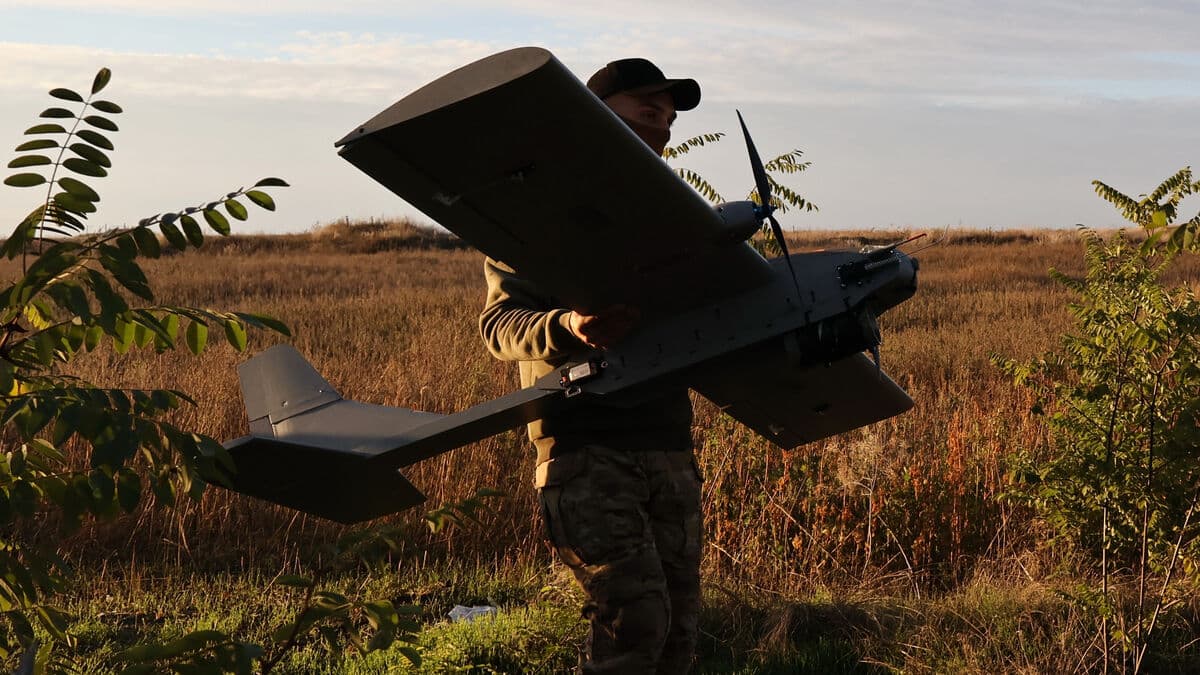
The drone, which was discovered by airport staff on August 4, was equipped with explosives and was near Ukrainian cargo planes. The device was defused.
Alexander Dobrindt said at a press conference in Berlin on Tuesday that the events follow the “pattern of Russian hybrid attacks.” The drone’s components, explosives and detonator point to the Russians and are recognisable “from other Russian hybrid operations and its war in Ukraine.”
"Low-level" agents hired by Russian state representatives carried out the suspected assassination attempt, Dobrindt says.
Cultural center closed
Foreign Minister Johann Wadephul says the Russian consulate in Bonn will be closed starting September 18. He also says that operations at the Russian House, a cultural center in Berlin, will cease.
"We are tightening entry controls for Russian citizens," says Wadephul.
Germany will also propose that more Russians be added to the EU's sanctions lists and promises tougher pressure on Russia's so-called shadow fleet.
Russian Ambassador Sergei Netyayev writes on the embassy's X account that targeted measures against Russia have consequences, and called the accusations "unfounded, absurd and contrary to common sense."
Putin reacts
Russian President Vladimir Putin says later in the evening, in a televised press conference, that targeting German sanctions against Russia would be "a mistake."
That is another mistake. And in my opinion, it goes against the interests of the German people.
NATO Secretary-General Mark Rutte has spoken to Chancellor Friedrich Merz about the incident:
"Russia's attempts to intimidate us, to undermine our unity and our willingness to support Ukraine are pointless and will fail," Rutte writes on X.
European Commission President Ursula von der Leyen says that further sanctions against Russia will be discussed within the EU.
Leipzig/Halle Airport is both an internationally important airport and crucial for deliveries of military equipment to Ukraine.
NATO's strategic efforts, including an airlift (Salis), operate from the airport with essentially daily deliveries to NATO groups in the Ukrainian vicinity: from Finland to Romania.