
When 29-year-old Sondos al-Kurd was eight months pregnant, her house was bombed and she lost her three-year-old daughter, Habiba. Her sister, aunt and cousin were also killed, she says.
She was rescued from the rubble and taken to al-Shifa Hospital, where she underwent an emergency caesarean section. Her daughter was placed in an incubator - at the same time, Sondos al-Kurd’s mother and brother were killed in another Israeli strike.
When Israeli forces besieged the hospital in November 2023, she was evacuated on a stretcher.
I kept repeating: “My daughter, my daughter”. They told me to leave her in the incubator. They said I would not be able to handle her condition, she tells Amnesty International.
The report describes how babies died because of the conditions during the attacks on al-Shifa. But Sondos al-Kurd’s baby was evacuated to Egypt and survived, she learned six months later. Mother and daughter were reunited only after two years.
“Preventing births”
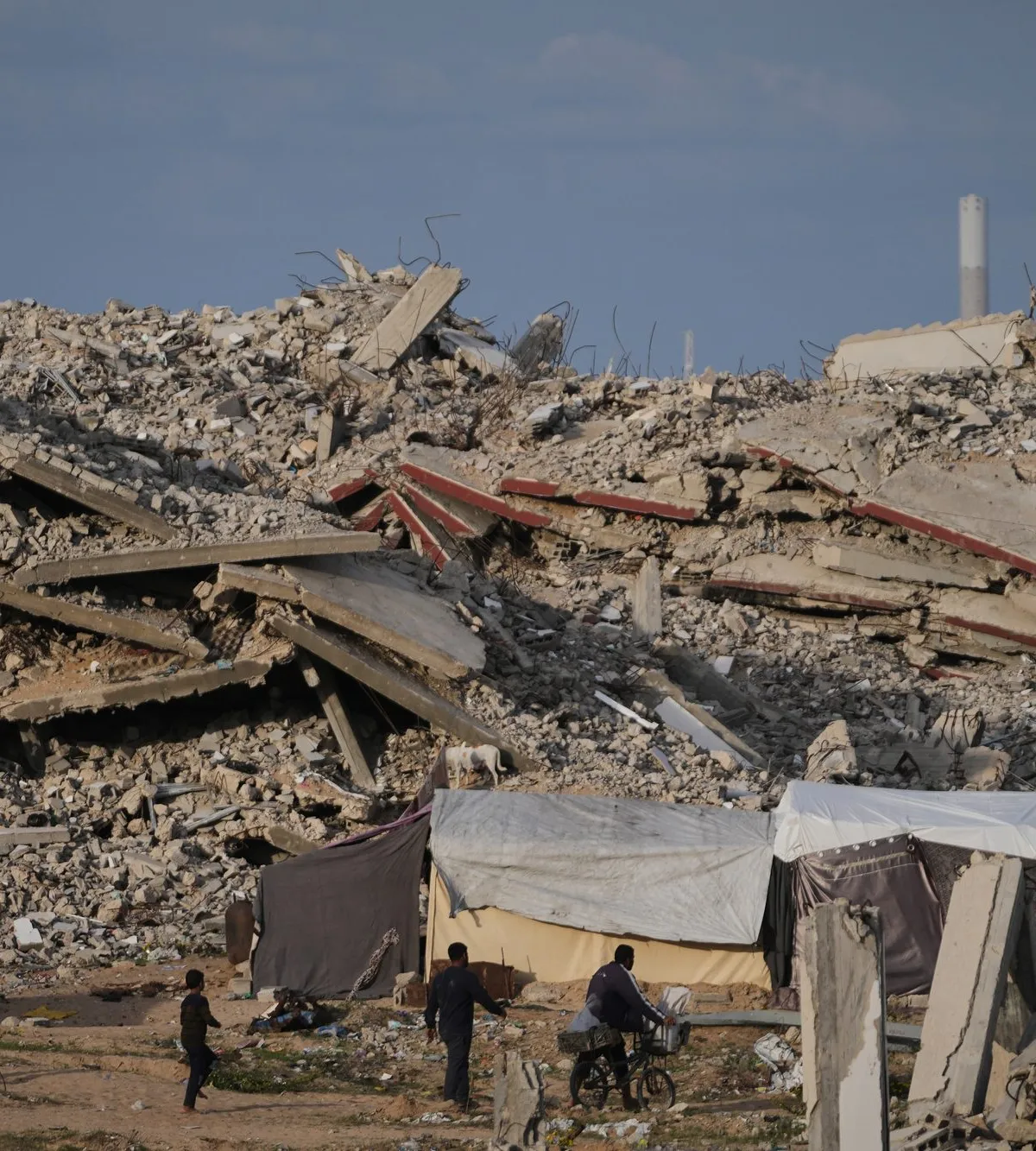
Women and girls make up around 30 percent of the total number of deaths in Gaza, according to figures from the Hamas-run Ministry of Health. They live in “unimaginably difficult living conditions,” says Katarina Bergehed, an expert at Amnesty.
The attacks by Israel have not stopped either, she points out.
And the living conditions imposed by Israel are so terrible that they are leading to the slow extermination of the Palestinian population. We believe that genocide is ongoing, despite the ceasefire agreement.
Amnesty also believes that Israel should be investigated for deliberately preventing births in Gaza.
A legal process has been ongoing at the International Court of Justice (ICJ) in The Hague since 2023 and has not yet concluded. In it, South Africa accuses Israel of genocide.
Affecting the children
Fertility care in Gaza has been completely destroyed - thousands of embryos and frozen eggs have been lost, according to Katarina Bergehed. There is hardly any prenatal or postnatal care available.
Healthcare workers have been forced to perform caesarean sections without electricity or adequate anesthesia.
According to her, it is “absolutely necessary” for Israel to start allowing materials to enter to rebuild the healthcare sector.
The vulnerable situation of women also affects the children, says Katarina Bergehed.
This is not a childhood that any child in the world should have.



What do you think?