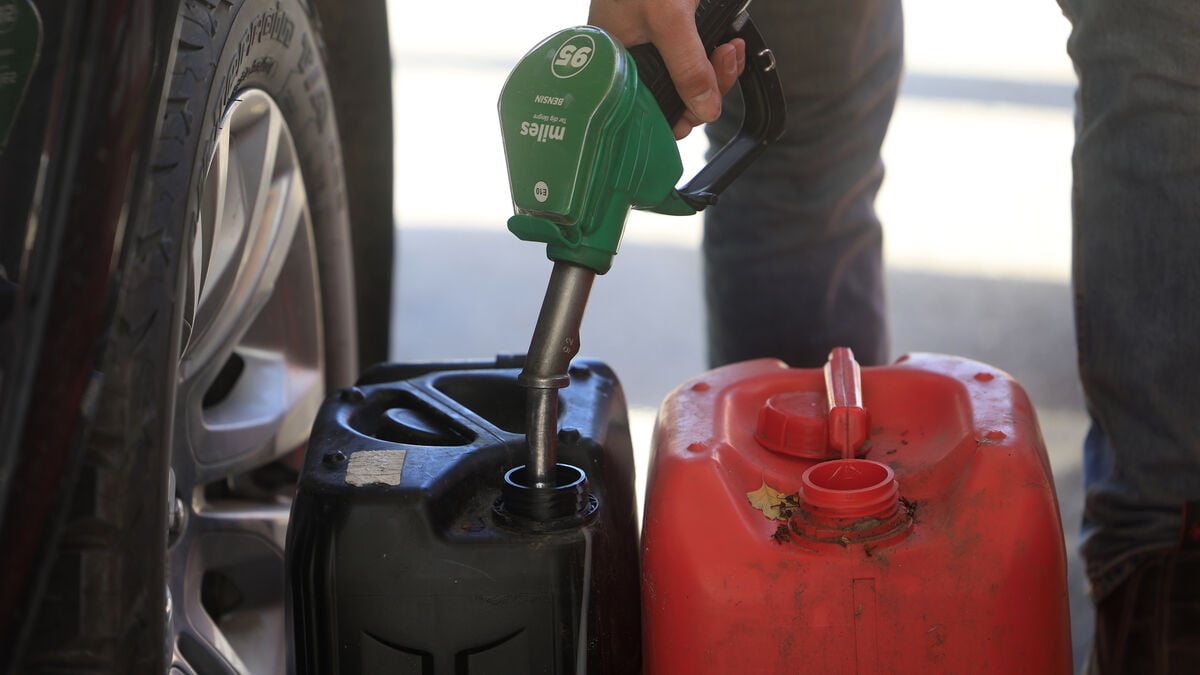
It's time to fill up your tank before October 1. At the end of the month, the tax on gasoline will increase by 1.03 kronor per litre including VAT. Diesel will also become 40 öre more expensive.
The reason is that the government's temporarily reduced tax on fossil fuels will end.
The same thing will probably happen again on December 1, when the temporary carbon dioxide tax returns to previous levels. At that time, the price of both diesel and gasoline is expected to rise by 3 kronor per litre.
However, the Sweden Democrats hope - through a so-called committee initiative in the Riksdag - to be able to extend the tax cuts, according to a statement from the party on Wednesday. But this requires the EU to approve continued exemptions from the minimum levels.
Whether there is a majority for it in the Riksdag is unclear.
Several factors
At the same time, global energy prices are at significantly elevated levels. Add to that an increasingly weaker krona that makes imports more expensive, and the price of diesel could reach 28-29 kronor per litre by Christmas.
How do customers act then - do they think less about taxes being raised or vice versa when taxes were lowered this summer? The effect is not entirely easy to see, according to Viktor Gunnarsson, responsible for competitiveness issues and taxes at Drivkraft Sverige.
There are so many other reasons that also play a role. For example, world market prices at the time, which can reinforce or counteract, he says.
The volumes of gasoline and diesel sold increased significantly in July, following the major tax cut of 3 kronor per litre on July 1. Several factors may have played a role, such as how people vacation.
But it could also be about refueling in neighbouring countries, says Viktor Gunnarsson, who points out that Sweden has the cheapest fuel prices in Western Europe.
Difficulty changing behavior
So what could possibly happen on December 1?
If this theory about June-July were correct, it would perhaps be the case that volumes would be abnormally high in November and decline slightly in December, he says.
However, motorists' sensitivity to price changes has proven to be relatively limited.
It is difficult to change short-term behavior, such as how you drive your car. It is more possible to do so over a longer period of time, says Viktor Gunnarsson.
"We saw no direct impact on our sales when fuel taxes were lowered and we also do not expect a major impact on our fuel volumes sold when the tax is increased," OKQ8's press department says in an email response.