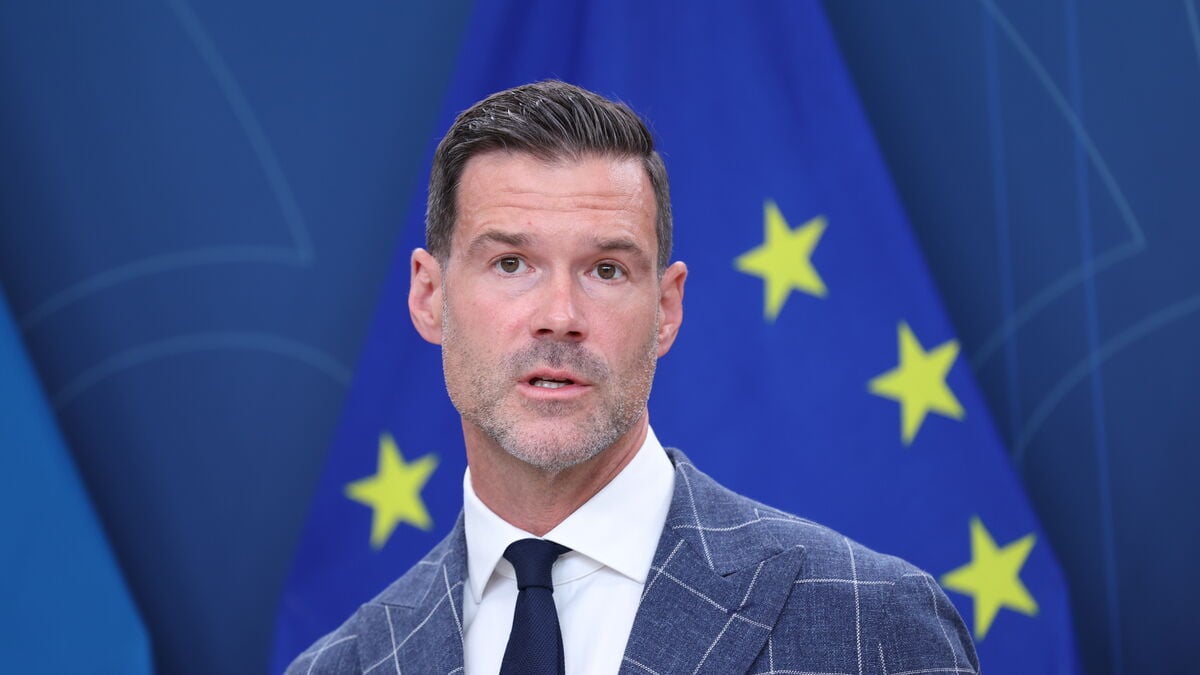
On Tuesday, Forssell will attend an extraordinary EU meeting due to the situation in Ceuta, the Spanish North African exclave on the Strait of Gibraltar.
Around 60,000 people crossed the border into Ceuta from Morocco last week. Most have since returned. More than 70 people have been confirmed dead, including in drownings and crushes.
Ahead of the digital crisis meeting, the government is insisting that Spain must take control of its external border.
"We warned about the risks of this. When you make such large amnesties for people who do not have grounds for asylum, it creates an incentive for people who do not have grounds for asylum to come to Europe," says Johan Forssell.
Compare with the refugee wave
The Minister of Migration compares Spain's migration policy to what it was like in Sweden a decade ago. In 2014 and 2015, a total of just over 244,000 people sought asylum in Sweden during the refugee wave, according to Statistics Sweden.
Sweden had a similar policy before, ten years ago when 250,000 people came in two years. We have learned from that. That is why we have changed the policy. But Spain has gone in a completely different direction. And, yes, many warned that it could have consequences. It has had those too.
The government is offering its support in Ceuta, through cooperation with the EU border agency Frontex, according to Forssell.
If Spain asks, Sweden is ready to help it regain control.
Sharp EU tone
The developments in Ceuta have caused a sharp tone between several EU countries. Italy announced on Friday that it is suspending its Schengen cooperation with Spain.
"I think we have maintained a very balanced tone. We want Spain to get through this. It is a serious situation. It is also a tragic situation. People have died, let's remember," says Forssell.