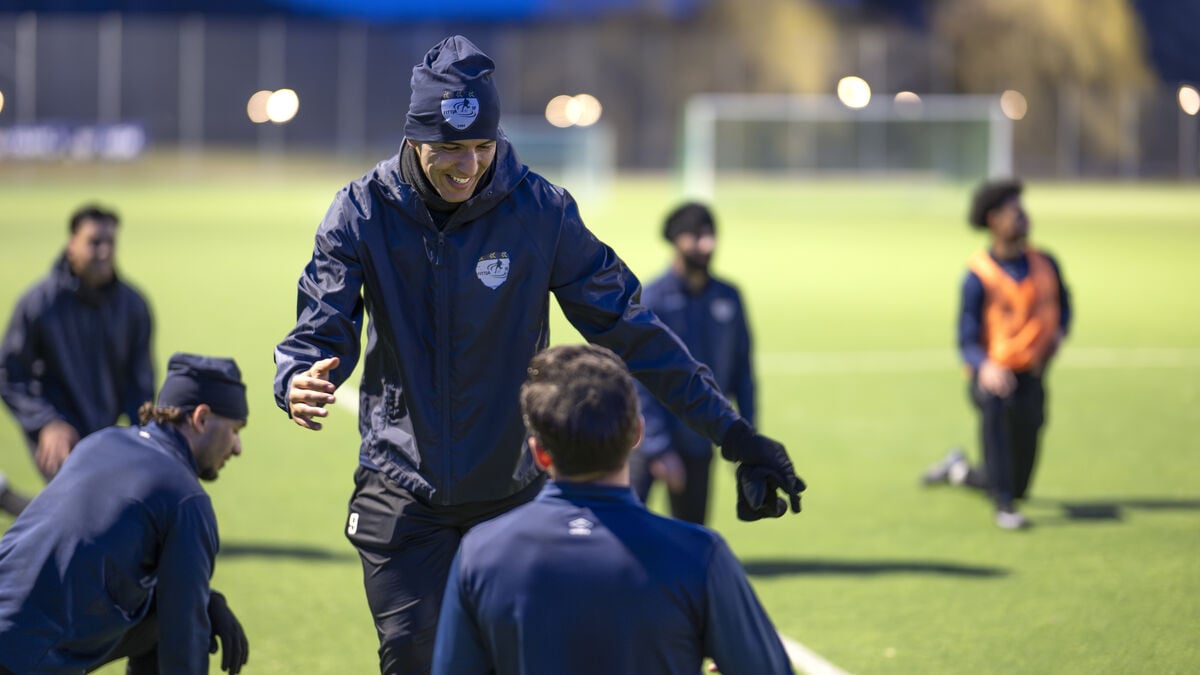
Earlier this spring, Nabil Bahoui ended his professional football career. The 35-year-old from southern Stockholm has achieved icon status at AIK, where he won a Swedish championship and played several hundred games in the black and yellow jersey.
He can look back on playing in Germany and the Netherlands, among other places - Bahoui played in the national team alongside Zlatan Ibrahimovic and has played in stadiums such as the legendary Stade Vélodrome in Marseille and the gigantic Westfalenstadion in Dortmund.
All of that obviously means a lot to him.
But what he wants to do now means even more to him.
Nabil Bahoui wants to give back.
To the suburbs.
To the young people out there who may be heading in the wrong direction in life.
I feel like I have horsepower left. I want to contribute.
I work with young people at Brommapojkarna, but I have time to spare. So I sat down and thought about what I want to do.
A thin line
The idea landed on playing football for the local team Fittja IF, from Botkyrka south of Stockholm, and in that way be the role model that young people often lack. A person to look up to up close when everyone else, except the shady gangs, lets them down.
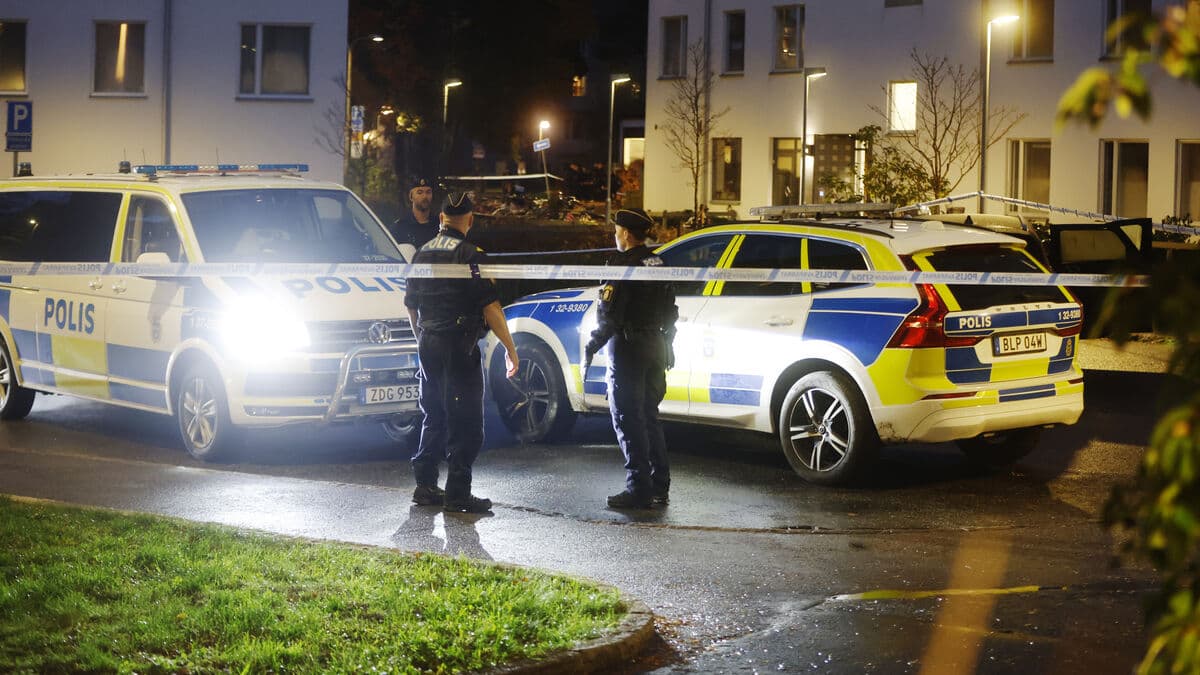
Fittja has long been classified as a particularly vulnerable area by the police, even though statistics show a positive trend with reduced crime and increased safety.
If I can, by playing football, help one child or several children stay away from crime, it would mean everything.
He glows when he talks about his commitment.
I want to show children that it's possible. The problem when I was growing up was that there was no one to relate to. Sure, Zlatan was there, but he was too far away. There was no one around. It's a thin line; the only reason I didn't end up on the wrong path was because my parents were very strict with me. I don't want the line to be that thin. You need role models.
Nabil Bahoui gives back to what he calls "his suburb," but he sees a bigger and broader perspective.
All municipalities in Sweden should invest more in sports for young people. It's a big question. As I said, the line is thin and sports can be absolutely decisive. In sports, in my case football, you unite. It's just positivity, you make friends for life.
On the right path
Björn Ödman is a youth coordinator at the police in Botkyrka.
"It is of course important for all young people to have good role models. But one difference you can see in some areas is that there are criminal networks that also pull in young people. They deceive and coerce and work against what is constructive," he says.
Björn Ödman finds it commendable that a well-known person like Nabil Bahoui wants to be a role model for an entire generation.
It is the authorities who are responsible for ensuring that young people are safe and that they develop and feel good. But the fact that a person of Nabil's caliber wants to take responsibility and be an inspiration is of course very positive. It means a lot to the local community.
Stopping the recruitment of young people into criminal networks has long been a multi-million-dollar question. There have been many attempts, with varying results.
I think we are on the right track now.
We work together with the authorities against the older criminals, who recruit the younger ones. Young people do not lack dreams or drive, but in some places there is a culture where criminal networks counteract that. For us, it is about authorities continuing to work closely together.
"Bigger than sports"
Nabil Bahoui hopes that his entry into Fittja IF will bring the entire suburb to life. He dreams of being present, of organizing various events and of a neighborhood that is associated with joy.
The people in Fittja are fighting hard. I can't say I've had a fantastic career, but I've lived my dream. The point now is that I want to contribute. I want to play some football and help in the bigger picture. But really, this is bigger than just sport.
The police have historically divided Sweden's vulnerable areas into three categories. In the latest situation report, which came out at the end of 2025, the category "risk area" was removed.
Vulnerable area: Characterized by low socio-economic status where criminals have an impact on the local community. May include threats and extortion, but also violence in the streets and squares and open drug dealing. The situation is considered serious.
Particularly vulnerable area: Here it is "difficult or almost impossible" for the police to fulfill their mission. There are systematic threats and acts of violence against witnesses and victims in the area. There are also parallel social structures, extremism and a high concentration of criminals. The situation is considered urgent.
The situation is based on data from local police areas. The problem picture is assessed, among other things, based on the degree of vulnerability based on the occurrence of threats, extortion or acts of violence in a public environment that risk harming third parties, open drug trafficking, outward dissatisfaction with society and the residents' willingness to participate in the legal process.
In 2025, 65 areas in Sweden were classified as vulnerable, of which 19 were particularly vulnerable.
Among the 19 particularly vulnerable areas, three have developed positively, two negatively and the rest are unchanged.
Fittja in Botkyrka municipality has long been classified as a particularly vulnerable area by the police. However, statistics show a positive trend with reduced crime and increased safety through collaboration.
Born: February 5, 1991 (age 35).
Clubs in his career: 2008-2012: Brommapojkarna (on loan to Gröndal, Väsby and Akropolis between 2009-2011), 2013-2015: AIK, 2015-2016: Al-Ahli, 2016-2017: Hamburg, 2017-2019: Grasshopper (on loan to AIK 2018), 2019: De Graafschap, 2019-2022: AIK, 2023: Qatar SC, 2023-2024: Persepolis, 2025: Brommapojkarna.
International matches: 8.
Current: Has finished his active career and now wants to help struggling young people in Stockholm's southern suburbs by playing football for the local team Fittja IF.