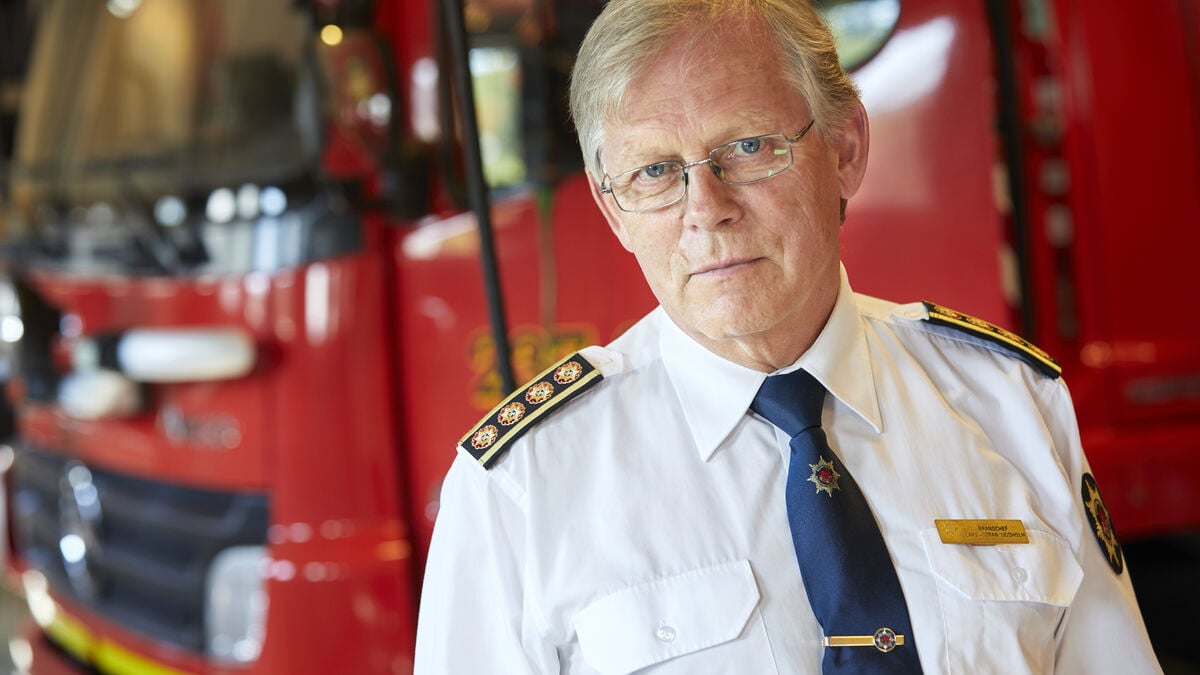
Lars-Göran Uddholm is a senior consultant and fire engineer who, among other things, was a rescue leader during the forest fire that raged in Västmanland in 2014.
"Compared to what we think is big in Sweden, this is huge. Nothing we've had has come close. So even though you have access to a lot of equipment, it's like trying to stop Niagara Falls," he says of the fires in southern Europe.
When fighting a large fire, it is primarily about two things, according to Lars-Göran Uddholm. One is to prevent the spread, the other is to get people to safety and ensure the safety of personnel, since there is a high risk of being surrounded by the fire.
What is already burning should be left for now. It makes sense to have a group that focuses on stopping the fire and one that looks at risks. It is important to ensure that resources are used as well as possible.
Own circadian rhythm
Lars-Göran Uddholm describes that a forest fire has its own circadian rhythm and that the best thing is to work with the circadian rhythm.
I sometimes say it's like a teenager, it's a bit lazy in the morning but then towards lunch and the afternoon it picks up again. Towards the evening it goes down in intensity when it gets cooler.
Therefore, it is actually better to work on the fire during the night, but this will pose great risks for personnel, especially in southern Europe where it is so dark at night even in the summer.
“Incredible challenge”
How the fires raging in southern Europe in the coming days will go depends a lot on the weather, whether the wind and heat will subside and, in the best case, whether there will be rain, according to Lars-Göran Uddholm. And whether there is time to plan ahead and evacuate people from areas where it cannot be guaranteed that the fire will not reach.
Lars-Göran Uddholm describes the ongoing rescue work in southern Europe as probably “an incredible challenge” for the rescue workers on site. A tough job with hot weather and rugged terrain.
It doesn't matter if you get more resources. They can affect specific efforts, but for the whole, it's the weather that decides. It's beyond human control to manage this.