
Vantaa is part of Greater Helsinki and Finland's fourth-largest city. Around 90 percent of its residents are connected to the municipal district heating network operated by Vantaan Energia. The water is currently heated using heat from waste incineration.
In summer, more district heating is produced than is needed.
In winter, demand can be ten times higher, says Juha Luomala, director of communications.
When the temperature drops to -10 degrees or lower, waste incineration is not enough, and gas-fired boilers have to help.
So we started thinking: wouldn't it be great if we could store the heat during summer, when we have an abundance, and use it during winter instead?
Last year, excavation work began beneath Vantaa. The Varanto energy storage facility is being built 140 meters underground in the form of three large rock caverns.
300 meters long, 20 meters wide and 40 meters high - and there are three of them, says Luomala.
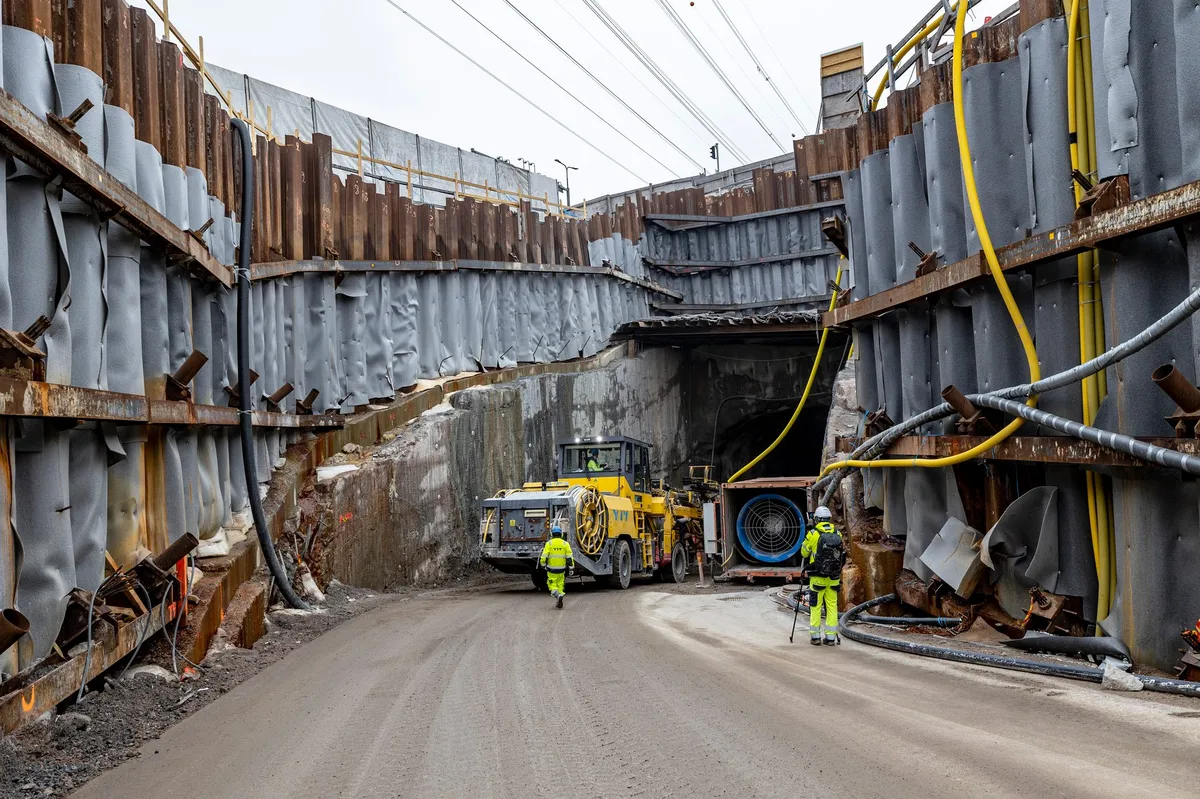
The tunnel down to the cave is so long that even if the entrance to the vault were to burst, the scalding water would remain underground. Press photo.
Almost two Globes
Just outside the construction area is the heavily trafficked Helsinki Ring Road.
When excavation is at its most intensive, a truck loaded with rock will leave here every two minutes, says Luomala.
Just over one million cubic meters of water, equivalent to almost two full Avicii Arenas (the Globe), will be pumped into the caverns under pressure, heated to a maximum of 140 degrees and then used in the district heating network as needed.
We can transfer the heat to the district heating network through a heat exchanger.
In addition to the combustion plants, two 60-megawatt electric boilers will be used to heat the water when electricity prices are low.
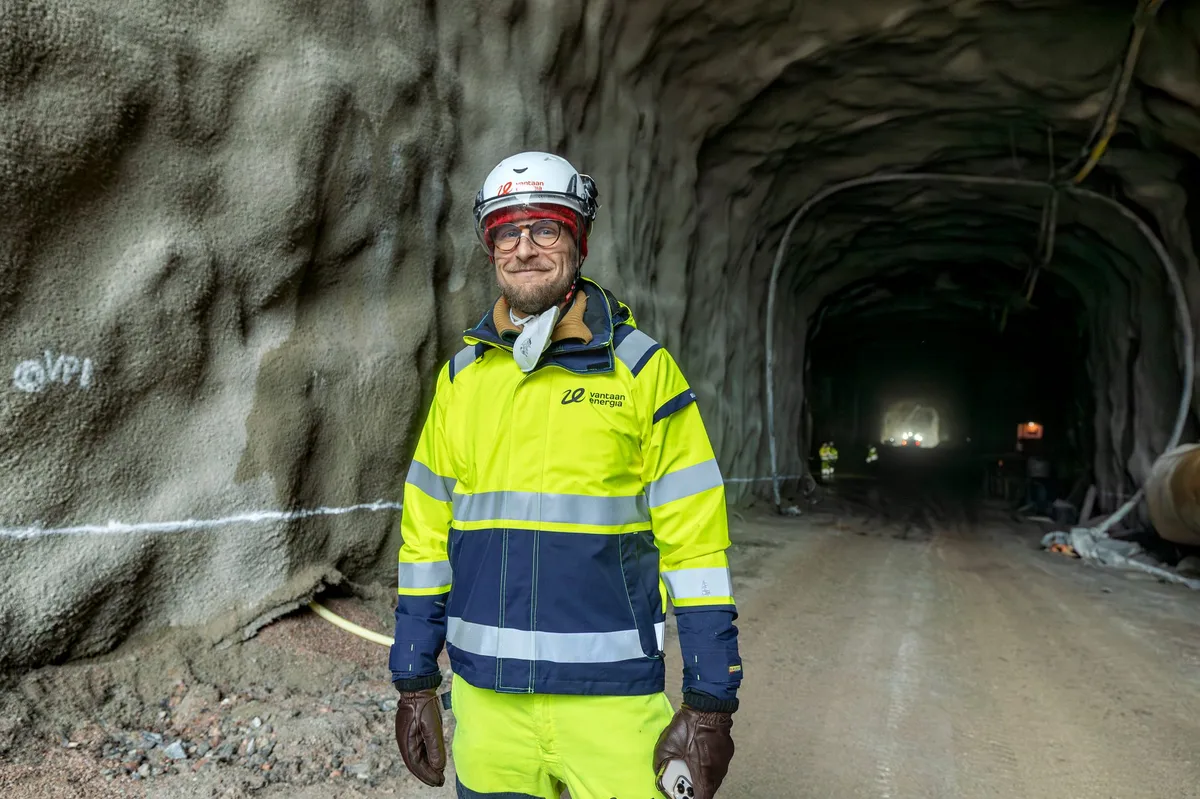
Juha Luomala says that there has been a lot of media interest in the project. “One of the biggest challenges in the energy transition is how to store energy when there is plenty of it,” he says. Press photo.
Major investment
Initially, 50 percent of the energy is lost as the water heats the surrounding rock.
But then the cave is like a huge thermos. The rock insulates quite well and maintains the temperature, says Luomala.
In theory, Varanto can supply the district heating network for several weeks during winter. Its capacity is estimated at 90 gigawatt-hours.
In Västerås, Mälarenergi's rock cavern was inaugurated in 2024. It was then described as the world's largest heat storage facility, with a capacity of 300,000 cubic meters, based on similar technology.
According to Luomala, the significantly larger Finnish project is estimated to cost 300 million euros, or 3.3 billion kronor. The investment is described as profitable, although Luomala cannot say when it will pay for itself.
It is a very large investment for us. But it will also be the heart of our energy system, he says.






What do you think?