The calculations we have made show that it is extremely unlikely that the damage to the ship occurred while it was still afloat, says Jonas Bäckstrand from the Swedish Accident Investigation Board.
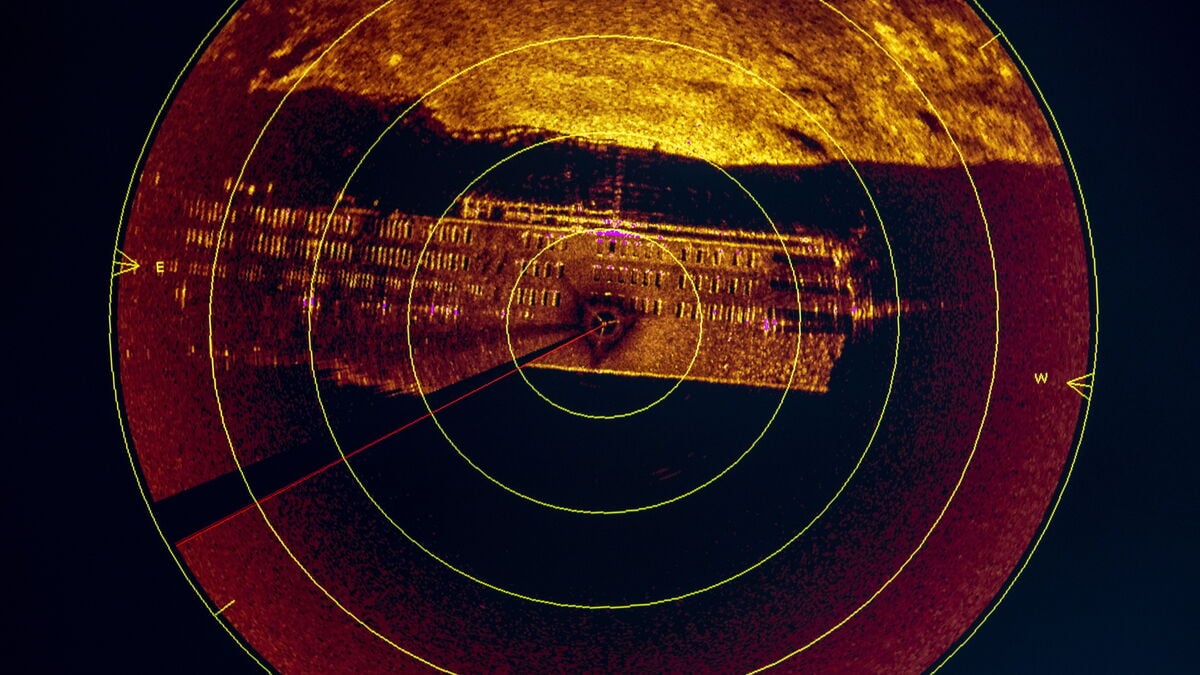
The purpose of the work, which has been to investigate information in the television documentary, meant that the conclusions from the 1997 accident report (JAIC) on the sinking of the Estonia needed to be revised. The documentary showed previously unknown holes in the Estonia's hull.
The answer to that question is no, according to the accident investigation boards in Estonia, Sweden (SHK) and Finland, which jointly investigated the matter.
Our conclusion is that MS Estonia sank due to the collapse of the bow structure, and that the new damage on the starboard side occurred through contact with the seabed, says Jonas Bäckstrand from SHK at a press conference in Tallinn.
Simulations of the accident
The assessment that the damage came from contact with the bottom is based, among other things, on the results of simulations of the accident sequence. According to these, the sinking sequence would have been very different if the damage had occurred at the surface.
Furthermore, calculations have been carried out that show that the damage is in good agreement with the expected outcome if the hull twists in the way it did on the bottom.
And the shape of the damage corresponds closely to the underlying geological formations, says Jonas Bäckstrand.
In addition, there is several testimonies that contradict the claim that there was such damage to the hull. The holes were not visible earlier in the 1990s, but only became visible after the hull had twisted on the bottom, according to the investigation.
New modeling
The results of the investigations are consistent with JAIC's conclusion about the cause of the accident: the bow visor gave way to the force of the waves, which led to the ramp opening and water flowing onto the car deck.
A modeling that has been done also supports the previous scenario of how the accident occurred, where rapid water ingress through the bow ramp led to the ship capsizing and sinking.
One conclusion that differs is the time when the accident sequence began, which is estimated to be 15 minutes earlier than stated in 1997. The new assessment also states that the Estonia was not seaworthy.
"JAIC has piled up a lot of facts that indicate that the ship was not seaworthy, but still concludes that it was. That's where we make a completely different assessment," says Bäckstrand.
Facts: The Estonia disaster
The ferry M/S Estonia sank on the night of September 28, 1994, en route from Tallinn to Stockholm.
852 people died, of whom 501 were Swedes. 137 people were rescued.
The International Maritime Bureau presented its report on the accident in 1997. The most important conclusion of the report was that the fasteners and locks for the Estonia's bow visor were undersized. When the bow visor came loose, large amounts of water rushed onto the car deck and caused the ship to capsize.