The idea of the university of applied sciences (YH) is to offer programs and courses based on the needs of the labor market.
However, in data and IT, the proportion who have a job the year after graduation has decreased from 90 percent in 2022 to just 69 percent this year, according to recent statistics from Statistics Sweden.
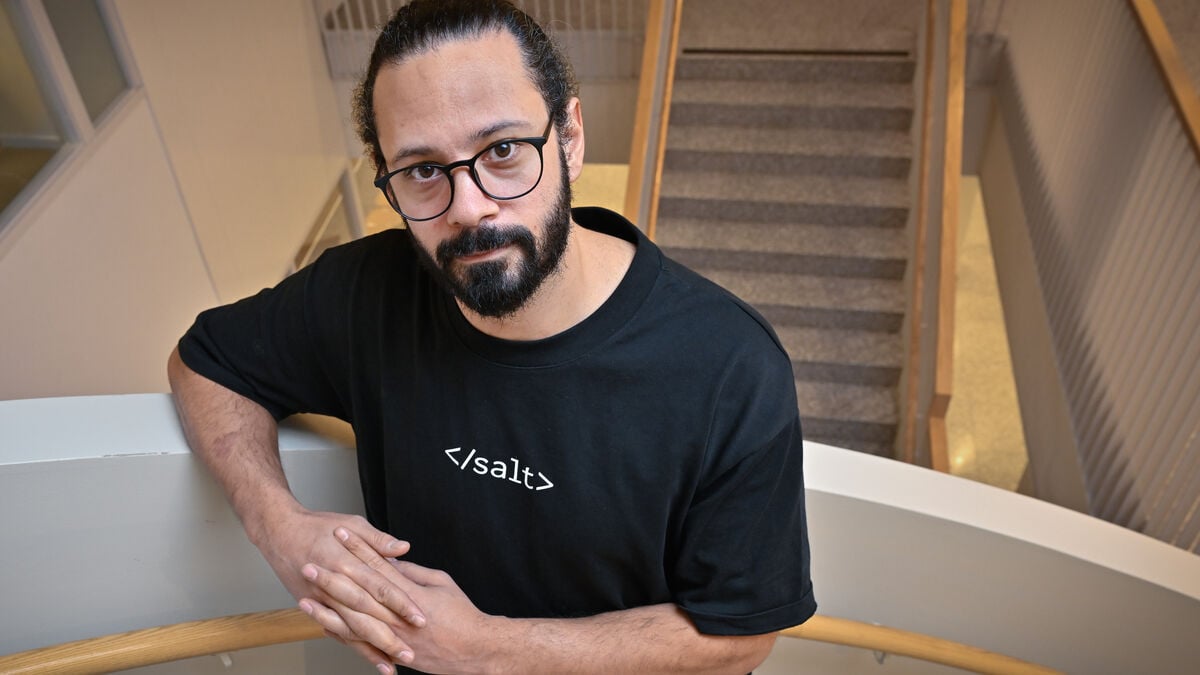
Cristoffer Dessezar, who has completed a programming education, has applied for hundreds of jobs since graduating but has only been called for a few interviews.
Previously, many people have found jobs through their internships, that has been one of the things that attracted them to YH, he says.
But unfortunately I couldn't stay at my internship and it was the same for a majority of my classmates.
“Catch 22”
One of the reasons may be that AI has taken over certain tasks, he believes. This has led companies to prefer to invest in more experienced programmers.
When you look at the advertisements, many require 2–3 years of work experience even though they are junior positions, says Cristoffer Dessezar, who lives in Järfälla outside Stockholm.
So it's a bit of a catch-22, because how are you going to get experience if you don't get a job?
In some areas of the University of Applied Sciences, things are looking better. In healthcare and social work, for example, 91 percent of those who graduated last year had a job when Statistics Sweden's survey was conducted in the autumn.
Overall, however, the proportion has decreased from 84 to 81 percent compared to last year.
No regrets
These are relatively expected figures, according to Joel Junros, an analyst at the Swedish Agency for Vocational Education and Training.
We had expected that because of the recession. That's the overall thing. But within data and IT in particular, there are also signs of long-term structural changes, where new technology such as AI is having an impact, he says.
Therefore, the university of applied sciences must adapt to the new conditions.
It's an element of uncertainty that we struggle with when we have to predict the future. But we think we see some signs of it already in the numbers, says Joel Junros.
It is not unreasonable to think that technology will have an impact here and that we need to prepare for it.
Cristoffer Dessezar is – despite hundreds of no's so far – positive about the future.
"I don't regret making this journey at all and I know it's nothing personal. It's probably just difficult times, while AI is reshaping the way we work," he says.