"Very tough results," Prime Minister Keir Starmer admits, according to the BBC.
There are now calls for his resignation.
"I believe, and many with me, that the party otherwise risks ceasing to exist," says former party leader Ian Lavery, according to The Guardian.
Starmer, however, stands his ground:
"Tough days like these don't weaken my resolve to deliver the change I promised. Instead, they strengthen it."
Losing thousands
Labour is losing over a thousand seats in local councils across England. In some places, the losses are particularly severe.
In Tameside – the home ground of Deputy Labour leader Angela Rayner – the party loses 16 of the 17 seats at stake.
In Wigan – represented by Culture Minister Lisa Nandy – it's even worse, with all 22 seats lost.
All those seats instead go to the big winner of the English election: the far-right Reform party.
Happy Farage
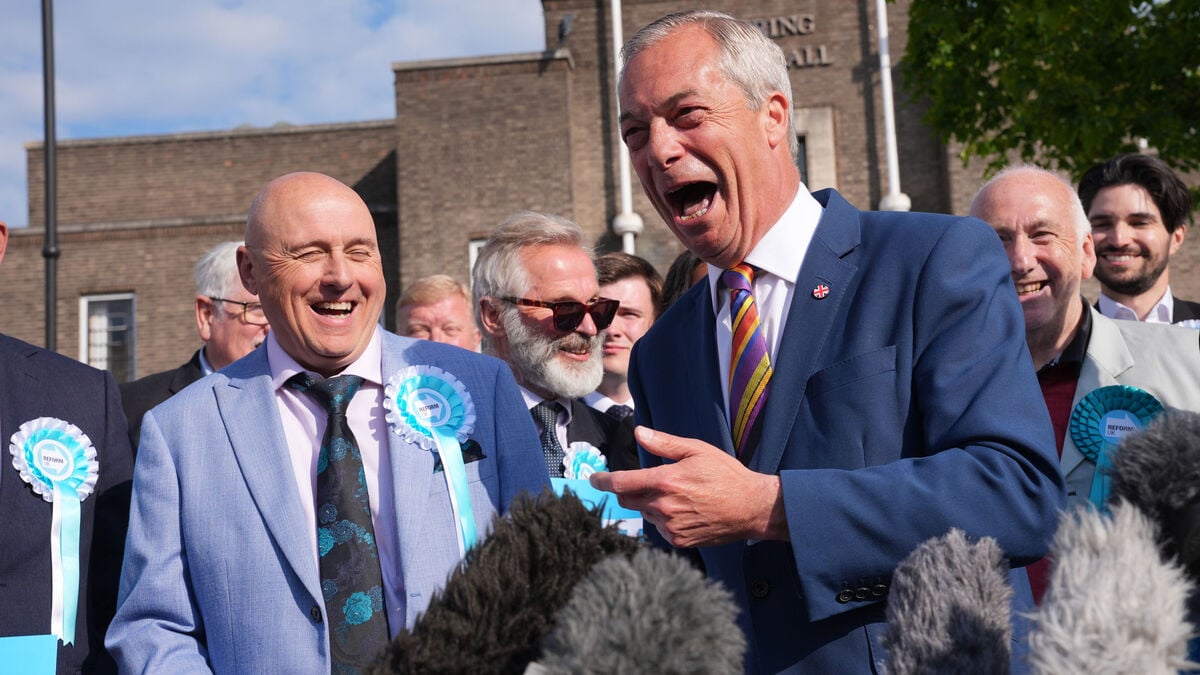
Party leader Nigel Farage is overjoyed.
"This is a big day for the complete overhaul of British politics. And the best is yet to come," the Brexit veteran tells the press in Havering – one of the boroughs where Reform is now taking power.
Farage laughs when asked whether Starmer should resign.
"Personally, I would be very sad if the Prime Minister had to resign. He is our greatest asset," says the Reform leader.
Reform takes many seats from both Labour and the Conservatives.
Collapse in Wales
At the same time, Labour's loss is slightly smaller than expected, largely because the Green Party is not doing as well as expected.
The Greens still secure a historic first mayoral victory in the London borough of Hackney.
On the other hand, Labour is completely devastated in Wales, where the separatist party Plaid Cymru becomes the largest party in the regional parliament, the Senedd. It is a historic loss for Labour, which has been in power since 1999, the BBC points out.
However, many support left-leaning Plaid for reasons other than a desire for independence.
"I think it's more about opposing the far right (in Reform) and disappointment with Labour," voters Matt and Chloe, for example, tell TT at a polling station in Cardiff.
In Scotland, the left-leaning separatist party SNP is also clearly the largest party. Final results are not expected until Saturday.
Correction: In an earlier version of the text, Angela Rayner was given an incorrect title.
Thursday's British elections concerned just over 5,000 seats in various municipalities and local assemblies across England, as well as all seats in the regional parliaments of Scotland and Wales.
In the English elections, the far-right Reform party won the most seats, followed by Labour and the Liberal Democrats.
In Wales, Plaid Cymru became the largest party in the regional parliament with 43 out of 96 seats, followed by Reform with 34. In Scotland, the nationalist party SNP became clearly the largest, although it did not reach a majority of 65 seats.